SouthState Bank Corporation Reports Robust Q2 2026 Results, Raises Dividend
Key Highlights and Insights for Investors
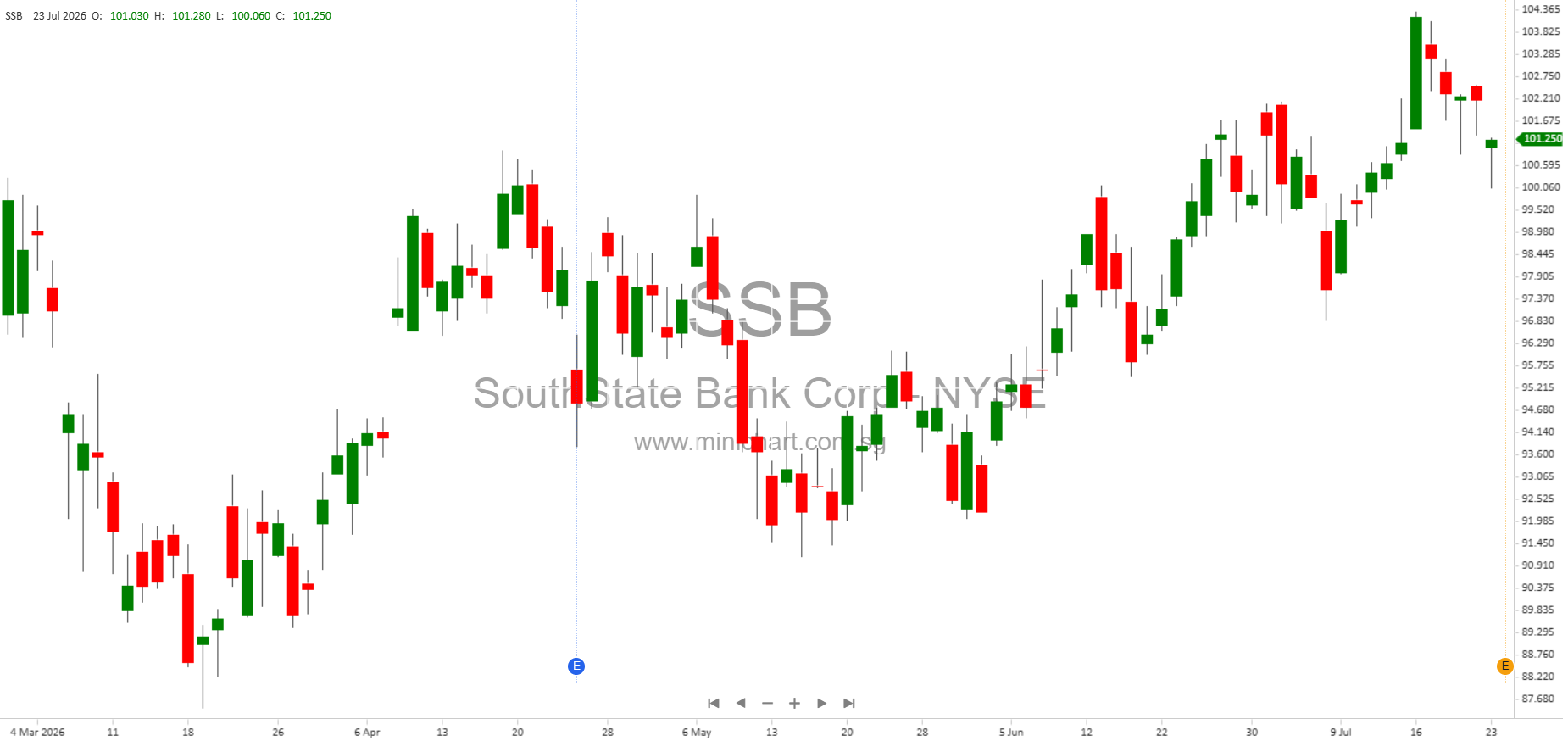
SouthState Bank Corporation (NYSE: SSB) has released its unaudited financial results for the second quarter ended June 30, 2026. The report reveals strong operational performance, improvements in asset quality, and a notable increase in its quarterly cash dividend. Below, we provide a comprehensive breakdown of the results and factors that could influence investor sentiment and the company’s share price.
Key Financial and Operational Highlights
-
Earnings Growth:
- Diluted Earnings per Share (EPS): \$2.35, up 11% year-over-year on a reported basis and 2% on an adjusted basis.
- Net Income: \$230 million.
- Adjusted Diluted EPS: \$2.35.
- Return on Average Common Equity: 10.2% (GAAP); Adjusted Return: 10.2%.
- Return on Average Tangible Common Equity: 17.6% (GAAP); Adjusted Return: 17.6%.
- Return on Average Assets: 1.36%.
- Tangible Book Value Per Share: \$58.72, up 13% year-over-year.
-
Dividend Increase:
- The Board of Directors approved an increase in the quarterly cash dividend from \$0.60 to \$0.66 per share. The dividend will be payable on August 14, 2026, to shareholders of record as of August 7, 2026. This represents an 11% increase compared to the prior year.
-
Share Repurchases:
- Nearly 5% of the outstanding share count retired over the past year, supporting EPS growth and shareholder value.
-
Balance Sheet Strength:
- Loans increased by \$1.4 billion (11% growth) compared to the prior quarter; up \$3.6 billion (8%) year-over-year.
- Deposits increased by \$474 million (3% growth) from the prior quarter, and \$2.7 billion (5%) year-over-year.
- Loan-to-deposit ratio: 90%.
- Total deposit cost remained stable at 1.76%.
- Strong capital position, with Tangible Common Equity ratio at 8.7%, Total Risk-Based Capital at 13.5%, Tier 1 Leverage at 9.4%, and Tier 1 Common Equity at 11.1%.
-
Revenue and Margin Performance:
- Net Interest Income: \$576 million, up 3% quarter-over-quarter.
- Noninterest Income: \$97 million, a slight decrease primarily due to lower mortgage banking income.
- Net Interest Margin (NIM): 3.78% (both non-tax equivalent and tax-equivalent).
- Efficiency Ratio improved to 50% from the prior quarter.
-
Cost and Asset Quality:
- Noninterest Expense: \$358 million, down \$2 million from the prior quarter, mainly due to lower OREO and loan-related expenses.
- Net charge-offs: \$8 million, or 0.06% of average loans – a sign of improved asset quality.
- Provision for Credit Losses: \$16 million.
- Total Allowance for Credit Losses plus reserve for unfunded commitments: 1.30% of loans.
-
Shareholder Value Metrics:
- Book Value per Common Share: \$94.17, up from \$86.71 a year ago.
Management Commentary
CEO John C. Corbett noted, “We continue to make progress on our priorities of balance sheet growth, opportunistic hiring, active share repurchases, and building our artificial intelligence capabilities. The second quarter featured solid loan growth, a stable net interest margin, unchanged deposit costs, and improved efficiency. Asset quality trends also improved, with a decline in non-accruals and charge-offs of just 6 basis points. Over the past year, we’ve retired nearly 5% of our share count, raised our dividend by 11%, and grown tangible book value by 13%. We remain focused on delivering for our shareholders.”
Items of Potential Price Sensitivity
- Dividend Increase: The 10% dividend hike signals confidence in future earnings and capital strength. This may attract income-focused investors and could support share price appreciation.
- Share Repurchases: The retirement of nearly 5% of shares outstanding is significant and can boost EPS and shareholder value, potentially making the stock more attractive.
- Solid Loan and Deposit Growth: Double-digit loan growth and continued deposit inflows reflect strong franchise momentum and could lead to increased investor optimism.
- Stable Margins, Improved Efficiency: A stable net interest margin amid a challenging rate environment and an improved efficiency ratio highlight SouthState’s ability to manage costs and generate profits.
- Improved Asset Quality: Lower charge-offs and non-accruals indicate prudent risk management and could reduce concerns over future credit losses.
- Capital Strength: Robust capital ratios provide a buffer against economic shocks and enable continued capital return to shareholders.
Detailed Financial Data (Q2 2026)
- Net Interest Income: \$575,949,000
- Provision for Credit Losses: \$15,919,000
- Noninterest Income: \$96,726,000
- Noninterest Expense: \$357,749,000
- Net Income (GAAP): \$230,022,000
- Adjusted Net Income (Non-GAAP): \$230,022,000
- Basic EPS: \$2.36
- Diluted EPS: \$2.35
- Adjusted Diluted EPS (Non-GAAP): \$2.35
- Dividends per Common Share (Q2): \$0.60 (to be raised to \$0.66 in Q3)
- Weighted-Average Common Shares Outstanding (Diluted): 97,676,767
- Total Assets: \$68.9 billion
- Total Shareholders’ Equity: \$9.13 billion
- Book Value per Common Share: \$94.17
- Tangible Book Value per Common Share: \$58.72
Outlook & Other Shareholder Information
- Capital Deployment: The company’s continued focus on share repurchases and dividend increases indicates shareholder-friendly capital policies.
- Risk Management: Improved asset quality metrics and strong capital ratios reduce downside risks.
- Efficiency Initiatives: Lower noninterest expense and improved efficiency ratio may support continued margin expansion and profitability.
- AI Investment: Management’s mention of building artificial intelligence capabilities points to a forward-looking approach that could enhance operational efficiency and competitiveness.
- Regulatory and Economic Environment: The company remains vigilant regarding regulatory changes and macroeconomic risks, as noted in its forward-looking statements.
Conclusion: Potential Impact on Share Price
The combination of robust earnings, improved efficiency, strong growth in loans and deposits, increased dividend, and ongoing share buybacks collectively represent a shareholder-friendly and operationally sound performance. These factors are likely to be viewed positively by investors and could support further share price appreciation. The dividend increase and share repurchases are particularly noteworthy, as they directly enhance shareholder returns and signal management’s confidence in the bank’s earnings power and capital position.
Disclaimer: This article is for informational purposes only and does not constitute investment advice. Investors should review the full official filings and consult with financial advisors before making investment decisions. The information above is based on unaudited results and may be subject to change. Forward-looking statements are subject to risks and uncertainties that could cause actual results to differ materially from those described herein.