Yum China to Acquire Pizza Hut Brand in Mainland China: In-Depth Investor Analysis
Key Points of the Announcement
- Yum China Holdings, Inc. (NYSE: YUMC, HKEX: 9987) has entered into a definitive agreement with Yum! Brands, Inc. (NYSE: YUM) to acquire full ownership of the Pizza Hut brand in Mainland China.
- Transaction Value: Cash consideration of \$1.2 billion.
- Immediate Impact: Upon closing, Yum China will no longer pay license fees for Pizza Hut to Yum! Brands, directly enhancing store economics and potentially lowering the threshold for new store openings.
- Financial Performance of Pizza Hut China:
- 2025 segment revenue: \$2.3 billion
- 2025 segment operating profit: \$183 million
- Q1 2026: 13th consecutive quarter of same-store transaction growth and eighth consecutive quarter of margin and operating profit expansion
- Expansion Targets:
- Current: 4,375 Pizza Hut restaurants in 1,100+ cities
- Target: Over 6,000 stores by 2028
- Aim to double operating profit by 2029 (vs. 2024)
- Strategic Rationale: Acquiring the brand gives Yum China “greater strategic flexibility” to innovate across menu, store formats, and operations. Eliminating the license fee is expected to improve margins and accelerate growth.
- Financial Guidance: Yum China’s full-year 2026 financial guidance remains unchanged. The deal is expected to be immediately accretive to diluted EPS starting in 2026, and mid-single-digit accretive to EPS in 2027 and 2028.
- Transaction Timeline: Expected to close in Q3 2026, subject to customary closing conditions.
- Financing Plan: Funded via a mix of cash and debt. Yum China will maintain its capital return commitments: \$1.5 billion in 2026, and about \$900 million to over \$1 billion annually in 2027 and 2028, exceeding \$1 billion in 2028.
- Valuation: The deal implies a last-twelve-month (LTM) P/E multiple of 19.5x, a 17% discount to peers’ median LTM P/E (23.5x) and a 24% discount to the peer group’s average LTM P/E over the past year (25.7x).
- KFC China Growth: KFC remains a key growth engine. Yum China targets an expansion from 13,454 stores to over 17,000 by 2028. KFC China will also receive a decade-long financial incentive from Yum! Brands upon meeting certain sales growth targets.
Detailed Analysis and Shareholder Considerations
1. Strategic Milestone and Growth Opportunities
This acquisition marks a transformative milestone for Yum China. By moving from exclusive licensee to brand owner of Pizza Hut in the world’s largest casual dining market, Yum China gains full control over branding, menu innovation, and operational strategy. The company believes it is still in the early stages of its ambitious growth trajectory for Pizza Hut China, with significant whitespace for expansion and store count growth.
CEO Joey Wat highlighted that becoming the brand owner will enhance strategic flexibility, drive innovation, and support margin expansion. Notably, the elimination of license fees (previously about \$62 million annually) is expected to lower new store-opening thresholds and directly benefit restaurant margins across the Pizza Hut China portfolio.
2. Financial Implications and Accretion
The transaction is expected to be immediately accretive to Yum China’s earnings per share (EPS) upon closing (Q3 2026), with further mid-single-digit percentage EPS accretion projected for 2027 and 2028. This is a significant price-sensitive factor for shareholders, as accretive deals typically support share value.
The acquisition’s implied P/E valuation is at a notable discount to comparable global and China-based quick-service and beverage companies, reinforcing the deal’s attractiveness from a value-creation perspective.
3. Funding, Capital Returns, and Financial Flexibility
Yum China will fund the acquisition through a combination of cash and debt financing. Importantly, the company reaffirms its commitment to existing capital return plans, including a \$1.5 billion payout in 2026 and returning nearly all annual free cash flow (after minority dividends) to shareholders from 2027 onward. This translates to an expected \$900 million to over \$1 billion returned annually in 2027 and 2028, rising above \$1 billion in 2028.
For investors, the maintenance of robust capital returns—even after a major acquisition—suggests confidence in ongoing cash flow generation and prudent balance sheet management.
4. Ongoing Growth in KFC Brand
While Pizza Hut is the focus of this transaction, KFC continues to be Yum China’s primary growth engine. The company is targeting a substantial increase in KFC stores (from 13,454 to over 17,000 by 2028), and will benefit from a decade-long financial incentive from Yum! Brands if certain system sales growth targets are met. This further supports Yum China’s long-term growth outlook and could serve as a catalyst for future earnings.
5. Risks and Forward-Looking Statements
As with any major acquisition, there are execution risks: the deal requires customary closing conditions and is subject to regulatory and financial risks. The company explicitly notes that forward-looking statements are subject to a range of uncertainties, including the successful integration of Pizza Hut, realization of anticipated cost savings, consumer demand, and external market factors.
Shareholders should review the company’s risk disclosures in its SEC filings for a comprehensive understanding of potential uncertainties.
Conclusion: Potential Share Price Impact
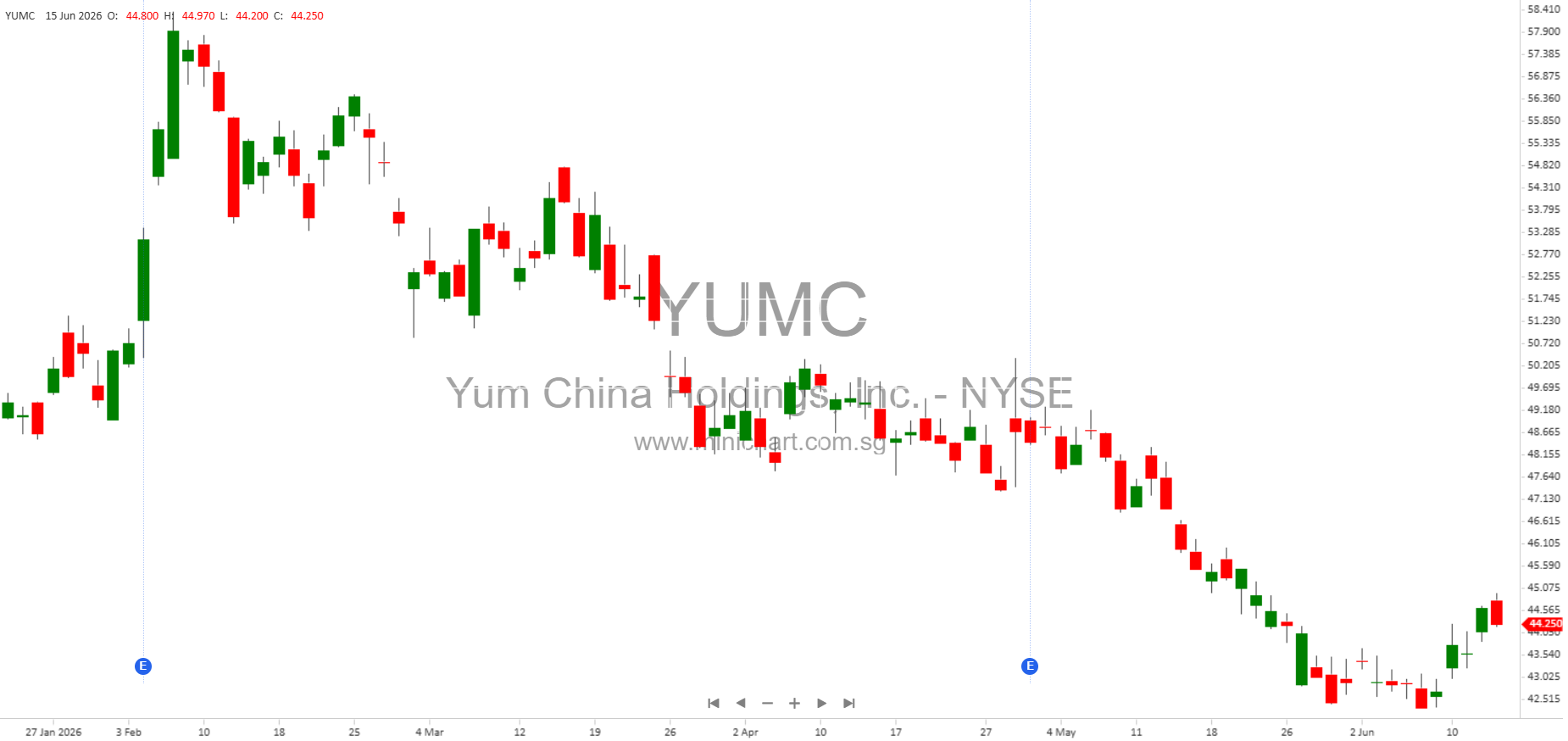
This acquisition represents a potentially transformative event for Yum China, giving it full control over one of its most important brands in the critical China market. The immediate and forecasted accretion to EPS, significant cost savings from eliminated license fees, and continued commitment to capital returns are all highly relevant and likely to be price-sensitive for YUMC shares. The attractive valuation relative to peers further enhances the deal’s appeal to investors.
Investors should monitor management’s further disclosures, particularly in the upcoming Q2 2026 earnings call, and track the deal’s progress toward closing in Q3 2026.
Disclaimer
This article is for informational purposes only and does not constitute investment advice. Investors should conduct their own due diligence and consult with a qualified financial advisor before making investment decisions. All forward-looking statements are subject to risks and uncertainties that could cause actual results to differ materially from those anticipated.