BIO-key International, Inc. 2025 10-K/A Filing: Key Investor Insights
Major Highlights from the Annual Report Amendment
- Amended 10-K Filing: BIO-key filed Amendment No. 1 to its Annual Report on Form 10-K for the fiscal year ended December 31, 2025, originally filed on June 12, 2026. The amendment was made to replace the Report and Consent of the Independent Registered Public Accounting Firm and to provide updated CEO and CFO certifications.
- Going Concern Warning: The company’s independent auditors issued a “going concern” warning, citing limited cash resources, recurring losses, negative cash flows from operations, and dependence on external financing. This raises substantial doubt about BIO-key’s ability to continue operations over the next year.
- Revenue and Profitability Challenges: BIO-key reported a decline in revenues to \$5.94 million for 2025, down from \$6.93 million in 2024. The company continues to operate at a loss, with historical difficulties in generating significant revenue and achieving profitability.
- Liquidity and Capital Constraints: The company requires approximately \$750,000 per month to operate but has struggled to meet this through revenues alone, highlighting ongoing dependency on debt and equity financing. Failure to secure additional funds may result in reduced operations or even discontinuation of the business.
- S-3 Ineligibility: Due to the late filing of its 2025 10-K, BIO-key is ineligible to use Form S-3 to register securities for at least one year, potentially limiting its ability to raise future capital efficiently.
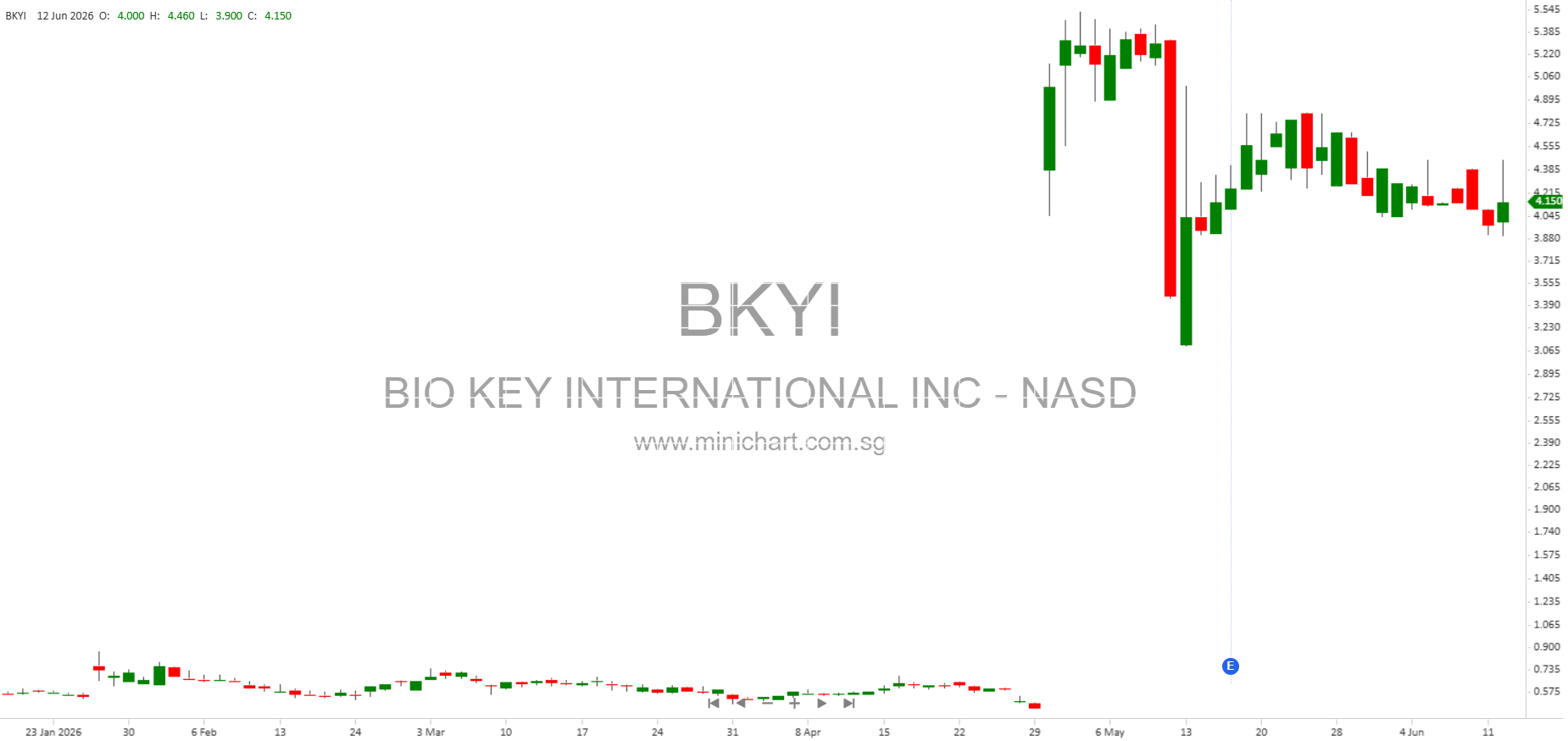
- Nasdaq Suspension & Trading on OTC: Trading of BIO-key’s common stock was suspended on the Nasdaq Capital Market on May 13, 2026. Shares now trade on the OTC Markets under the symbol “BKYI.” Although the company is appealing the delisting, the outcome is uncertain and could materially impact trading liquidity and share value.
- Warrants and Dilution Risk: Approximately 794,073 shares are reserved for issuance upon exercise of options and warrants, which could result in significant dilution for current shareholders.
- No Plans for Dividends: The company has never paid and does not plan to pay cash dividends in the foreseeable future. Investors seeking dividends should not expect payouts.
- Risk Factors: The report details a wide range of risks, including internal control weaknesses, challenges with international receivables (notably in Asia and Africa), the need for further R&D, cybersecurity threats, regulatory and ESG-related compliance costs, and potential volatility in share price.
- Acquisition Strategy and Risks: BIO-key is considering acquisitions for growth but faces significant integration, financing, and operational risks in these efforts. The company’s financial constraints may limit its ability to pursue or benefit from such strategies.
Detailed Analysis for Investors
1. Revenue Trends and Financial Performance
Revenue dropped by \$922,016 (a 13% decline) year-over-year. This was primarily due to the non-repeat of a significant foreign bank contract and the company’s strategic exit from its Swivel Secure Limited distribution agreement in EMEA, shifting to BIO-key branded solutions. The company reported selling, general and administrative (SG&A) expenses of \$6.28 million in 2025 (down 12% from 2024), mainly due to lower personnel costs, reduced marketing expenses, and audit fees, partially offset by higher professional service costs related to financing activities.
Research and development expenses totaled \$2.61 million in 2025 (up from \$2.51 million in 2024), reflecting ongoing investment in technology innovation and product upgrades.
The company continues to report significant operating losses, and its financial statements do not reflect adjustments that could arise if it is unable to continue as a going concern.
2. Capital Market Access and Financing Risks
BIO-key’s ongoing negative cash flow from operations requires the company to regularly access capital markets or seek alternative financing. The ineligibility to use Form S-3 for one year significantly hampers its ability to raise capital efficiently, increasing both cost and time for any future public offerings. This could further strain liquidity and may require the company to issue securities in less favorable circumstances, leading to dilution of existing shareholders.
The company’s need for approximately \$750,000 a month to operate exceeds current revenue, underscoring the urgency of raising new capital or significantly improving sales.
3. Nasdaq Delisting and Share Liquidity
The recent suspension of trading on the Nasdaq Capital Market and transition to OTC Markets is a significant event. Reduced liquidity, increased volatility, and potential loss of institutional investor interest often follow such moves. BIO-key is appealing the Nasdaq delisting, with a hearing scheduled for June 16, 2026, but there is no guarantee of a positive outcome.
4. Dilution and Shareholder Value Concerns
With almost 800,000 shares reserved for potential issuance via options or warrants, current shareholders face substantial dilution risk. Any future capital raises involving equity or convertible securities will further dilute existing ownership. Additionally, the company’s certificate of incorporation, bylaws, and Delaware law provide anti-takeover protections, which may deter potential acquirers but can also inhibit shareholder-driven changes.
5. Absence of Dividends
BIO-key has never paid dividends and does not intend to do so in the foreseeable future. All available cash is likely to be reinvested in operations or used to service debt, making the stock unsuitable for income-oriented investors.
6. Operational and Strategic Risks
The company remains exposed to several operational risks including:
- Potential internal control weaknesses and risk of material misstatements in financial reporting.
- Uncertainty in collecting international receivables, particularly in Asia and Africa, which has led to material write-offs in the past.
- Challenges in maintaining and growing market acceptance for its biometric technology and IAM products.
- Dependence on third-party resellers, especially in foreign markets where contract enforcement and collection are difficult.
- Ongoing risks from cybersecurity threats, regulatory changes, and ESG compliance costs.
- Risks from acquisition strategies: integration difficulties, inability to generate sufficient revenue from acquired businesses, and potential non-cash charges due to amortization of intangible assets.
7. Share Price Volatility
BIO-key’s share price has historically been volatile and is subject to significant fluctuation due to operating results, financial condition, market conditions, and broader technology sector trends. The reduction in market makers and the move to OTC Markets could amplify this volatility.
What Shareholders Must Know (Potential Price-Sensitive Items)
- Going Concern Risk: The auditor’s warning is highly significant and could materially impact investor confidence.
- Nasdaq Suspension: The loss of Nasdaq listing is a major event that could affect liquidity, institutional ownership, and share value. The appeal outcome could be price-moving.
- Form S-3 Ineligibility: Increases the cost and complexity of future capital raises, potentially affecting the company’s ability to fund operations and growth.
- Ongoing Losses and Cash Burn: The company’s inability to achieve profitability and reliance on external financing are ongoing risks.
- Dilution Risk: Large number of outstanding options/warrants and the potential for further equity issuance could significantly dilute shareholders.
- Receivables Collection Risk in International Markets: Continued challenges in enforcing contracts and collecting payments, especially in Asia and Africa, could lead to more write-offs and affect results.
Conclusion
In summary: BIO-key International, Inc. faces ongoing and significant financial, operational, and strategic challenges. The risk of continued operating losses, dependence on external financing, Nasdaq delisting, and dilution from additional share issuances are material risks that could impact shareholder value. Investors should closely monitor the outcome of the Nasdaq appeal, future capital raising activities, and any developments related to the company’s ability to improve sales, control costs, and collect receivables internationally.
Disclaimer: This article is for informational purposes only and does not constitute investment advice or a recommendation to buy or sell any securities. Investors should conduct their own due diligence and consult with their financial advisors before making investment decisions. The information is based on the company’s SEC filings as of the dates specified and may not reflect the most current developments.