Amazon.com, Inc. Announces \$17.5 Billion Term Loan Facility
Major New Credit Facility May Impact Shareholder Value
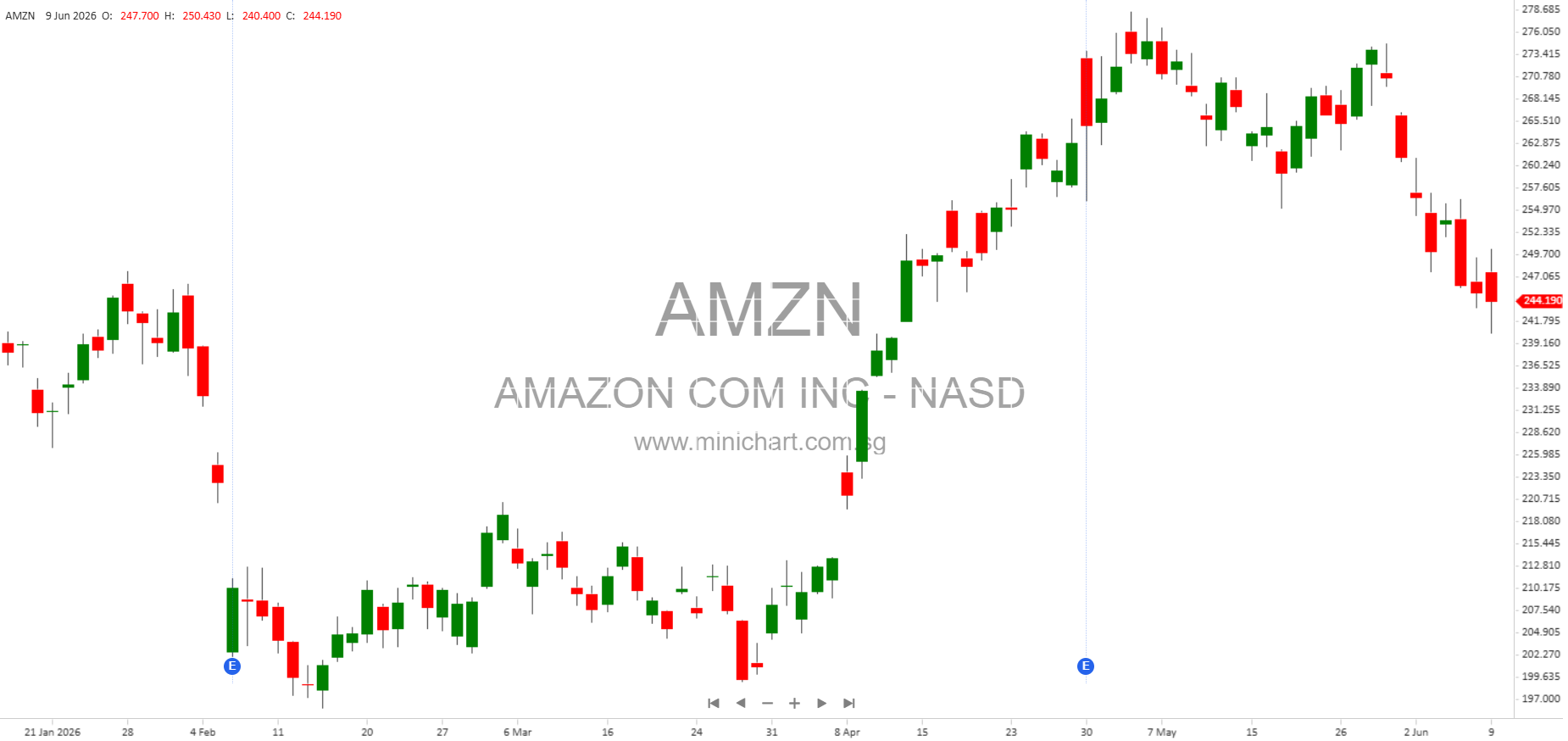
Amazon.com, Inc. (NASDAQ: AMZN) has entered into a significant new financing arrangement as disclosed in its latest Form 8-K filing. The company and a syndicate of major international banks have executed a \$17.5 billion Term Loan Agreement, dated June 8, 2026. This development is highly material and has the potential to influence Amazon’s financial flexibility, capital structure, and, consequently, its share price.
Key Points from the Filing
- Facility Size and Structure: The total aggregate commitments under the new term loan facility amount to \$17.5 billion. The facility is available in US Dollars, with loans to be drawn in a single drawing on or before the Commitment Termination Date.
- Administrative Agent and Lender Group: Citibank, N.A. serves as the administrative agent. Other major financial institutions involved as lenders, joint lead arrangers, and bookrunners include JPMorgan Chase Bank, N.A., Bank of America Securities, Inc., HSBC UK Bank plc, Wells Fargo Securities, LLC, Barclays Bank PLC, BNP Paribas, Deutsche Bank Securities Inc., Goldman Sachs Bank USA, Morgan Stanley Senior Funding, Inc., Royal Bank of Canada, Société Générale, TD Securities (USA) LLC, The Bank of Nova Scotia, Banco Bilbao Vizcaya Argentaria S.A., Banco Santander S.A., PNC Bank N.A., Standard Chartered Bank, Sumitomo Mitsui Banking Corporation, U.S. Bank N.A., and UniCredit S.p.A.
- Interest Rate and Pricing: The interest rate is determined by a margin over the relevant benchmark rate (SOFR), with a pricing grid based on Amazon’s credit ratings by S&P, Moody’s, and Fitch. For example, if Amazon holds an AA/Aa2/AA or above, the margin is 0.625% over SOFR. The margin increases with lower credit ratings, up to 1.125% for ratings at or below A-/A3/A-.
- Flexible Use of Proceeds: Amazon has not publicly disclosed the specific intended use for the loan proceeds in this filing. However, such facilities typically provide flexibility for general corporate purposes, refinancing, acquisitions, or capital expenditures.
- Covenants and Financial Terms: The agreement includes standard covenants relating to financial reporting, compliance with laws, and restrictions on liens, fundamental changes, and the use of proceeds. There are also provisions related to anti-corruption laws and sanctions compliance.
- Potentially Price-Sensitive Provisions: The agreement defines “Material Adverse Effect” as any material adverse change in Amazon’s financial condition or ability to perform its obligations under the loan. This means that a material negative event could give lenders the right to call the loan or take other actions.
- Change of Control: The agreement contains a “Change of Control” provision that could trigger lender rights if there is an event resulting in Amazon changing hands, an important consideration for long-term investors.
- Not an Emerging Growth Company: Amazon has indicated it is not an emerging growth company, affirming its status as a mature, large-cap public issuer.
- Listing and Trading: Amazon’s common stock continues to trade on the Nasdaq Stock Market under the symbol “AMZN.” The company also has a series of notes and debt instruments (e.g., Floating Rate Notes due 2028, 2.800% Notes due 2028, etc.) listed, though these do not have active trading symbols for public equity investors.
- Signatories: The filing is signed by Antonio Masone, Vice President, Finance and Chief Accounting Officer.
Why This Matters to Shareholders
- Financial Flexibility: Securing a \$17.5 billion term loan significantly increases Amazon’s liquidity and borrowing capacity, providing the company with robust resources to fund growth, pursue strategic initiatives, or weather adverse economic conditions.
- Potential for Strategic Activity: Large new credit lines often precede major investments, share buybacks, or acquisitions. Investors should watch for follow-up announcements from Amazon regarding the use of these funds.
- Interest Expenses and Credit Ratings: The cost of the facility is tied directly to Amazon’s credit rating. Any downgrade could increase borrowing costs and affect profitability. Conversely, maintaining or improving the rating would keep debt service costs lower.
- Market Implications: Such a large financing move can signal management’s confidence in the company’s outlook, or could foreshadow significant capital needs. The market will likely speculate on the intended use of proceeds, which could affect the share price.
Additional Details
- Documentation: The full Term Loan Agreement is filed as Exhibit 10.1 to the Form 8-K and contains further technical details on terms, covenants, and schedules.
- No Immediate Dilution: This facility is structured as debt, not equity. There is no direct dilution to existing shareholders as a result of this transaction.
- Potential Risks: As with all large financings, increased leverage heightens sensitivity to interest rate changes, credit market conditions, and operational performance.
Conclusion
Amazon’s entry into a new \$17.5 billion term loan facility is a major financial event that investors should monitor closely. The facility enhances Amazon’s balance sheet flexibility and could precede strategic actions with significant implications for future growth and shareholder value. Given the size and structure of this agreement, it is a potentially price-sensitive development.
Disclaimer: This article is for informational purposes only and does not constitute investment advice. Investors should review the full SEC filing and consult their financial advisor before making investment decisions. The author and publisher do not hold any positions in AMZN at the time of writing.