FuelCell Energy Reports Second Fiscal Quarter 2026 Results: Critical Update for Investors
Key Highlights from Q2 2026 Report
- Backlog: \$1.14 billion as of April 30, 2026, down 9.9% from \$1.26 billion a year ago.
- Sales Pipeline: 4 GW in Q2 2026, up an impressive 267% from Q1 2026.
- Manufacturing Expansion: Torrington, CT facility expansion target increased to 500 MW annualized production rate, with project cost estimated at \$200-275 million.
- Carbon Capture Progress: First modules shipped to Rotterdam, The Netherlands, in partnership with ExxonMobil Technology and Engineering Company.
- Financials:
- Revenue: \$35.6 million (-5% YoY)
- Gross loss: \$(12.9) million (loss widened by 37% YoY)
- Loss from operations: \$(77.9) million (loss doubled YoY)
- Net loss attributable to common stockholders: \$(78.7) million
- Net loss per share: \$(1.45) (improved from \$(1.79) YoY, but due to higher share count)
- Adjusted EBITDA: \$(17.1) million (improved YoY)
- Cash and equivalents (including restricted): \$440.9 million, up from \$341.8 million at FYE 2025
- Common Stock Sales: 10.9 million shares sold in Q2 at an average \$9.45/share for \$100.4 million net; additional 4.1 million shares sold post-quarter at \$13.31/share for \$52.9 million net.
Management Commentary
CEO Jason Few highlighted strong commercial momentum and disciplined execution, especially in the company’s data center power strategy. Few emphasized the uniqueness of FuelCell Energy’s megawatt-scale, utility-grade platform for powering data centers, contrasting it with competing solutions that rely on aggregating many smaller units. The company’s approach is aimed at reducing dependence on constrained transmission infrastructure, streamlining permitting, and supporting the rising energy demands of AI-driven data centers with proven, scalable technology.
Few also underscored the ongoing expansion of the Torrington manufacturing facility, which is being scaled up from a previously planned 350 MW capacity to 500 MW per year, in response to increased commercial demand. As of May 31, 2026, installation of a new high-volume tape caster and commissioning of a new conditioning room had begun.
Business and Strategic Updates
-
Launch of 12.5 MW Standardized FuelCell Energy Block:
- Designed for rapid deployment to data center and AI compute markets facing power grid constraints.
- Off-the-shelf, modular solution allows large data center projects to proceed faster by bypassing permitting and grid bottlenecks, reducing need for expensive transmission infrastructure.
-
Torrington Facility Expansion:
- Capacity expansion increased from 350 MW to 500 MW annualized rate; cost estimate \$200-275 million over 24 months.
- Driven by sharply rising demand, especially for the new 12.5 MW Energy Block product.
-
Carbon Capture Collaboration:
- First two carbon capture modules shipped to Rotterdam, The Netherlands, as part of the collaboration with ExxonMobil.
Backlog and Revenue Insights
Backlog at end of Q2 2026 was \$1.14 billion (down 9.9% YoY), with declines in product, service, generation, and advanced technologies segments, mainly due to revenue recognition outpacing new business. The combined service and generation backlog has a weighted average term of about 15 years, with some contracts up to 20 years in duration.
| Backlog Category | Q2 2026 | Q2 2025 | Change |
|---|---|---|---|
| Product | \$36.1M | \$98.2M | \$(62.1M) |
| Service | \$155.4M | \$164.4M | \$(9.1M) |
| Generation | \$928.5M | \$967.4M | \$(38.9M) |
| Advanced Tech | \$15.4M | \$29.6M | \$(14.2M) |
Detailed Financial Performance
- Revenue decline driven by lower service revenue (no module exchanges this quarter) and lower generation revenue (Groton Project repairs), partially offset by higher product sales (notably to Korea) and advanced technologies revenue.
- Gross loss increased due to higher costs in product and generation segments.
- Operating loss and net loss more than doubled, primarily due to a \$42.6 million non-cash impairment expense for Groton Project upgrades (moving to three standard 2.5 MW blocks).
- Net loss per share improved, but only due to higher share count from equity issuances, not improved profitability.
- Adjusted EBITDA improved slightly, reflecting lower cash operating costs.
- Cash position strengthened by equity sales. Unrestricted cash at \$373.2 million, restricted cash at \$67.7 million.
Equity Issuance and Impact
- During the quarter, 10.9 million shares sold at an average \$9.45/share, raising \$100.4 million net.
- After quarter-end, 4.1 million shares sold at average \$13.31/share, raising \$52.9 million net.
- Only \$0.5 million of shares remain available for sale under the Open Market Sale Agreement.
- Share count increased significantly, which impacts per-share metrics and may dilute existing shareholders.
Risks and Forward-Looking Statements
The company emphasized several risks in its outlook, including product development and manufacturing risks, supply chain issues, changes in the energy regulatory environment, volatility in commodity prices, the need for additional financing, and the ability to deliver on pipeline opportunities and cost-reduction targets. Investors should be aware that many forward-looking statements depend on successful execution of business strategies and favorable market conditions.
What Investors and Shareholders Need to Watch
- Significant Non-Cash Impairment Charge: The \$42.6 million impairment related to Groton Project upgrades is a substantial one-time hit to quarterly results, but not a recurring cash cost. However, it signals a shift in project strategy and may reflect challenges with legacy deployments.
- Rising Share Count: Aggressive equity issuance has strengthened the cash position but dilutes existing shareholders, pressuring per-share valuations.
- Manufacturing Expansion: The increase in the Torrington facility expansion to 500 MW (with \$200-275 million cost) reflects confidence in future sales but also commits significant capital expenditure over the next two years.
- Backlog and Pipeline Trends: Backlog decline may cause concern, but the sharp rise in sales pipeline (now 4 GW) could indicate strong medium-term growth potential if converted to contracts.
- Data Center/AI Power Strategy: Entry into standardized on-site power solutions for data centers is a major strategic move, targeting a high-growth market. Success here could be transformational.
- Carbon Capture Progress: Shipping first modules to Rotterdam with ExxonMobil is a key milestone and validates the company’s advanced technology capabilities.
Conclusion
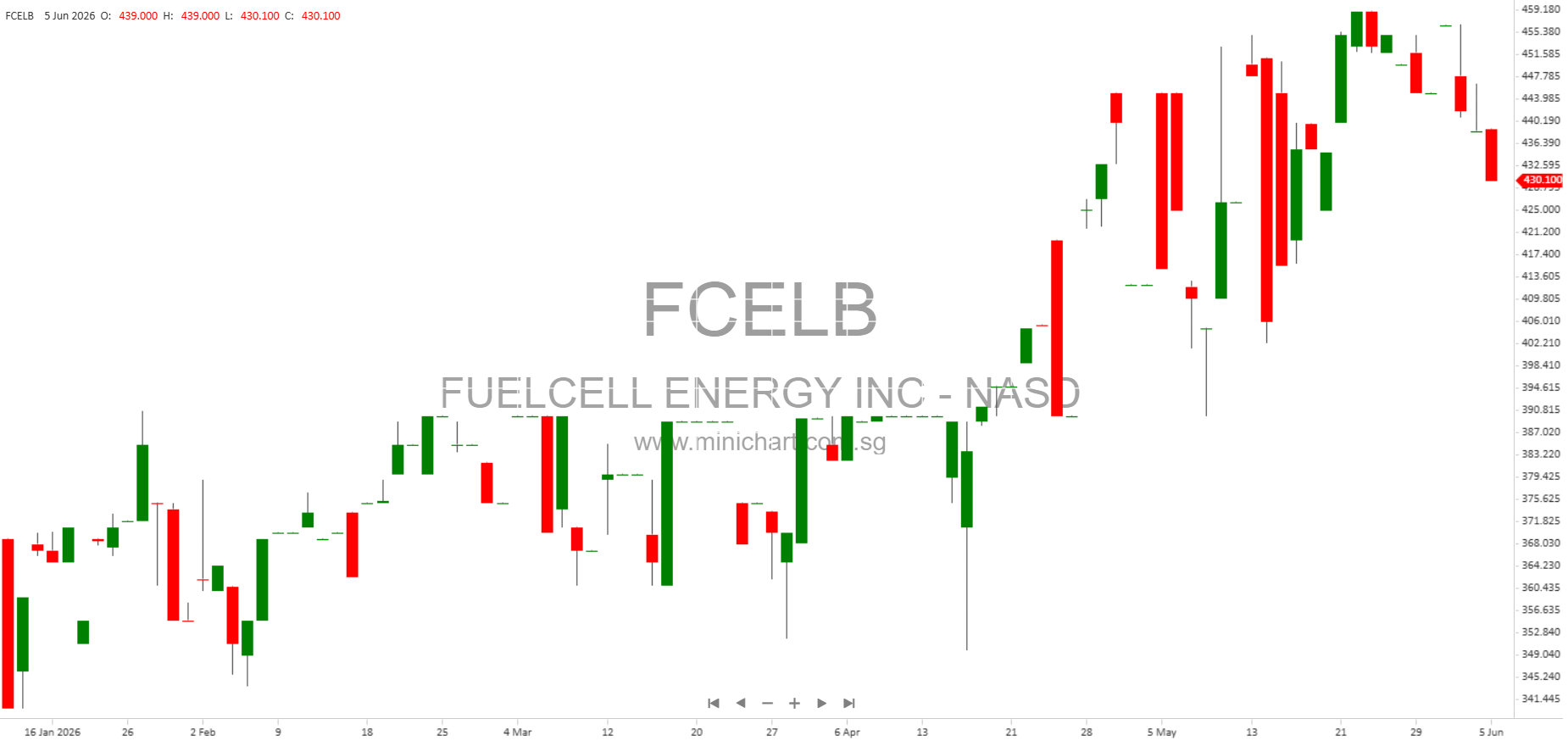
FuelCell Energy’s Q2 2026 report contains several price-sensitive developments. The large impairment charge, aggressive equity issuance, and declining backlog may pressure shares in the short term. However, the dramatic expansion of the sales pipeline, increased manufacturing investment, and the launch of a standardized product for the data center market, plus progress in carbon capture with ExxonMobil, offer potentially strong upside if execution delivers. Investors should closely monitor the company’s ability to convert pipeline into signed contracts, manage dilution, and ramp up production efficiently.
Disclaimer: This article is for informational purposes only and does not constitute investment advice. Investors should review all public filings and disclosures from FuelCell Energy, Inc. and consult with their financial advisor before making any investment decisions. The information herein is based on the company’s Q2 2026 earnings release and may be subject to change without notice.