First Western Financial Inc. 2026 Annual Meeting: Highlights, Risks, and Shareholder Value Drivers
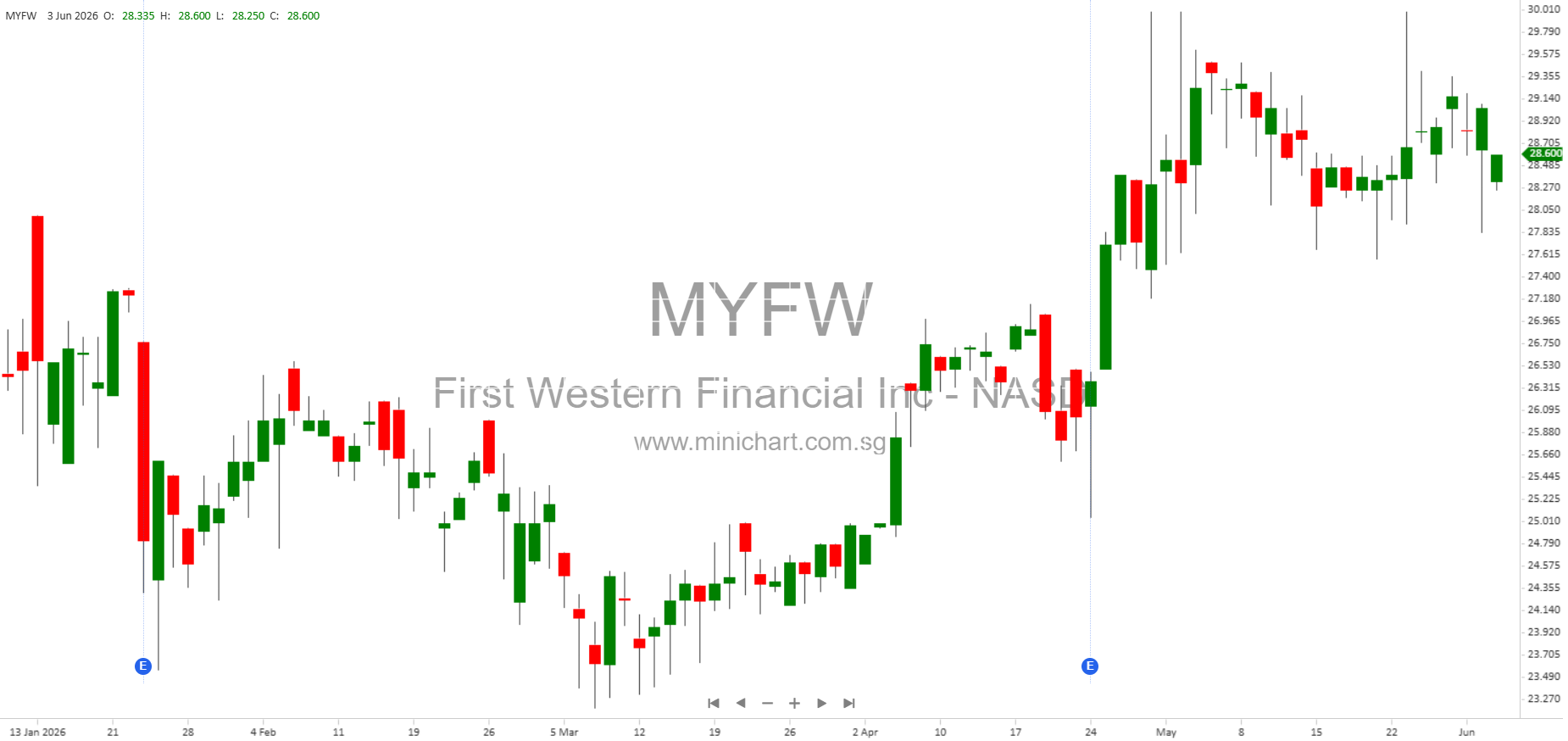
First Western Financial Inc. (NASDAQ: MYFW) held its 2026 Annual Meeting of Shareholders on June 3, 2026, releasing a comprehensive update on its operational and financial performance, strategic vision, and outlook. This report contains several points of interest that may impact shareholder value, as well as important risk disclosures that current and prospective investors should consider.
Key Highlights from the 2025 Review
-
Strong Execution in a Challenging Environment: Despite difficult economic conditions, First Western achieved key objectives, including:
- Maintaining a solid loan-to-deposit ratio
- Generating robust loan and deposit growth
- Expanding net interest margin
- Improving asset quality by reducing non-performing assets
- Maintaining stable expenses while investing in talent and technology
- Book Value Growth: The company increased both its book value and tangible book value per share while maintaining strong capital ratios.
-
Business Development:
- Significant new deposit accounts opened in 2025
- Strong loan production, with most new loans coming from clients bringing deposits to the bank
- Steady addition of new wealth management clients
- Strategic Hires and Organizational Changes: Addition of banking talent and organizational changes led to a strong year for business development.
- Strong Balance Sheet: The company is well-positioned to continue growth and create shareholder value, with an increasing presence in attractive markets.
Franchise Fundamentals and Financial Momentum
- Diversified Client Base: No significant industry or asset class concentrations in deposits or loans.
- Sticky Deposits: Loyal clients value First Western’s service and expertise.
- Diversified Business Model: Strong sources of non-interest income and minimal exposure to higher-risk office CRE and multifamily loans.
- Low Credit Losses: Conservative underwriting has resulted in exceptionally low credit losses throughout the company’s history.
- Tangible Book Value Per Share Growth: Up approximately 186% since December 2017, reaching \$24.07 at year-end 2025 and \$24.87 at March 31, 2026.
Expansion, Acquisitions, and Revenue Growth Strategies
-
Expansion Track Record:
- Multiple office openings and acquisitions since 2002, including recent market expansions in Bozeman, MT, and Cheyenne and Loveland, CO.
- Acquisition of Teton Financial Services, Inc. in 2021-2022.
-
Revenue Growth Initiatives:
- Upgrading commercial and industrial (C&I) product and service capabilities
- Building expertise in specific vertical markets
- Expanding into new markets with attractive demographics
- Cross-selling a wide range of financial products (planning, insurance, retirement, investment)
- Selective, minimally dilutive acquisitions to leverage infrastructure and drive growth
-
Balance Sheet Growth:
- Loans held for investment (HFI) increased 166% between 2020 and 2025
- Total deposits increased 153% in the same period
Near-Term Outlook and Long-Term Value Drivers
- Market Positioning: The company describes itself as a “Goldilocks-size” bank, well-positioned for market disruption due to a combination of great markets, financial strength, unique focus, and scale.
-
Operational Leverage:
- Continued solid loan and deposit growth
- Expansion in net interest margin
- Greater business development in wealth management
- Increased mortgage production driven by more mortgage loan officers (MLOs)
- Disciplined expense control for more operating leverage
- History of low loan losses and solid asset quality
- Efficiency Ratio Improvement: Efficiency ratio trended down from 79.4% in 2023 to 77.2% in 2025, and further to 74.88% by Q4 2025, indicating improved cost management.
- Asset Quality: Continued strong asset quality, disciplined underwriting, and low losses; allowance for credit losses (ACL) at 0.8% of loans as of March 31, 2026.
-
Strategic Goals:
- Tripled loans and deposits since 2017 IPO
- More than doubled tangible book value per share
- Long-term focus on growing through \$5 billion in total assets and \$25 billion in trust and investment management (TIM) assets
- Combination of organic growth, infill/adjacent market expansion, and selective M&A
- Building a unique, high-fee income regional powerhouse with scalable bank, trust, and wealth management platforms
Financial Performance and Non-GAAP Results
- Gross Revenue: \$101.7 million in 2025, up from \$93.1 million in 2024.
- Adjusted Pre-tax, Pre-provision Income: \$22.1 million in 2025, up from \$13.5 million in 2024.
- Adjusted Net Income Available to Common Shareholders: \$13.2 million in 2025, up from \$8.8 million in 2024.
- Adjusted Diluted Pre-Tax Earnings Per Share: \$1.74 in 2025, compared to \$1.22 in 2024.
-
Tangible Book Value Per Share:
- \$24.07 at December 31, 2025
- \$24.87 at March 31, 2026
- Represents 186% growth since December 2017
- Return on Tangible Common Equity (Annualized): 10.26% for Q1 2026.
Risks and Forward-Looking Statements
Risks That May Affect Share Value:
- Geographic concentration in Colorado, Arizona, Wyoming, California, and Montana
- Potential adverse changes in the economy affecting real estate values and liquidity
- Ability to continue originating and selling residential real estate loans
- Credit risks, especially if economic conditions deteriorate, may require increasing allowance for credit losses
- Dependence on maintaining strong core deposit base and low-cost funding
- Potential litigation or claims related to fiduciary responsibilities
- Interest rate changes impacting net interest margins
Shareholders should note that these and other risks could materially affect the company’s financial results and share value.
Conclusion
First Western Financial Inc. is emerging from a challenging period with strong capital, robust growth in tangible book value, and a record of successful expansion and acquisitions. The company’s diversified model, conservative credit culture, and strategic focus on scalable, high-fee income businesses position it well for future growth. However, shareholders should closely monitor geographic and credit risks, as well as the company’s ability to continue its growth trajectory and manage costs efficiently.
Disclaimer: This article is for informational purposes only and does not constitute investment advice. Investors should review the company’s official filings, risk disclosures, and consult with their financial advisor before making any investment decisions. Forward-looking statements are subject to risks and uncertainties that may cause actual results to differ materially from those projected.