Mountain Crest Acquisition 6 Corp. Releases Q1 2026 Results: Key Insights for Investors
Summary of Quarterly Report (Form 10-Q) for the Period Ended March 31, 2026
Mountain Crest Acquisition 6 Corp. (Nasdaq: MCAH / MCAHU) has filed its Form 10-Q for the first quarter ending March 31, 2026. As a newly formed Special Purpose Acquisition Company (SPAC), the company’s financials and disclosures offer several important takeaways for investors and current shareholders.
Key Points from the Report
-
Initial Public Offering (IPO) Update:
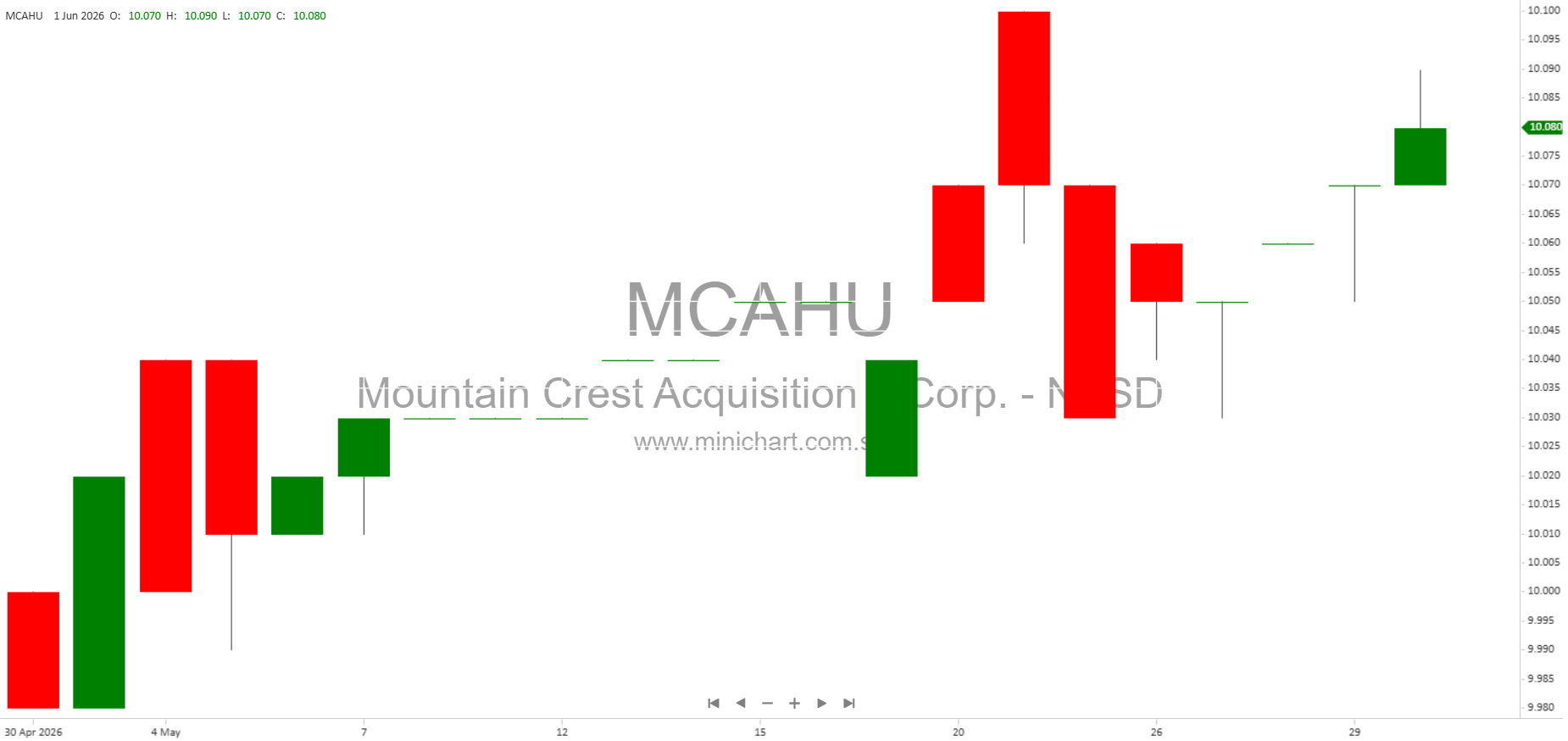
- The company completed its IPO on May 1, 2026, after the end of the reported quarter, issuing 6,000,000 Units at \$10.00 per unit, raising gross proceeds of \$60,000,000.
- Each unit includes one ordinary share and one Public Right. Each Public Right entitles the holder to receive one-fourth (1/4) of one ordinary share upon the consummation of a Business Combination. The company will not issue fractional shares upon conversion of the Public Rights.
- The IPO proceeds are to be used for identifying and consummating a Business Combination, a standard strategy for SPACs.
-
Financial Condition as of March 31, 2026:
- Total assets: \$46,950 (pre-IPO, so does not include IPO proceeds).
- Cash on hand: \$30,000.
- Accrued offering costs (deferred): \$40,000.
- Shareholder’s deficit: \$(18,470).
- Net loss for the period (from inception Jan 6, 2026, through March 31, 2026): \$(43,470).
- Expenses were primarily related to formation, general, and administrative costs.
-
Liquidity and Capital Resources:
- Prior to IPO, operations were financed by Sponsor loans and the issuance of 2,957,143 Founder Shares to the Sponsor.
- The company’s only significant asset prior to the IPO was cash and deferred offering costs. No revenue-generating operations have commenced.
- Post-quarter, the IPO provides the company with sufficient capital to pursue a Business Combination, but the company highlights that if a transaction is not completed within 12 months (barring extensions), it will liquidate and return funds to shareholders.
- The company and Sponsor may raise additional funds via working capital loans to finance transaction costs if required.
-
Share Structure and Rights:
- Ordinary shares outstanding (pre-IPO): 2,957,143, all held by the Sponsor as Founder Shares.
- Founder Shares are subject to forfeiture (up to 385,714 shares) if the underwriters’ over-allotment option is not exercised in full or in part.
- Preference Shares: Authorized up to 5,000,000 with par value \$0.0001 per share (none issued or outstanding as of March 31, 2026).
- Only holders of Founder Shares may vote on the election of directors prior to a Business Combination; public shareholders cannot vote on directors during this period.
-
Going Concern and Forward-Looking Risks:
- The company emphasizes a substantial doubt about its ability to continue as a going concern if a Business Combination is not completed within 12 months of the IPO.
- The company may require additional equity or debt financing to complete a transaction; market conditions could impact the availability and terms of such financing.
- If no transaction is completed, the company will be required to liquidate, which would materially affect shareholders.
-
Controls and Procedures:
- Management (CEO/CFO) evaluated disclosure controls and internal controls over financial reporting and found them effective as of March 31, 2026. No changes in internal control over financial reporting were noted in the quarter.
-
Other Important Items:
- The company is an “emerging growth company” under the JOBS Act, allowing for reduced public company reporting requirements.
- There were no material changes to risk factors previously disclosed in the IPO prospectus.
- No unregistered sales of equity securities occurred during the quarter, except for the issuance of Founder Shares to the Sponsor.
Potentially Price-Sensitive Information
-
SPAC Lifecycle Risk:
- The most significant risk is the company’s ability to identify and consummate a Business Combination within the 12-month window (by May 2027, unless extended). If unsuccessful, the company must liquidate and return funds to public shareholders, which could result in a total loss of investment for holders of founder and sponsor shares.
-
Shareholder Rights and Structure:
- Public shareholders have limited voting rights prior to a Business Combination. This is standard for SPACs but is important for governance-conscious investors.
-
Post-Quarter IPO Completion:
- The completion of the IPO after quarter-end dramatically changes the company’s balance sheet and liquidity, providing capital to pursue a transaction but also starting the clock on the 12-month business combination window.
-
Founder Share Forfeiture:
- Up to 385,714 Founder Shares may be forfeited if the underwriters’ over-allotment option is not exercised, which could impact the ownership structure and dilution for public shareholders upon a Business Combination.
Conclusion for Investors
Mountain Crest Acquisition 6 Corp. is at the very early stage of its SPAC lifecycle, having just completed its IPO and with no operating business yet. This means its entire share value is predicated on the successful identification and completion of a Business Combination within the next 12 months. Failure to do so will result in liquidation and return of trust assets to public shareholders.
Key catalysts for the share price going forward will be:
- Announcement of a target for Business Combination;
- Progress toward completion of that transaction;
- Market conditions affecting SPACs and M&A activity.
Shareholders should monitor further SEC filings and press releases closely, as any business combination announcement or delay could materially affect share values.
Disclaimer
This article is for informational purposes only. It does not constitute investment advice, an offer, or solicitation to buy or sell securities. Investors should review the full SEC filings and consult their financial advisor before making investment decisions. All forward-looking statements are subject to risks and uncertainties as described in the company’s filings.