Citius Oncology Announces Encouraging Phase 1 Results for LYMPHIR® (Denileukin Diftitox-cxdl) Plus Pembrolizumab in Recurrent Gynecologic Cancers
Key Highlights from ASCO Annual Meeting Presentation
- Durable Responses in Heavily Pre-treated Patients: Data from an investigator-initiated Phase 1 study showcased durable clinical responses and a manageable safety profile for the combination of LYMPHIR and pembrolizumab in heavily pre-treated patients with recurrent or refractory gynecologic malignancies.
- Median Progression-Free Survival (mPFS): Among patients achieving clinical benefit (defined as CR, PR, or prolonged stable disease), the median PFS was 20.5 months. Across all efficacy-evaluable patients, mPFS was 5.8 months.
- Objective Response Rate (ORR): 24% ORR among all efficacy-evaluable patients (21), with 5 partial responses. Responses were seen even in patients previously treated with immune checkpoint inhibitors.
- Robust Results in Endometrial Cancer: 33% ORR in endometrial cancer patients who had previously failed checkpoint inhibitor therapy, including one patient with an ongoing response exceeding three years.
- Clinical Benefit Rate: 48% of efficacy-evaluable patients (10 of 21) achieved clinical benefit. Notably, five patients experienced PFS of over 20 months, with one exceeding 30 months.
- Tolerability: Safety profile was manageable; only one reversible Grade 3 capillary leak syndrome (CLS) was observed at the highest dose. No new safety signals or high-grade immune-related adverse events were detected.
- Translational Research and Expansion Plans: Ongoing studies are evaluating immune biomarkers, regulatory T-cell depletion, and tumor microenvironment changes. A Phase 2 expansion is planned, targeting broader gynecologic cancer populations, including less heavily pre-treated and immunotherapy-exposed cohorts.
What Shareholders Need to Know
- Potential Expansion Beyond Current FDA Indication: LYMPHIR is FDA-approved for relapsed or refractory cutaneous T-cell lymphoma (CTCL), but not for gynecologic cancers. This study, though early-stage, suggests a new, high-value indication could be on the horizon.
- Market Opportunity: Management estimates the initial CTCL market for LYMPHIR at over \$400 million and growing. Expansion into gynecologic cancers could unlock additional significant market potential.
- Intellectual Property and Competitive Position: Robust IP protection—including orphan drug designation, trade secrets, and pending patents for immuno-oncology use—could reinforce Citius Oncology’s market position if LYMPHIR progresses in these new indications.
- Risks and Forward-Looking Statements: Early-stage clinical data may not be predictive of outcomes from larger or later-stage studies. The combination therapy is investigational in gynecologic cancers and not yet FDA-approved for this use. The company faces risks related to funding, commercialization, regulatory compliance, and competitive dynamics.
- Regulatory and Safety Considerations: Capillary leak syndrome (CLS) is a serious risk with LYMPHIR, including the potential for fatal reactions. Visual impairment, infusion-related reactions, hepatotoxicity, and embryo-fetal toxicity are also noted. Shareholders should monitor ongoing regulatory review and post-marketing requirements.
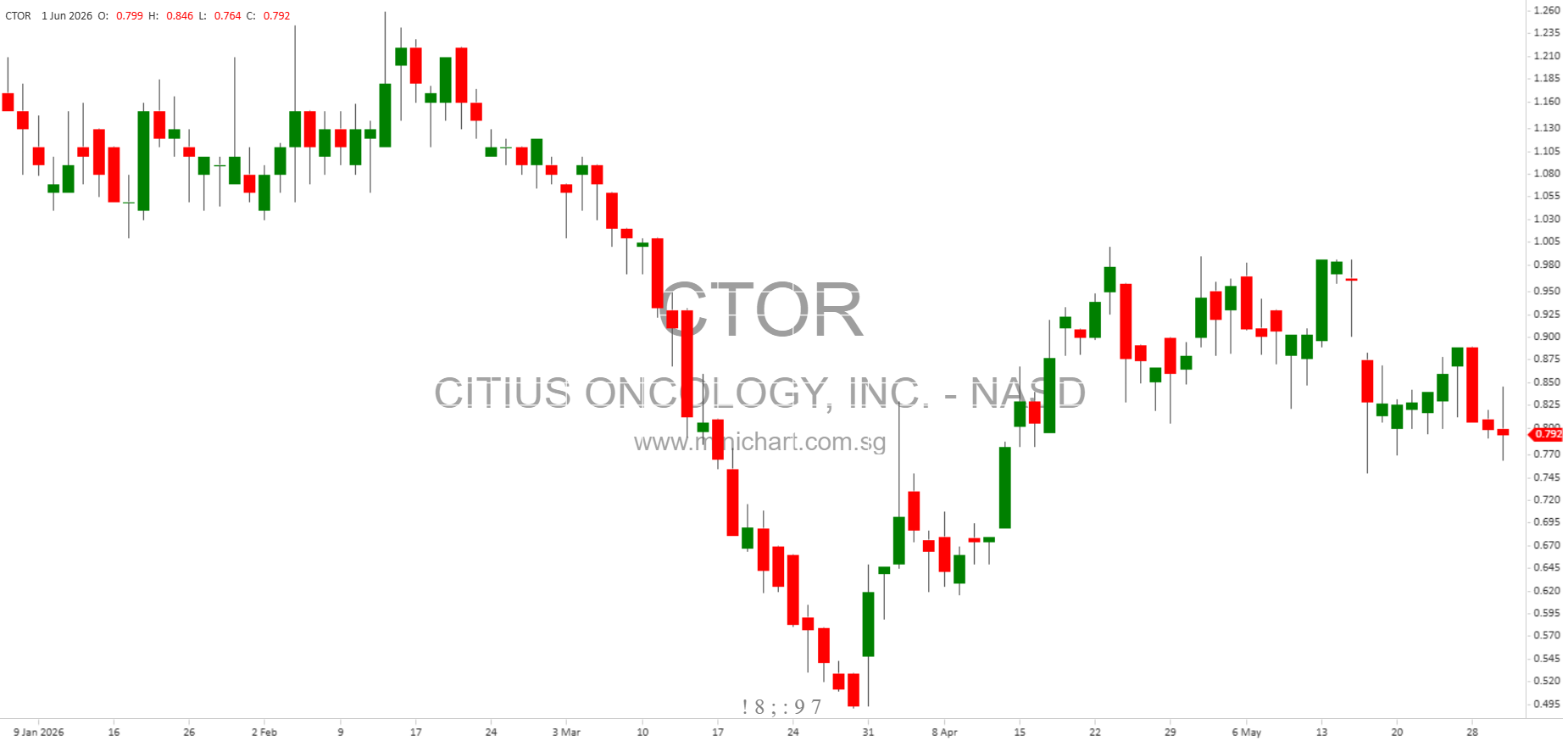
- Upcoming Catalysts: The planned Phase 2 expansion study in gynecologic cancers represents a key potential value driver and could impact share price depending on future data readouts.
- Nasdaq Compliance: The company notes a need to regain Nasdaq listing compliance, which is a material factor for share stability.
Detailed Study Summary
The Phase 1, open-label, dose-escalation study (NCT05200559), led by Dr. Alexander B. Olawaiye at UPMC Magee-Womens Hospital, enrolled 25 patients with recurrent/metastatic solid tumors (primarily gynecologic cancers) who had received a median of five prior lines of therapy. LYMPHIR was administered intravenously on Days 1-3 of each 21-day cycle at escalating doses (3, 6, 9, 12 mcg/kg), alongside pembrolizumab (200 mg IV). Patients completing eight cycles could continue pembrolizumab monotherapy until progression. Citius Oncology provided study drug and financial support, but the study was investigator-led.
Safety: Of 24/25 patients evaluable for dose limiting toxicities, only one reversible Grade 3 CLS was observed at the highest dose, and a maximum tolerated dose was not reached. Sixteen serious adverse events occurred in seven patients at the highest dose level, but no new safety signals or severe immune-related adverse events were observed. Other risks associated with LYMPHIR include visual impairment (9% incidence), infusion-related reactions (69% incidence), hepatotoxicity (ALT elevation in 70%, AST in 64%), and embryo-fetal toxicity.
Efficacy: Among the 21 efficacy-evaluable patients, ORR was 24% (5 PRs, none CRs reported), and median duration of response had not been reached (median of 21.1 months, range 4.2-35 months). The clinical benefit rate was 48%, with median PFS of 20.5 months for those achieving clinical benefit. In endometrial cancer patients previously treated with checkpoint inhibitors, ORR was 33%.
The company is conducting translational studies to identify biomarkers, regulatory T-cell depletion, and immune effector cell changes to optimize future development. A Phase 2 expansion is planned for gynecologic cancers, including less heavily pre-treated and prior immunotherapy-exposed patients.
Commercial and Strategic Implications
- Market Expansion: If future studies confirm efficacy and safety, LYMPHIR could move beyond its current CTCL indication into gynecologic cancers—a market with high unmet need and limited effective therapies, especially for patients who have failed prior immunotherapies.
- Regulatory and Reimbursement Risks: Approval for new indications will require additional studies. Physician and payer acceptance will depend on further data and successful education.
- Supply Chain and Manufacturing: The company notes reliance on third-party logistics and the need to secure cGMP commercial-scale supply as business risks.
- Financial Concerns: Citius Oncology needs substantial additional funds to maintain operations and commercialize LYMPHIR. Shareholders should monitor capital raises, potential dilution, and revenue generation.
Investor Contacts
For further information, investors may contact Ilanit Allen at [email protected] or 908-967-6677 x113.
Media contact: Greg Salsburg, [email protected]
Disclaimer
This article is for informational purposes only and does not constitute investment advice. All information is based on publicly available disclosures as of June 1, 2026. Early-stage clinical results may not be indicative of future outcomes, and LYMPHIR is not FDA-approved for gynecologic malignancies. Investors should carefully review company filings and consult with financial advisors before making investment decisions. Citius Oncology faces significant risks related to funding, commercialization, regulatory compliance, and market expansion. The company expressly disclaims any obligation to update forward-looking statements except as required by law.