First REIT 2026 AGM: Major Indonesia Asset Divestments, Currency Risks, and Strategic Shift to Developed Markets
Key Highlights from the 17th Annual General Meeting
First Real Estate Investment Trust (First REIT) held its seventeenth Annual General Meeting (AGM) on 23 April 2026, with significant developments that could have material impacts on the trust’s future direction and unit price. The meeting, convened at Hilton Singapore Orchard, was presided over by Chairman Christopher James Williams and attended by key board members and unitholders.
1. Strategic Review and Proposed Divestment of Indonesian Assets
- First REIT is preparing to divest a substantial part of its Indonesian hospital portfolio. The Board is seeking unitholder approval at a forthcoming Extraordinary General Meeting (EGM) for the sale of eight hospital assets to PT Siloam International Hospitals Tbk (Siloam), the current tenant, and three non-core assets to other related parties.
- Total consideration for the divestments is approximately S\$471.5 million, representing a 2.1% premium over independent valuations, although this premium has been partly eroded by recent depreciation of the Indonesian Rupiah (IDR).
- Siloam has granted a Put Option for the remaining six Indonesian hospital assets, giving First REIT the right (but not the obligation) to sell these assets within a defined period. Siloam does not have a corresponding call option.
- Rationale: The Board cites persistent IDR/SGD currency depreciation, unsustainable rental models (4.5% annual escalation outpaced by IDR declines), and increasing operational and capital expenditure (capex) pressures as key reasons for the strategic exit from Indonesia. Three-quarters of First REIT’s assets are presently exposed to currency and operational risks in developing markets.
- Use of Proceeds: The divestment proceeds are intended to strengthen the balance sheet, reduce gearing (pro forma leverage expected to drop to ~16.7%), and provide headroom for investments in developed markets such as Singapore, Japan, Australia, Europe, and the US.
- Timeline: Signing of sale agreements occurred in April 2026, with EGM and potential completion targeted for June-August 2026.
- Price-Sensitive Note: The divestments are classified as interested person transactions, thus related parties (including the sponsor) are excluded from voting at the EGM. Approval depends on independent unitholders.
2. Financial Performance and Headwinds
- FY2025 rental and other income: S\$102.2 million (-1.6% year-on-year).
- Distributable amount: S\$45.8 million (-7.1%).
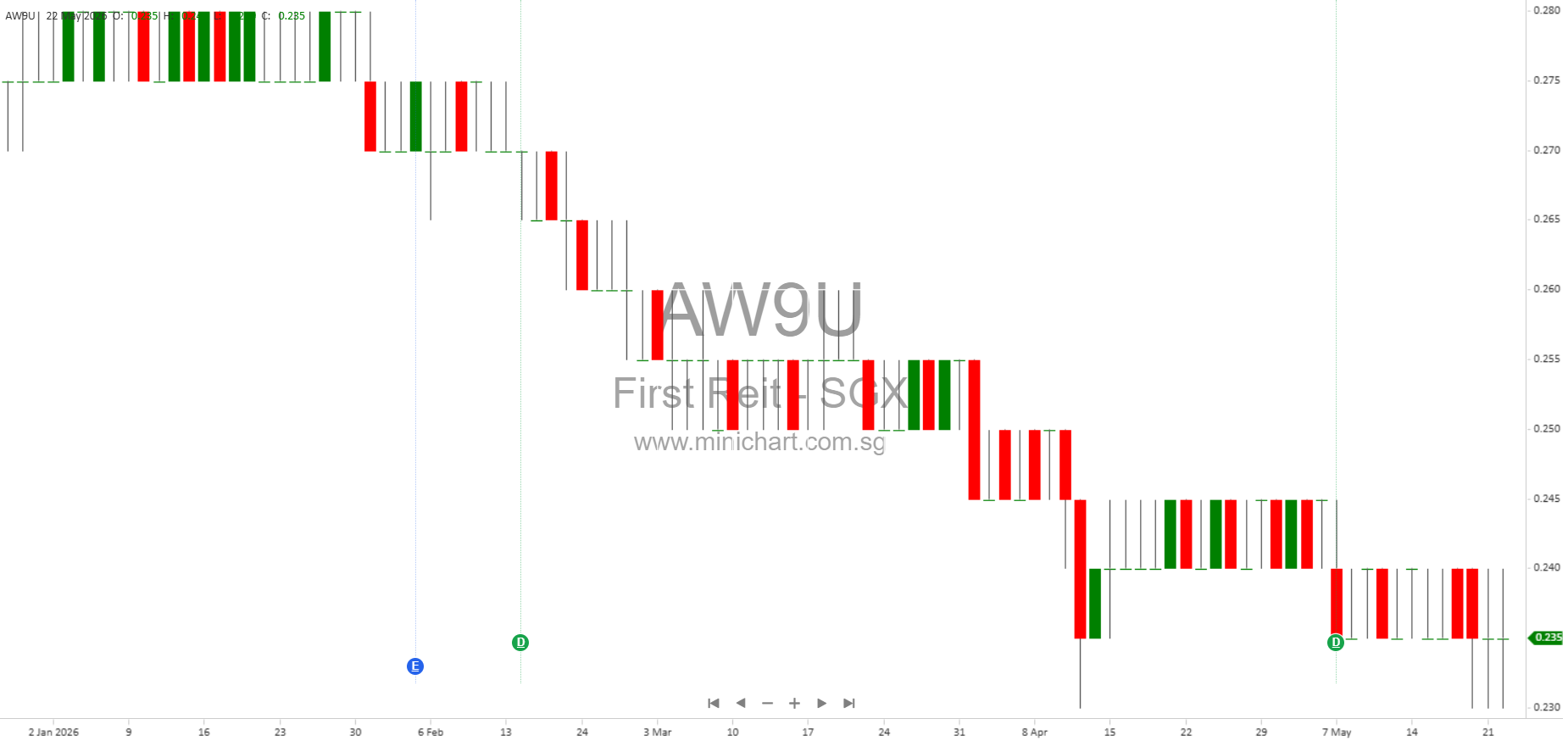
- Distribution per Unit (DPU): 2.17 Singapore cents (-8.1%). The drop was attributed mainly to currency headwinds, particularly the strengthening of SGD against IDR and Japanese Yen (JPY), which reduced translated rental income from overseas assets.
- Gearing Ratio: Increased from 39% to 42.1% due to portfolio devaluation, narrowing debt headroom.
- Debt Refinancing: S\$300 million of debt originally due in May 2026 has been successfully extended by 12 months to May 2027, but the interest rate remains elevated at 4.5% due to the Indonesian asset profile.
- Occupancy: 100% across the portfolio.
3. Key Risks and Shareholder Concerns Raised
- Currency Volatility: The Board and CEO acknowledged that IDR depreciation has negated the benefits of annual rental escalations. Only 3 of 14 Indonesian hospitals are on performance-based rent exceeding the 4.5% escalation.
- Tenant Concentration: PT Metropolis Propertindo Utama (PT MPU) owed S\$6.9 million in overdue payments as of December 2025. S\$1.5 million was recovered in January 2026; the remaining is being negotiated as part of the divestment, with Siloam ultimately responsible if PT MPU defaults.
- Capex Pressures: Average age of Indonesian hospitals is around 20 years, with increasing structural capex required. First REIT is responsible only for structural capex; operational capex falls to the tenant (Siloam).
- Ongoing Forex Hedging: Management hedges 50% of Indonesian income but hedging at the balance sheet level is costly and inefficient.
- Yield Compression in Developed Markets: Post-divestment, expected rental yields for new acquisitions in developed markets are 4%–6%, with borrowing costs in Australia at 5%–6%, and Japan at 2%–2.5%.
4. Shareholder Engagement and Forward Strategy
- Webinars and EGM: Management will hold webinars to address unitholder questions and provide further information ahead of the EGM.
- Acquisition Pipeline: Management has actively reviewed and negotiated for assets in Singapore, Japan, Australia, Europe, and the US, but no deals have been finalised as of the AGM.
- Post-Divestment Plans: First REIT is committed to redeploying capital into developed markets and will continue to update unitholders via SGXNet.
5. Voting Results and Resolutions Passed
- All four resolutions at the AGM were passed with overwhelming majorities, including acceptance of audited accounts, re-appointment of KPMG LLP as auditors, general mandate for issuance of units, and adoption of the unit buy-back mandate.
6. Key Takeaways for Investors
- The proposed Indonesian asset divestments are transformative and could significantly alter First REIT’s risk profile, financials, and future growth trajectory.
- Potential one-off special distributions could arise from the sale proceeds.
- Future DPU and asset yields may decrease in the near term as the trust pivots to lower-yield, but more stable, developed markets.
- Unitholders’ decisions at the EGM will be pivotal for the trust’s future direction and could be share price moving.
Disclaimer
This article is for informational purposes only and does not constitute investment advice or a recommendation to buy or sell any securities. Investors should conduct their own due diligence and consult their financial advisers before making investment decisions. The past performance of First REIT is not indicative of future results. The information herein is based on the minutes and disclosures from First REIT’s 2026 AGM and related announcements, and may be subject to change.
首次房地产投资信托(First REIT)2026年度股东大会重磅:印尼资产大规模剥离、汇率风险与战略转向发达市场
大会要点总结
首次房地产投资信托(First REIT)于2026年4月23日召开第十七届年度股东大会(AGM),会议披露了可能对信托未来方向及单位价格产生重大影响的重要事项。会议在新加坡希尔顿乌节酒店举行,由董事会主席Christopher James Williams主持,主要管理层及投资者均出席。
1. 战略评估与印尼资产剥离方案
- First REIT拟剥离其旗下大部分印尼医院资产。董事会计划在即将召开的特别大会(EGM)上,寻求持有人批准向现有租户PT Siloam International Hospitals Tbk(Siloam)出售8家医院资产,同时向其他关联方出售3项非核心资产。
- 总剥离对价约为4.715亿新元,比独立估值溢价2.1%,但近期印尼盾(IDR)贬值已部分抵消溢价。
- Siloam给予First REIT对剩余6家医院资产的认沽权,First REIT可在规定期限内选择性出售,Siloam无强制购入权。
- 剥离理由:董事会指出,IDR/SGD持续贬值,租赁模式(年递增4.5%)难以抵消汇率损失,且现有医院平均楼龄已达20年,后续维持及资本开支压力大。当前First REIT 资产有四分之三暴露于新兴市场的货币和运营风险。
- 资金用途:剥离所得将强化资产负债表、将杠杆率降至约16.7%,并为进军发达市场(如新加坡、日本、澳大利亚、欧美)预留资金空间。
- 时间表:出售协议已于2026年4月签署,EGM及交割预计在2026年6-8月完成。
- 价格敏感提示:该交易属关联交易,相关方(包括发起人)将被排除投票。结果取决于独立持有人的表态。
2. 财务表现与不利因素
- 2025财年租金及其他收入:1.022亿新元,同比减少1.6%。
- 可分配金额:4,580万新元,同比下降7.1%。
- 每单位分派(DPU):2.17新分,同比下降8.1%。主要由于新元兑印尼盾及日元升值,海外租金折算受损。
- 资产负债率:因资产评估下跌,从39%升至42.1%。
- 债务再融资:原定2026年5月到期的3亿新元债务已获延期12个月至2027年5月,利率仍高达4.5%。
- 整体出租率:100%。
3. 重要风险与投资人关注点
- 汇率波动:董事会及CEO承认,IDR贬值完全抵消了租金递增,仅有3家医院实现高于4.5%的绩效租金。
- 租户集中度:PT Metropolis Propertindo Utama(PT MPU)截至2025年12月拖欠690万新元,2026年1月收回150万新元,剩余部分纳入剥离谈判,若违约由Siloam承担。
- 资本开支压力:印尼医院平均楼龄约20年,结构性资本开支日益增加,First REIT仅负责结构部分,运营部分由Siloam负责。
- 外汇对冲:管理层对印尼收入对冲覆盖50%,但资产负债表整体对冲代价过高且效率低下。
- 发达市场收益率压缩:剥离后新收购资产在发达市场预计租金收益4%-6%,借贷成本澳洲5%-6%,日本2%-2.5%。
4. 投资人沟通与后续战略
- 专题说明会与EGM:管理层将举办网络研讨会,解答投资人关切,为EGM作准备。
- 收购资源管线:管理层已广泛考察新加坡、日本、澳洲、欧美等市场的资产,但截至AGM未有最终成交。
- 剥离后计划:First REIT致力于将资金重新配置到发达市场,并通过SGXNet持续向投资人披露进展。
5. 表决结果与决议事项
- 四项年度决议均高票通过,包括财务报表、KPMG LLP续聘、发行新单位授权及回购授权。
6. 投资人须知
- 印尼资产剥离案标志性转型,将大幅改变First REIT的风险结构、财务表现及未来增长路径。
- 资产出售后有可能进行一次性特别分派。
- 剥离后短期内DPU和收益率或将下降,但风险结构更趋稳健。
- EGM投票结果将决定信托未来方向,或影响单位价格。
免责声明
本文仅供参考,不构成投资建议或买卖证券的推荐。投资者应自行尽职调查,并在做出投资决策前咨询财务顾问。首次房地产投资信托的过往表现不代表未来结果。本文依据First REIT 2026年AGM及相关公告整理,信息如有变更恕不另行通知。