Golden Agri-Resources Ltd (GAR): Q1 2026 Financial Performance Review
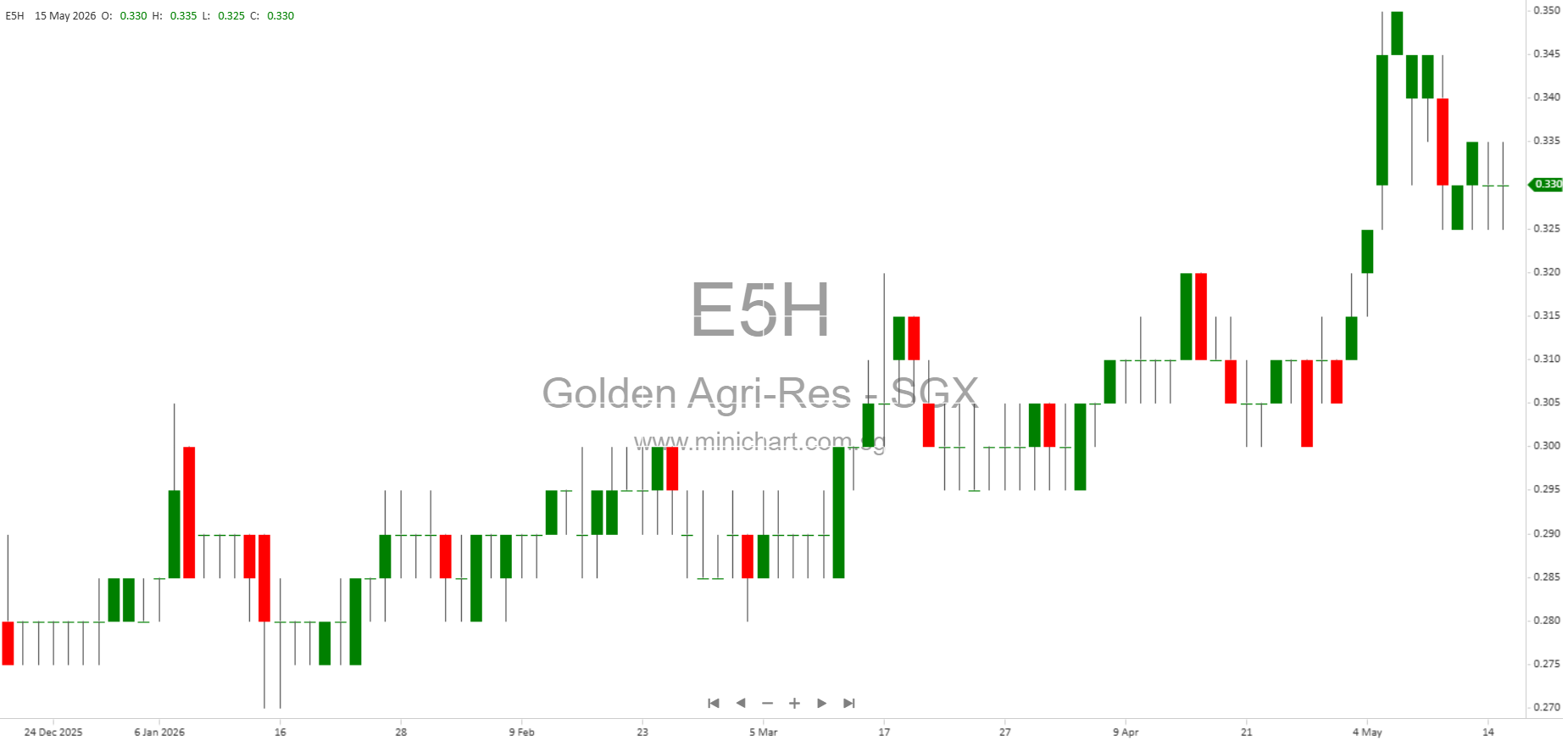
Golden Agri-Resources Ltd (GAR) delivered a mixed set of results for the first quarter of 2026 amid challenging market conditions. The company displayed revenue growth driven by its downstream segment but faced profitability pressures from lower upstream production and softer crude palm oil (CPO) prices.
Key Financial Metrics
| Metric | Q1 2026 (31 Mar 2026) |
Q4 2025 (31 Dec 2025) |
Q1 2025 (31 Mar 2025) |
YoY Change | QoQ Change |
|---|---|---|---|---|---|
| Revenue (US\$ million) | 3,233 | N/A | 3,039 | +6% | N/A |
| Gross Profit (US\$ million) | 450 | N/A | 433 | +4% | N/A |
| EBITDA (US\$ million) | 241 | N/A | 259 | -7% | N/A |
| Underlying Profit (US\$ million) | 50 | N/A | 89 | -43% | N/A |
| Net Profit (US\$ million) | 44 | N/A | 55 | -20% | N/A |
| EPS | Not disclosed | N/A | Not disclosed | N/A | N/A |
| Dividend | Not disclosed | N/A | Not disclosed | N/A | N/A |
Operational Update
- Upstream palm product output (CPO and PK) fell by 10% YoY, primarily due to replanting preparations and a festive holiday in Indonesia, impacting harvest volume.
- Downstream sales volume increased by 2% YoY, reflecting GAR’s efforts to expand its merchandising activity and product portfolio in the face of softer CPO prices.
- Harvested fruits dropped 11% YoY to 1.92 million tonnes.
Balance Sheet and Financial Position
- Total assets increased 2% QoQ to US\$10,908 million.
- Net debt rose slightly to US\$298 million, with a healthy net debt/EBITDA ratio of 0.24x, and a gearing ratio of 0.55x, reflecting a solid balance sheet.
- Current ratio improved to 1.46x, up from 1.40x at end-2025.
Industry and Market Conditions
- The average CPO market price (FOB Indonesia) declined 2% YoY to US\$1,136 per tonne.
- Global energy shortages have pushed up diesel prices, leading to higher biofuel mandates and increased demand for vegetable oils.
- Palm oil supply is constrained by ageing plantations, replanting, El Niño weather effects, and higher input prices, supporting elevated CPO prices in the near term.
Operational Risks and Mitigation
- GAR is alert to fire risks due to a predicted stronger dry season (El Niño), deploying advanced fire detection technology and community engagement programs to manage risks.
- No major legal disputes, asset revaluation, or unusual transactions were disclosed.
Chairman’s Statement and Management Tone
The report adopts a cautious but proactive tone, emphasizing the company’s resilience and adaptability:
“With the current uncertain global situation, the Company will remain proactive and agile. We will continue to closely monitor market developments, manage supply chain disruptions, and mitigate input cost volatility, ensuring the business remains resilient.”
Conclusion and Investment Recommendations
Overall Assessment: GAR’s Q1 2026 results demonstrate revenue resilience despite adverse market conditions. The company’s downstream expansion has partly mitigated lower upstream output and CPO prices. However, profitability has come under pressure, with underlying profit and net profit down sharply YoY. The balance sheet remains robust and the company is taking prudent steps to address operational and climatic risks.
-
If you are currently holding the stock:
Stay invested but monitor closely. GAR’s fundamentals are stable, and demand tailwinds from biofuel mandates and constrained supply could support CPO prices. However, ongoing profitability pressure and operational risks warrant a cautious stance. -
If you are not currently holding the stock:
Consider a wait-and-see approach. Although the company is operationally sound and well-capitalized, near-term uncertainties around upstream recovery and cost pressures suggest it may be prudent to wait for signs of margin improvement or a more attractive entry point.
Disclaimer: The above is not investment advice. Please conduct your own research or consult with a qualified adviser before making investment decisions. This analysis is solely based on disclosed company information for Q1 2026 and does not account for subsequent developments.