Crown Reserve Acquisition Corp. I Q1 2026 Financial Report: Key Highlights for Investors
Overview
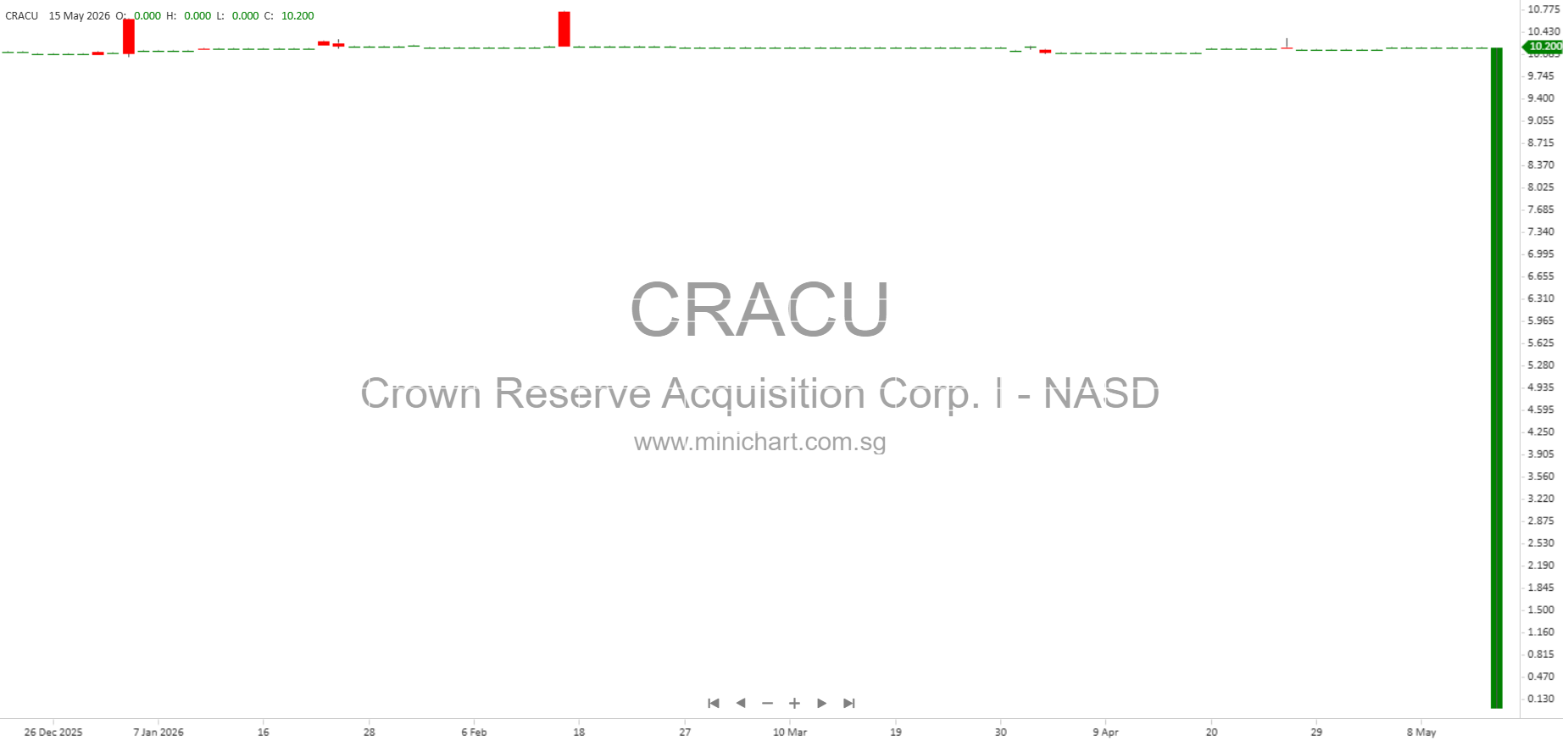
Crown Reserve Acquisition Corp. I (“CRAC”, Nasdaq: CRACU, CRAC, CRACW, CRACR) has released its unaudited financial results for the first quarter ended March 31, 2026. The company is a Cayman Islands-exempted blank check company formed to effect a merger, stock exchange, asset acquisition, or similar business combination.
- Form 10-Q filed May 14, 2026, covers operations through March 31, 2026.
- Currently, the company is classified as a shell company and has not yet completed a business combination.
Key Financial Highlights
- Net Loss: CRAC reported a net loss of \$263,493 for the quarter, allocated as \$210,794 to Class A ordinary shares and \$52,699 to Class B ordinary shares.
- Cash Position: The company reported total assets of \$173.9 million, primarily held as cash and marketable securities in its trust account.
- Class A Shares Outstanding: As of May 14, 2026, there were 18,056,250 Class A ordinary shares (including 17,250,000 subject to possible redemption and 806,250 not subject to redemption), and 4,312,500 Class B ordinary shares outstanding.
- Shareholders’ Deficit: The company reports a shareholders’ deficit of \$3,160,885 as of March 31, 2026.
- Marketable Securities Income: The trust account generated \$1,524,741 in dividends during the quarter.
Potential Price-Sensitive Developments and Shareholder Considerations
1. Status as a Shell Company
CRAC remains a shell company with no substantial operations. The company’s value is highly dependent on its ability to successfully complete a business combination. Until such an event occurs, the share price may be sensitive to speculation and developments regarding potential targets.
2. Business Combination Progress
The report discloses that the company is progressing on a previously announced Business Combination Agreement with Carvix. No definitive completion timelines or further material events have been announced for Q1 2026. Failure to complete a business combination within the prescribed time frame may trigger mandatory redemptions of public shares and could materially impact shareholder value.
3. Material Weakness in Internal Controls
Management reiterates the existence of a material weakness in internal control over financial reporting—specifically in the initial classification and valuation of warrant liabilities and public rights. Although remediation efforts are ongoing, this issue has not been fully resolved as of March 31, 2026. This could increase the risk of future restatements or financial reporting errors, potentially impacting investor confidence and share value.
4. Classification of Shares and Redemption Risk
All 17,250,000 Class A shares sold in the IPO are classified as temporary equity and are subject to possible redemption. The company is required to accrete the carrying value of these shares to their redemption value. If a business combination is not completed, or if a significant number of shares are redeemed, remaining investors could face a material impact on returns.
5. Deferred Underwriting Commissions
The company is obligated to pay Polaris a deferred underwriting commission of \$300,000 from the trust account, which is only payable upon completing a business combination. This could impact the available funds for post-combination operations or redemptions.
6. Emerging Growth Company Status
CRAC is taking advantage of the reduced reporting and compliance obligations afforded to “emerging growth companies.” This includes reduced disclosure regarding executive compensation and exemption from auditor attestation of internal controls. While this may reduce compliance costs, it also means less transparency for investors.
7. Segment Reporting
For the reporting period, CRAC had a single operating segment, with the Chief Financial Officer serving as the chief operating decision maker. No revenue-generating operations have commenced.
8. Legal Proceedings
The company is not currently a party to any material legal proceedings, reducing litigation risk at this time.
Other Noteworthy Items
- No unregistered sales of equity securities during the quarter.
- No defaults on senior securities and no mine safety disclosures applicable.
- No directors or officers adopted, modified, or terminated Rule 10b5-1 trading arrangements during the quarter.
Risks and Forward-Looking Statements
The company emphasizes that forward-looking statements, including those concerning the business combination process and financial performance, are subject to substantial risks. Shareholders should carefully review the risk factors disclosed in the 2025 Annual Report, particularly as they relate to the success or failure of completing a business combination, the potential for share redemptions, and ongoing internal control remediation efforts.
Conclusion
For investors, the most price-sensitive issues are the ongoing material weakness in internal controls, the company’s status as a shell company pending a business combination, and the redemption risk associated with Class A shares. Any news regarding the completion, modification, or cancellation of the proposed Carvix business combination, or the emergence of new internal control findings, could significantly move the share price.
Investors should monitor future filings for updates on the business combination process, internal control remediation, and redemption risks.
Disclaimer: This article is for informational purposes only and does not constitute investment advice. Shareholders and potential investors should consult the company’s filings with the SEC and their own advisors before making investment decisions. The analysis herein is based on publicly available information as of the reporting date and may not reflect subsequent events.