D. Boral Acquisition I Corp. Q1 2026 Financial Report: Key Takeaways for Investors
Overview
D. Boral Acquisition I Corp. (trading on Nasdaq as “DBCAU” and “DBCAW”) has released its unaudited financial report for the quarter ended March 31, 2026. As a Special Purpose Acquisition Company (SPAC), the firm has not yet engaged in commercial operations or generated revenues, but its financial statements and disclosures contain several key developments and important information for shareholders and potential investors.
Key Financial Highlights
- Total Assets: \$289.67 million as of March 31, 2026, a significant increase from \$185,954 at December 31, 2025, reflecting the closing of the initial public offering and related transactions.
- Cash Deposited into Trust: \$287.5 million placed into the trust account following the IPO.
- Shareholders’ Equity: Positive equity of \$734,954 as of March 31, 2026, reversing a deficit from year-end 2025.
- Net Income: For Q1 2026, net income was \$1,247,160, with basic and diluted earnings per share of \$0.04 for both redeemable and non-redeemable shares.
- Remeasurement of Class A shares subject to possible redemption: \$11.3 million adjustment, a significant non-cash item reflecting the change in redemption value.
- Offering Costs: \$6.0 million charged to shares subject to redemption, and \$83,378 to additional paid-in capital.
Corporate and Capital Structure Developments
- Initial Public Offering: The company sold 28,750,000 units (including 3,750,000 from over-allotment) at \$10 per unit. Each unit comprises one Class A ordinary share and half a redeemable warrant. Simultaneously, the sponsor purchased 200,000 private placement units at \$10 each.
- Underwriter Compensation: Underwriters received a \$100,000 cash discount plus 2 million Class A shares for no cash consideration.
- Warrants: Each whole warrant entitles the holder to purchase one Class A share at \$11.50. Warrants become exercisable later and may be redeemed by the company if certain price and trading conditions are met (\$18.00 per share for 10 of 20 trading days).
- Founder Shares: On April 3, 2025, the sponsor received 3,593,750 founder shares, which may be subject to forfeiture depending on underwriter actions, but none were forfeited following the full exercise of the over-allotment.
- Redemption Feature: Public shareholders can redeem their shares in connection with business combinations or company liquidation. Class A shares subject to redemption are classified outside of permanent equity and adjusted to redemption value each period.
- Preferred Shares: 5 million authorized, none issued.
Significant Accounting and SPAC-Specific Disclosures
- The company is an emerging growth company under the JOBS Act, allowing it to take advantage of reduced disclosure and compliance obligations, including deferring compliance with new or revised financial accounting standards until such standards apply to private companies.
- The entire IPO proceeds (less certain expenses) are held in a U.S. trust account, invested in government securities or money market funds until a business combination or liquidation.
- No off-balance sheet arrangements or undisclosed contractual obligations as of March 31, 2026.
- No material changes in internal controls over financial reporting during the quarter, and the company did not identify any litigation or unresolved SEC staff comments at the time of the report.
- The company is a shell company (as defined in Rule 12b-2) and has not yet identified a target business for acquisition.
- There are forward-looking statements in the report regarding the company’s ability to consummate a business combination, obtain additional financing, and other risks—which may impact future share values.
- No unregistered sales of equity securities or defaults upon senior securities occurred in the quarter.
Risks and Potential Price-Sensitive Information
- SPAC Timeline and Redemption Risk: As a SPAC, if no business combination is completed within the required timeframe, funds in the trust account will be returned to public shareholders, and the company will be liquidated. This is a critical factor for share value.
- High Cash Position and No Revenue: The company’s value is currently based on cash held in trust and the potential for a future merger or acquisition. Any signal of a pending combination could move the share price significantly.
- Warrant Structure: Warrants only become valuable if a business combination occurs and the share price exceeds \$11.50 (and potentially \$18.00 for certain redemption scenarios). If no combination occurs, warrants could become worthless.
- Interest Income: The company earned \$1.37 million in interest on trust account holdings, offsetting some operating expenses, but this income will diminish if interest rates fall or the trust is liquidated.
- Market Risks: The report highlights adverse impacts from external events (geopolitical unrest, pandemics, market volatility) that could delay or prevent a business combination and affect share value.
- Emerging Growth Company Exemptions: Reduced reporting and compliance requirements may affect transparency compared to other public companies.
- Controls and Procedures: Management concluded that disclosure controls and procedures were not effective at a reasonable assurance level as of the quarter’s end. While no material changes in internal controls were observed, this may raise concerns for some investors about financial reporting reliability.
Conclusion and Investor Considerations
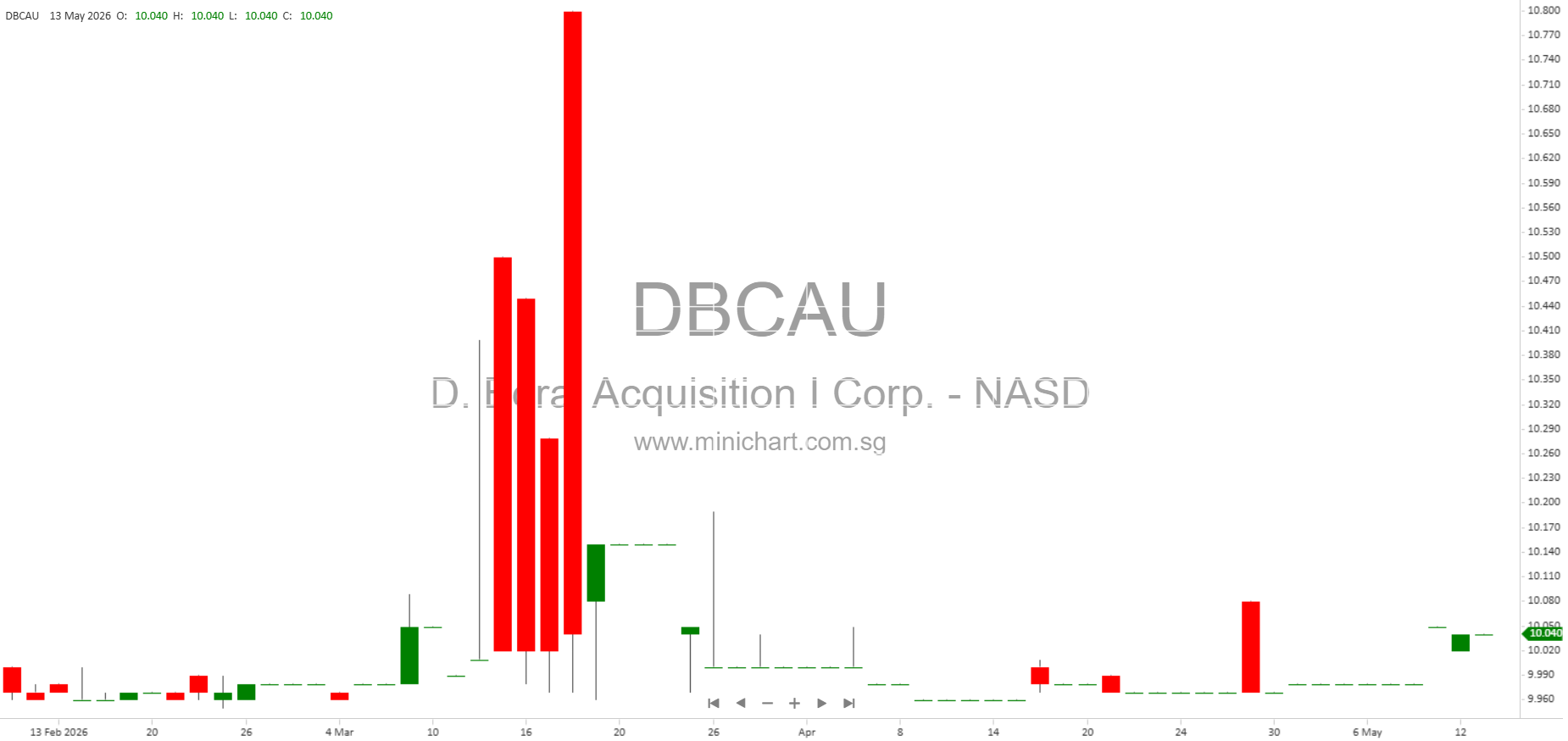
D. Boral Acquisition I Corp. remains in an early-stage, pre-combination phase typical of SPACs. The company is well-capitalized with nearly \$290 million in trust, but has not yet announced a business combination. Shares currently trade primarily on the basis of the trust value, interest income, and market anticipation of a potential merger or acquisition. The outcome of these strategic actions, and any news regarding a target business, will be critical catalysts for share price movement.
Investors should closely monitor updates regarding the search for a business combination, redemption deadlines, and any changes in market or regulatory conditions affecting SPACs. The warrant structure and the company’s timeline to complete a merger are also key variables that could materially impact share values.
Disclaimer
This article is for informational purposes only and does not constitute investment advice or a recommendation to buy or sell securities. All information is based on the company’s public filings and is subject to change. Investors should conduct their own due diligence and consult with financial advisors before making investment decisions. The author and publisher accept no liability for any loss arising from reliance on this information.