Arcadia Biosciences, Inc. 10-K/A Amendment: Key Investor Insights
Overview
Arcadia Biosciences, Inc. (“Arcadia” or “the Company”) has filed Amendment No. 1 to its Annual Report on Form 10-K for the fiscal year ended December 31, 2025. This amendment primarily serves to provide information required by Part III of Form 10-K, which was previously omitted in reliance on General Instruction G(3) and was not included in the definitive proxy statement. No other information in the original filing has been updated, and no financial statements are included in this amendment. New Sarbanes-Oxley certifications are filed, but paragraphs related to internal controls are omitted as permitted [[11]].
Key Points for Investors
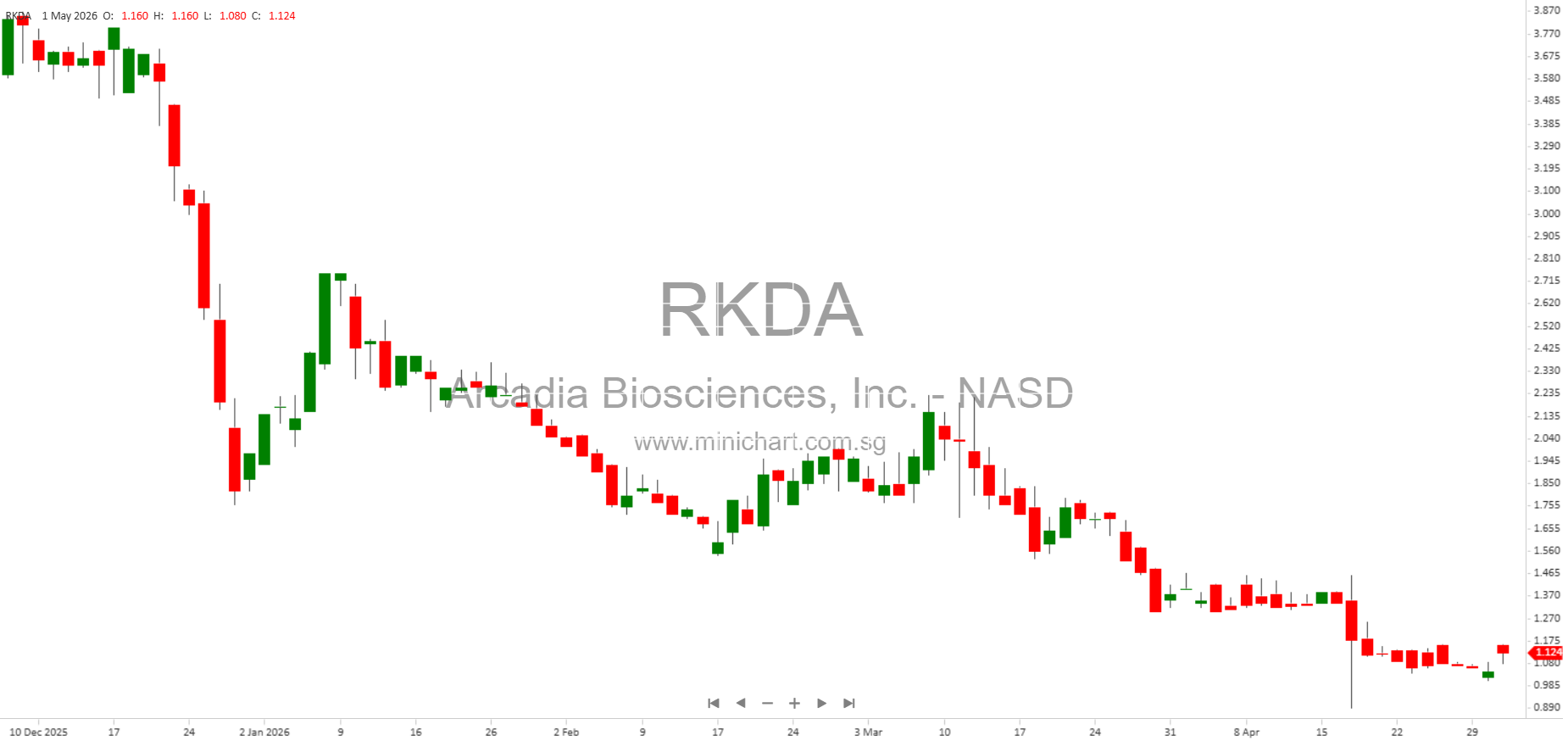
- NASDAQ Listing & Public Float: Arcadia remains listed on the NASDAQ Capital Market under the symbol RKDA. As of June 30, 2025, the aggregate market value of voting and non-voting common equity held by non-affiliates was \$5,740,919 (based on a closing price of \$4.31 per share). As of April 23, 2026, there were 2,056,884 shares of common stock outstanding with a par value of \$0.00 per share [[10]].
- Shareholder and Governance Structure: The report details the directors and executive officers. The President and CEO is currently serving as Interim Chief Financial Officer. The board includes experienced directors, with Mr. Waller, Ms. Shackelford Murray, and Ms. Yoder forming the audit committee. Notably, Mr. Waller and Ms. Shackelford Murray are designated “audit committee financial experts” under SEC rules, which should reassure investors about financial oversight [[14], [20]].
- Audit Committee Responsibilities: The audit committee’s mandates include:
- Selecting the independent public accounting firm
- Ensuring independence and performance of auditors
- Reviewing audit scope and results
- Risk assessment and management policies review
- Approval of all audit and permissible non-audit services
- Procedures for anonymous employee concerns
- Reviewing related party transactions
These are standard governance practices but notable for their thoroughness [[21]].
- Insider Trading Policy: Arcadia has adopted an insider trading policy covering officers, directors, employees, and other covered persons. The policy is described as reasonably designed to ensure compliance with U.S. insider trading laws and NASDAQ listing standards. A copy is filed as Exhibit 19.1, which may be relevant if investors are concerned about corporate governance and trading ethics [[22]].
- Section 16(a) Compliance: The company asserts that, except as described, all required filings by officers and directors under Section 16 of the Exchange Act were timely filed in 2025. No major delinquencies are reported, supporting strong compliance [[22]].
- Executive Compensation:
- President and CEO (also Interim CFO) received a salary of \$260,000 in 2025.
- Other executives’ compensation ranges from \$178,424 (COO) to \$260,000 (CEO/CFO).
- Stock options for executives vest over multi-year periods, with clear vesting schedules disclosed.
- Non-employee directors received cash retainers, meeting attendance fees, and special committee fees related to the company’s strategic review process (each received \$6,000 for special committee work).
- Option awards to directors ranged from \$46,000 to \$65,500 per individual.
These compensation figures are consistent with small-cap companies. However, the dual role of CEO/CFO may raise governance questions for some investors [[24], [25], [28], [30], [40], [52], [53], [54], [55], [56], [57], [58], [59], [60], [61]].
- Corporate Governance Policies:
- Code of Business Conduct and Ethics: Available on the company’s website; any substantive amendments or waivers will be disclosed publicly.
- Director Nomination Procedures: No material changes from prior years; procedures are described in the November 2025 proxy statement.
These policies are standard but their explicit inclusion may be relevant for governance-focused investors [[21]].
- Financial Reporting & Controls:
- Arcadia is a “non-accelerated filer” and “smaller reporting company,” which affects reporting requirements and may impact investor perceptions of risk and transparency.
- The company confirms that it has filed all required reports, including interactive data files, over the past 12 months.
- No errors or restatements requiring recovery analysis of incentive compensation are reported.
These disclosures suggest stable compliance but lack newsworthy financial changes [[8], [9]].
- Shell Company Status: Arcadia confirms it is not a shell company, supporting ongoing business operations and value creation [[9]].
Potentially Price-Sensitive or Material Information
- Strategic Review: The mention of a special committee and related director fees for the company’s “strategic review process” suggests Arcadia may be considering significant business changes, transactions, or restructuring. While no explicit outcomes are reported, this could be highly price-sensitive information for investors, as strategic reviews often precede M&A, divestitures, or major operational shifts.
- Governance Structure: The CEO also serving as interim CFO may impact investor confidence regarding financial oversight and succession planning. This could be price-sensitive if investors perceive increased risk or instability.
- Low Public Float: With a public float of just \$5.74 million and only 2 million shares outstanding, Arcadia’s shares may be thinly traded and subject to volatility. This is material for investors considering liquidity and risk.
- No Financial Updates: The amendment does not include new financial statements or updates, meaning investors should not expect new results or guidance. The absence of fresh financials may limit short-term price movement unless the strategic review results in future announcements.
Conclusion & Investor Takeaways
- Arcadia’s 10-K/A Amendment is largely administrative, providing governance, compensation, and compliance details omitted from the original 10-K.
- The most notable news is the existence of a strategic review process, with directors paid for their involvement. This may signal future corporate action.
- The dual role of CEO/CFO and small public float are potential risk factors for investors.
- No material changes in governance policies, director nomination, or ethics codes.
- No financial statement updates or restatements. No shell company status.
Disclaimer
The above article is for informational purposes only and does not constitute investment advice. Investors should conduct their own due diligence and consult an investment professional before making any investment decisions. The information is based on publicly available filings as of April 30, 2026, and may be subject to change.