Veritone, Inc. Releases 2025 10-K/A: Key Updates and Shareholder Considerations
Veritone, Inc. (Nasdaq: VERI) has filed its Amendment No. 1 to the Annual Report on Form 10-K (10-K/A) for the fiscal year ended December 31, 2025. This amendment fills in previously omitted Part III information, covering directors, executive officers, corporate governance, executive compensation, related party transactions, and principal accountant fees. Here are the most significant findings and issues for investors and shareholders to consider.
Key Financial Highlights and Shareholder Updates
-
Public Float and Outstanding Shares:
- As of June 30, 2025, Veritone’s public float (market value of non-affiliate shares) was approximately \$55.1 million, based on Nasdaq’s last reported sale price.
- Common shares outstanding as of April 22, 2026: 92,953,666.
-
Reporting Status and Compliance:
- Veritone confirms it is a non-accelerated filer, a smaller reporting company, and not an emerging growth company.
- The company has filed all reports required under the Securities Exchange Act during the prior 12 months and has submitted all required Interactive Data Files.
- There have been no error corrections or restatements in the financial statements reported.
-
Corporate Governance:
- Veritone’s Board comprises experienced executives with relevant industry, governance, and financial expertise. The majority of the Board and all committee members are classified as independent directors.
- Key committees include Audit, Compensation, and Corporate Governance/Nominating, each with defined oversight responsibilities over risk, compensation, governance, and financial reporting.
-
Internal Controls and Risk Factors:
- The company acknowledges material weaknesses in internal controls over financial reporting and has disclosed plans for remediation.
- Risks highlighted include ongoing concerns about liquidity, reliance on key customers, macroeconomic and geopolitical uncertainties, the scheduled maturity of \$1.75% convertible notes in November 2026, and the need for additional funding to support operations and potential note repayment or refinancing.
- Cybersecurity, technology reliability, and compliance risks are underscored, with regular Board and committee oversight of these areas.
Executive Compensation and Incentives
-
Compensation Structure:
- As a smaller reporting company, Veritone follows scaled SEC disclosure requirements.
- Executive compensation is composed of base salaries, cash incentives, and equity awards, with an emphasis on aligning management and shareholder interests through long-term value creation.
- The Compensation Committee, made up entirely of independent directors, oversees all executive and director compensation plans.
-
2025 Equity Awards:
- Equity-based incentives, including stock options and RSUs (restricted stock units), were granted with time-based and/or performance-based vesting conditions.
- Performance-based RSUs awarded in 2025 became eligible to vest upon meeting revenue and non-GAAP net income (loss) targets, and were vested in full in March 2026.
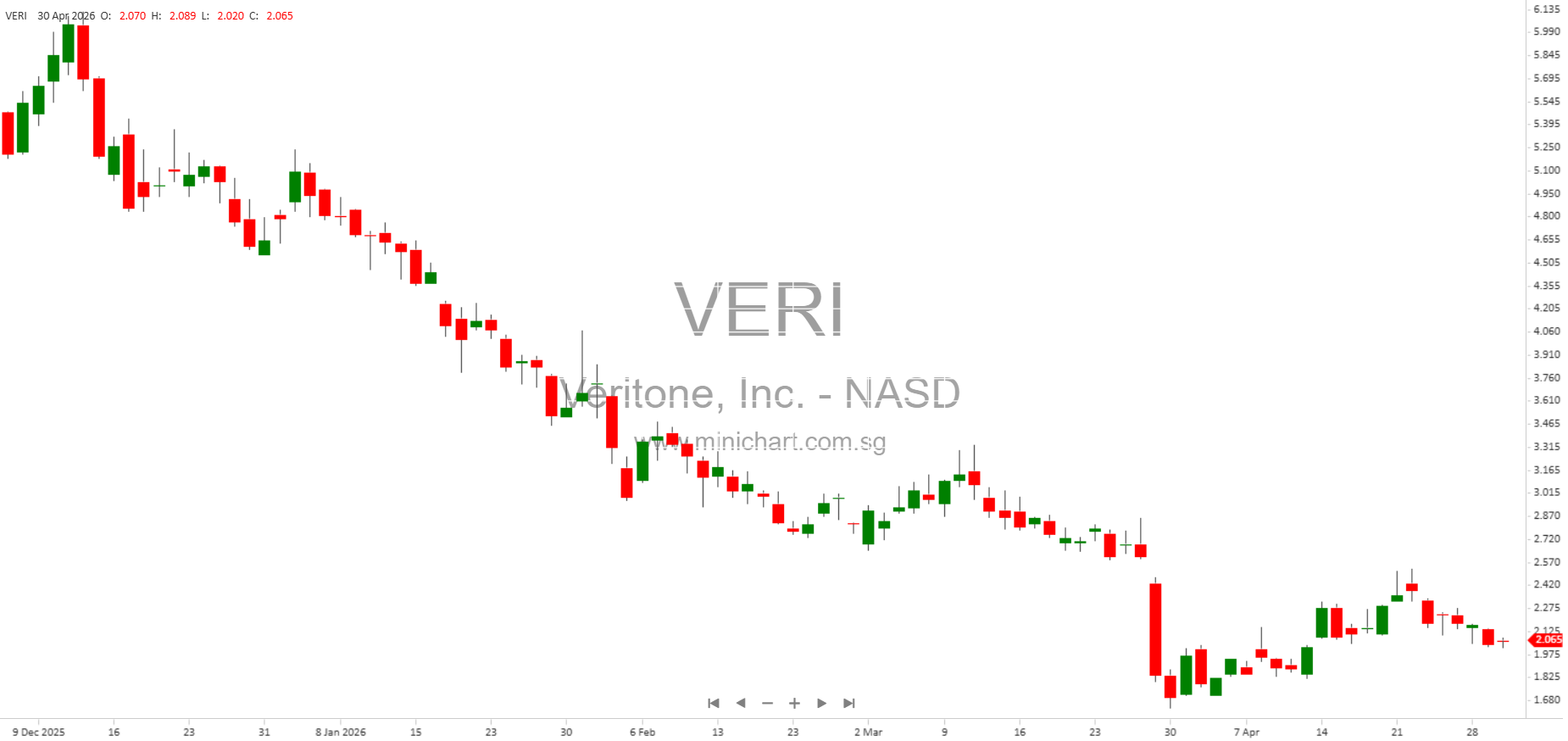
- The closing price used for RSU valuations at year-end 2025 was \$4.65 per share.
-
Director and Executive Stock Ownership Guidelines:
- As of March 2023, the Board adopted new stock ownership guidelines: the CEO is expected to own shares worth at least five times his annual salary, other executive officers one times salary, and directors three times their annual retainer. The first measurement date is March 2028.
-
Clawback Policy:
- A new clawback policy was adopted in November 2023, compliant with Section 10D of the Exchange Act. This allows for recovery of incentive-based compensation in the event of a financial restatement due to material noncompliance with reporting requirements.
-
Hedging Policy:
- Directors, officers, and employees are strongly discouraged from entering hedging or monetization transactions, such as zero-cost collars and forward sale contracts, without prior approval from the Compliance Officer.
Corporate Ethics, Governance, and Compliance
- Veritone maintains a Code of Business Conduct and Ethics applicable to all directors, officers, and employees. This code is available on the company’s investor website and covers prompt disclosure of amendments or waivers as required by SEC and Nasdaq.
- The company has an insider trading policy and procedures to ensure compliance with all insider trading laws and regulations.
- Indemnification Agreements: The company maintains indemnification arrangements with directors and executive officers to protect against personal liability arising from their service.
- Section 16(a) Compliance: All directors, executive officers, and greater-than-10% shareholders complied with SEC reporting requirements in 2025, except for two late Form 4 filings by Ryan Steelberg and Francisco Morales.
Potentially Price-Sensitive and Shareholder-Relevant Information
-
Liquidity and Going Concern:
- Veritone’s continued operation depends on its ability to manage liquidity, secure additional funding, and address the upcoming maturity of its \$1.75% convertible notes due November 2026. Failure to refinance or repay these notes could have a material adverse effect on the company’s financial position and share value.
-
Internal Control Weaknesses:
- Material weaknesses in internal controls over financial reporting present a risk. While remediation plans are in place, any future control failures could impact the accuracy of financial statements and investor confidence.
-
Concentration Risk:
- The company relies on a limited number of key customers for a significant portion of revenue, exposing it to risks of revenue fluctuation if any key customer reduces usage or terminates its relationship.
-
Macroeconomic and Geopolitical Risks:
- Management highlights the ongoing threats from international conflicts, inflation, high interest rates, trade tensions, and the potential for recession, all of which could have material impacts on Veritone’s business and stock price.
-
Cybersecurity and Technology Risk:
- The Board maintains oversight of IT and cybersecurity policies. Any significant breach or technology failure could impact operations and investor perception.
-
Clawback and Executive Compensation:
- Adoption of a clawback policy provides additional governance, but also signals a heightened focus on financial accuracy and accountability at the executive level.
Conclusion
Veritone’s 2025 10-K/A Amendment provides a comprehensive update on the company’s governance, compensation, and risk landscape. Shareholders should closely monitor developments related to liquidity, the maturity of convertible notes, internal control remediation, and ongoing macroeconomic risks. These areas have the potential to significantly affect Veritone’s financial health and share value going forward.
Disclaimer: This article is for informational purposes only and does not constitute investment advice. Investors should conduct their own due diligence and consult with professional advisors before making investment decisions. The information provided is based solely on the latest available SEC filings and is subject to change without notice.