Grace Therapeutics, Inc. (GRCE) Corporate Update: Key Developments and Investor Insights (April 2026)
Executive Summary
Grace Therapeutics, Inc. (GRCE) has issued a comprehensive corporate presentation in April 2026, detailing significant advancements and challenges related to its clinical pipeline, primarily focusing on GTx-104, a novel intravenous nimodipine candidate designed to address critical unmet needs in aneurysmal subarachnoid hemorrhage (aSAH).
Key Highlights for Investors
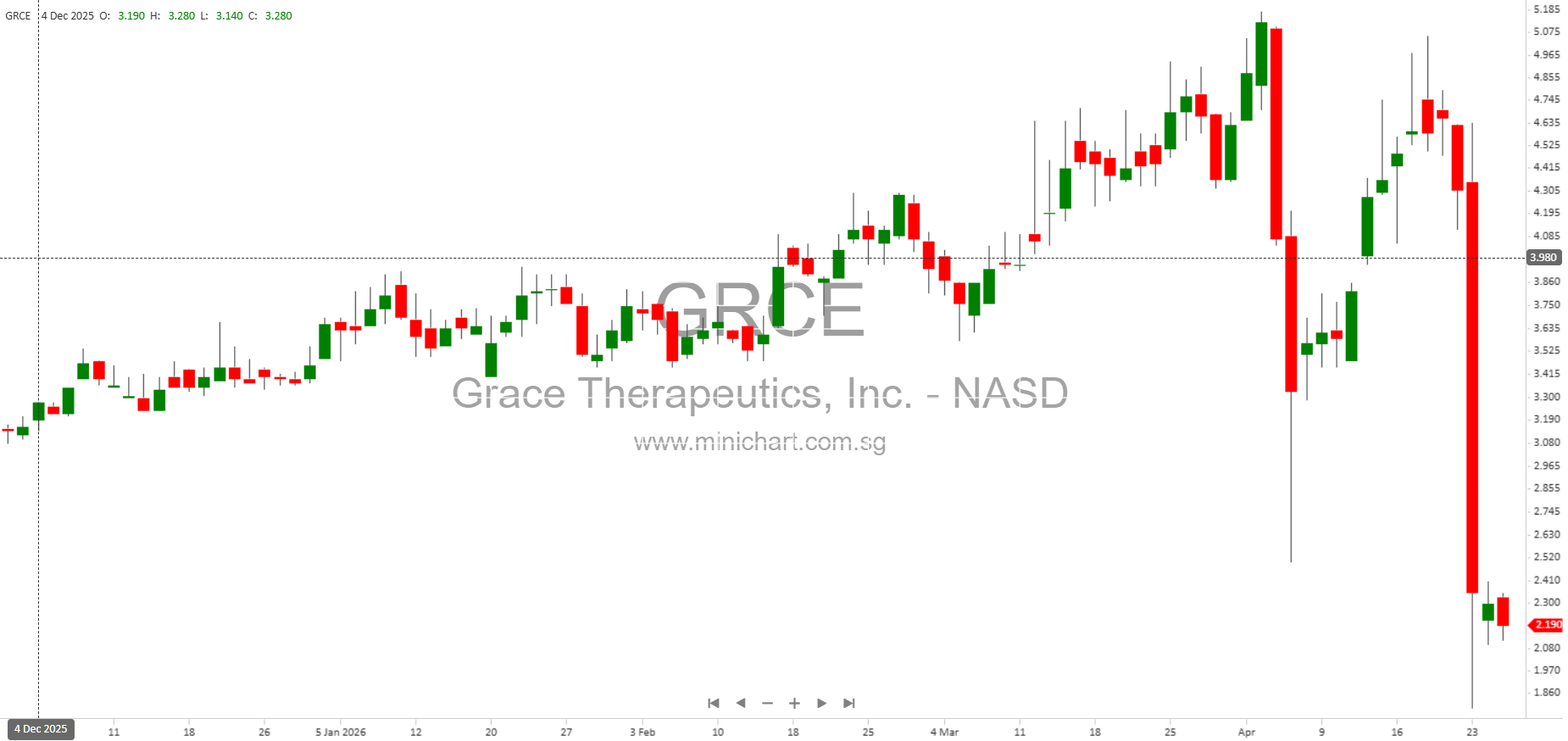
- FDA Complete Response Letter (CRL) Received for GTx-104: The FDA issued a CRL in April 2026, primarily due to issues related to chemistry, manufacturing, and controls (CMC) data completeness and manufacturing readiness. Importantly, no clinical deficiencies were identified, and the company expects a clear path to resolution following FDA alignment at a planned Type A meeting.
-
GTx-104: Clinical and Market Potential
- Pivotal Phase 3 STRIVE-ON safety trial met its primary endpoint, demonstrating a 19% reduction in clinically significant hypotension events and a 29% relative increase in good recovery (modified Rankin Score at day 90) compared to oral nimodipine.
- 54% of patients on GTx-104 achieved over 95% prescribed dose intensity versus only 8% for oral nimodipine.
- Pharmacoeconomic benefits included fewer ICU days, less time on mechanical ventilation, and a 48% reduction in ICU readmission rates.
- Safety profile was comparable to oral nimodipine, with no treatment-related deaths.
- Orphan Drug Status and IP Portfolio: GTx-104 has orphan drug designation, securing 7 years of market exclusivity upon approval. The company holds a robust patent portfolio with multiple US and international patents, with the earliest expiry in 2037 and the newest in 2043.
- Commercialization Readiness: The aSAH market is highly concentrated, allowing efficient commercialization with a lean sales force. Approximately 80% of patients are treated in 880 centers, and only 15 sales representatives could reach 50% of the US aSAH market.
- Financial Position and Potential Dilution: As of December 31, 2025, Grace Therapeutics reported \$18.7 million in cash and equivalents, no debt, and 15.5 million shares outstanding (23 million fully diluted). There are outstanding warrants exercisable for \$15 million upon FDA approval of GTx-104, which could provide substantial non-dilutive funding but also increase the share count materially.
- Other Pipeline Programs: The company has deprioritized GTx-102 (oral spray for Ataxia-Telangiectasia) and GTx-101 (topical bupivacaine spray for postherpetic neuralgia), both of which have met Phase 1 endpoints but are not current focus areas due to the prioritization of GTx-104.
Potential Share Price Drivers
- FDA Resubmission and Approval Timeline: The outcome and timeline of the resubmission for GTx-104 following the CRL is critical. If the company successfully addresses the CMC and manufacturing issues, approval could unlock significant value given GTx-104’s clinical and commercial advantages.
- Market Opportunity: With up to 70,000 US hospital-treated aSAH patients annually and high hospitalization charges (up to \$530k per patient), GTx-104 could command significant pricing power and reimbursement.
- Warrant Exercise and Cash Infusion: The potential exercise of \$15 million in warrants upon FDA approval would strengthen the balance sheet but also increase dilution.
- Patent Life and Exclusivity: Multi-layered IP and orphan exclusivity could sustain revenues and protect market share, supporting long-term valuation.
Risks and Considerations
- Regulatory Uncertainties: The main risks relate to regulatory timelines, successful remediation of FDA CMC/manufacturing concerns, and potential need for additional data or facility inspections.
- Manufacturing Readiness: The company is addressing cGMP compliance issues at its CDMO and may need to secure alternative facilities or pass reinspection prior to approval.
- Competition and Adoption: Although GTx-104 offers clear advantages over oral nimodipine, market uptake will depend on clinical adoption, formulary inclusion, and hospital purchasing decisions.
Management and Governance
Grace Therapeutics is led by an experienced team, including VP Clinical Operations Carrie D’Andrea, Chief Medical Officer Dr. Loch Macdonald, and Chief Executive Officer Prashant Kohli. The company also benefits from a scientific advisory board with deep expertise in aSAH clinical care and drug development.
Conclusion
Grace Therapeutics is at a pivotal stage as it seeks to resolve FDA CMC and manufacturing issues to unlock the value of GTx-104, which has demonstrated meaningful clinical, safety, and pharmacoeconomic benefits over the current standard of care. The next 6–12 months and the outcome of the FDA resubmission process are likely to be highly price-sensitive for shareholders. Investors should monitor regulatory developments, cash runway, and potential dilution from warrant exercises closely.
Disclaimer: This article is for informational purposes only and does not constitute investment advice. Investors should conduct their own due diligence and consult with their financial advisor before making investment decisions. The information is based on company disclosures as of April 2026 and may become outdated. Forward-looking statements are subject to risks and uncertainties as detailed in the company’s filings.