Weibo Corporation Annual Report 2025: Key Highlights and Investor Considerations
Introduction
Weibo Corporation (Stock Code: 9898; Nasdaq: WB), a leading social media platform serving China and global Chinese communities, has released its audited annual results for the fiscal year ended December 31, 2025. The report, published in compliance with both the Hong Kong Stock Exchange and SEC requirements, presents significant operational, financial, and regulatory updates that are highly relevant to shareholders and potential investors.
Key Financial and Operational Highlights
- Ordinary Shares Outstanding: As of December 31, 2025, there were 245,549,858 ordinary shares outstanding, comprising 157,727,834 Class A ordinary shares and 87,822,024 Class B ordinary shares.
- Listing Status: Weibo’s Class A ordinary shares are listed on the Hong Kong Stock Exchange (HKEX: 9898) and its ADSs (each representing one Class A share) are listed on Nasdaq (WB).
- Financial Results and Seasonality: The company notes that advertising revenue continues to experience significant seasonality, with the first quarter typically being the slowest due to the Lunar New Year. Investors should anticipate quarterly volatility as a result.
- Long-Term Investments: As of year-end 2025, Weibo held US\$1,120.1 million in private company investments. In 2025, it recognized a net gain of US\$21.3 million from fair value changes, but incurred impairment charges in prior years (e.g., US\$6.0 million in 2025). The valuation of these investments is subject to significant judgment, market, and information risks, potentially impacting future earnings.
- Cash Dividend Policy: As of March 2025, Weibo adopted a cash dividend policy, but cautions that dividends are not guaranteed and are subject to Board discretion, legal requirements, and future financial performance.
Regulatory and Compliance Developments
-
PRC Regulatory Risks: Weibo highlights extensive risks related to its status as a China-based issuer, including:
- Significant PRC government authority over business operations, foreign investment, and overseas listings.
- Potential for material adverse regulatory changes, fines, or even the revocation of licenses if compliance with evolving laws and regulations (such as those concerning VIE structures, anti-monopoly, data privacy, and foreign exchange controls) is not maintained.
- Requirements for filings and approvals for future offshore capital raising or listing activities, which could be delayed or denied, impacting the company’s ability to raise funds or repatriate cash.
- Risks of penalties or restrictions on capital transfers and dividend distributions if PRC shareholder registration or foreign exchange rules are breached.
- HFCAA and Audit Inspections: Under the Holding Foreign Companies Accountable Act (HFCAA), Weibo may face delisting risk from U.S. exchanges if its auditor cannot be inspected by the U.S. Public Company Accounting Oversight Board for two consecutive years. While dual listing on the HKEX provides an alternative, there is no guarantee of market liquidity or sustained trading in Hong Kong if U.S. trading is halted.
- Tax and PFIC Status: The report warns U.S. holders that Weibo is likely classified as a Passive Foreign Investment Company (PFIC) for U.S. tax purposes for 2025, potentially subjecting U.S. investors to adverse tax consequences.
Business and Market Risks
- Competition and User Growth: Weibo’s growth depends critically on maintaining active user numbers and engagement. Any decline here, or failure to innovate, could significantly impact financial performance.
- Brand Sensitivity: The company’s brand is highly sensitive to user sentiment, media coverage, and public opinion. Negative publicity, regulatory actions, or security incidents can rapidly erode market value.
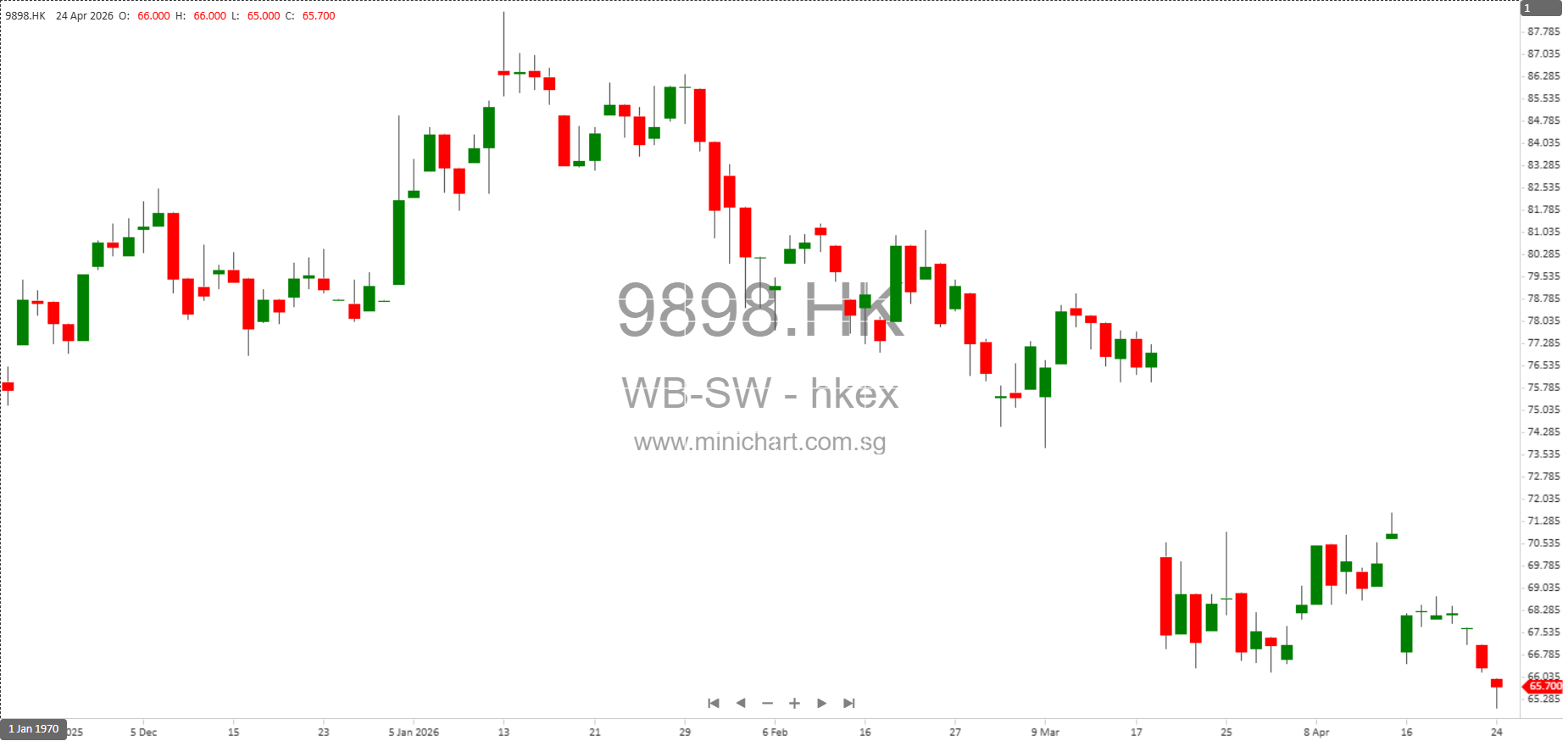
- Volatility and Market Sentiment: Weibo’s share price has been volatile, with its ADSs trading between US\$7.10 and US\$12.96 in 2025, and Hong Kong shares between HK\$58.20 and HK\$103.10. The company’s stock is susceptible to general macroeconomic trends, sector sentiment (especially for China-based tech firms), and geopolitical tensions.
- Short Selling Pressure: The company acknowledges that short sellers may target its shares, which could lead to further price volatility, negative publicity, and costly legal or reputational defense efforts.
- Dual Listing Risks: If trading volume shifts predominantly to the Hong Kong exchange, Weibo could lose certain regulatory exemptions, increasing compliance costs and possibly requiring changes to its corporate structure.
Corporate Governance and Control
- Weighted Voting Rights: Weibo is controlled through a weighted voting rights structure, with Class B shares carrying more votes per share, which allows controlling shareholders significant influence over major decisions.
- Anti-Takeover Provisions: The company’s memorandum and articles of association contain provisions that could deter takeovers or changes in control, potentially limiting shareholders’ ability to realize a control premium.
- Exemptions as a Controlled Foreign Private Issuer: Weibo takes advantage of exemptions from certain Nasdaq and SEC requirements, meaning investors may have less transparency and fewer protections than with U.S. domestic companies.
Other Notable Disclosures
- Legal Proceedings: The company is subject to ongoing litigation, including copyright, trademark, and labor disputes. While most current cases are not expected to be material, outcomes are uncertain and could impact future financials.
- Internal Controls: Weibo’s management and its independent auditor have both concluded that the company’s internal controls over financial reporting are effective as of December 31, 2025.
- Significant Related Party Transactions: The company has material loans and receivables with related parties, including an equity investee in real estate (US\$349.7 million) and an online brokerage investee (US\$100.0 million). These concentrations may add risk.
- Foreign Exchange Risk: With most revenues and costs denominated in RMB, significant RMB volatility could materially impact reported results in USD.
Potential Price-Sensitive Issues for Shareholders
- Future Capital Raising and Dividends: Shareholders face uncertainty regarding the company’s ability to conduct future offshore capital raising due to regulatory filings and approvals that may be delayed or denied by PRC authorities.
- Regulatory Crackdowns: Any adverse regulatory developments in China, particularly in relation to VIE structures, data privacy, or anti-monopoly actions, could materially affect Weibo’s operations and the value of its shares.
- Delisting Risk: The threat of delisting from U.S. exchanges due to the HFCAA or similar regulations remains a significant overhang for investors.
- Dividend Policy: While a dividend policy is now in place, dividends are not guaranteed and the return for investors will depend primarily on share price appreciation, which is highly volatile and subject to external factors.
- Complex Ownership and Control Structure: The weighted voting rights structure and significant related party transactions could limit minority shareholder influence and add governance risks.
Conclusion
The 2025 Annual Report from Weibo Corporation underscores both the company’s prominent market position and the multitude of risks—regulatory, operational, and market—that could impact shareholder value. Investors should pay particular attention to the regulatory environment in China, the company’s capital raising flexibility, dividend policy, and the volatility of its share price.
Disclaimer
This article is for informational purposes only and does not constitute investment advice. Investors should conduct their own research and consult with professional advisors before making any investment decisions. The information is based on the Weibo Corporation Annual Report 2025 and is subject to change without notice. Neither the author nor the publisher accepts any liability for actions taken based on this article.