Dynex Capital, Inc. Reports First Quarter 2026 Results: Key Financial Metrics and Shareholder Alerts
Summary of First Quarter 2026 Performance
Dynex Capital, Inc. (“the Company”) has released its financial results for the quarter ended March 31, 2026. The report contains several material disclosures that are significant for investors and may impact the Company’s share price. The following key points and details are drawn directly from the Form 8-K and accompanying earnings release:
Key Financial Highlights
- Total Economic Return: The Company reported a total economic return of \$(0.34) per common share, translating to a (2.5)% decrease from the beginning book value.
- Book Value Per Common Share: Book value per common share declined to \$12.60 as of March 31, 2026.
- Comprehensive and Net Loss: The quarter saw a comprehensive loss of \$(0.42) per common share and a net loss of \$(0.41) per common share.
- Dividends: The Company declared dividends of \$0.51 per common share.
- Equity Capital Raised: Dynex raised \$442 million through at-the-market (ATM) common stock issuances, a significant increase in capital that enabled further portfolio expansion.
- Investment Purchases: The Company executed \$6.0 billion in net investment purchases during the quarter.
- Liquidity: Dynex reported \$1.3 billion in liquidity, representing 46% of total equity as of quarter-end.
- Leverage: Leverage, including to-be-announced (TBA) securities at cost, rose to 8.6 times shareholders’ equity, reflecting increased risk exposure and portfolio expansion.
Detailed Financial Statements and Metrics
- Total Assets: \$17.34 billion as of March 31, 2026.
- Total Liabilities: \$14.88 billion.
- Total Shareholders’ Equity: \$2.72 billion.
- Preferred Stock Aggregate Liquidation Preference: \$111.5 million.
- Common Shares Outstanding: 207,154,465 shares.
- Net Interest Income: \$79.25 million for the quarter.
- Interest Income: \$257.39 million.
- Repurchase Agreement Financing: \$(178.1) million in expense, indicating significant reliance on short-term funding markets.
- Economic Net Interest Income (Non-GAAP): \$80.95 million.
Portfolio and Financing Updates
- The Company’s MBS portfolio, including TBA securities, increased substantially as a result of the new equity capital raised.
- The average cost of repurchase agreement financing declined by 33 basis points, benefiting from the Federal Reserve’s rate cuts in 2025.
- Operating expenses increased, notably due to a \$3.4 million rise in share-based compensation triggered by the accelerated vesting of equity grants following the departure of the Company’s former CFO.
- The Company’s Agency RMBS investments saw both realized and unrealized losses, with a net negative impact on book value and earnings.
- The performance of hedging strategies, including derivatives and TBA securities, partially offset the negative impacts within the investment portfolio.
Non-GAAP Financial Measures
- Earnings Available for Distribution (EAD): EAD to common shareholders was \$61.8 million, or \$0.31 per common share.
- Management emphasizes that non-GAAP measures such as EAD and economic net interest income are used internally to evaluate operational performance but should be considered supplemental to GAAP results.
Shareholder Alerts and Price-Sensitive Developments
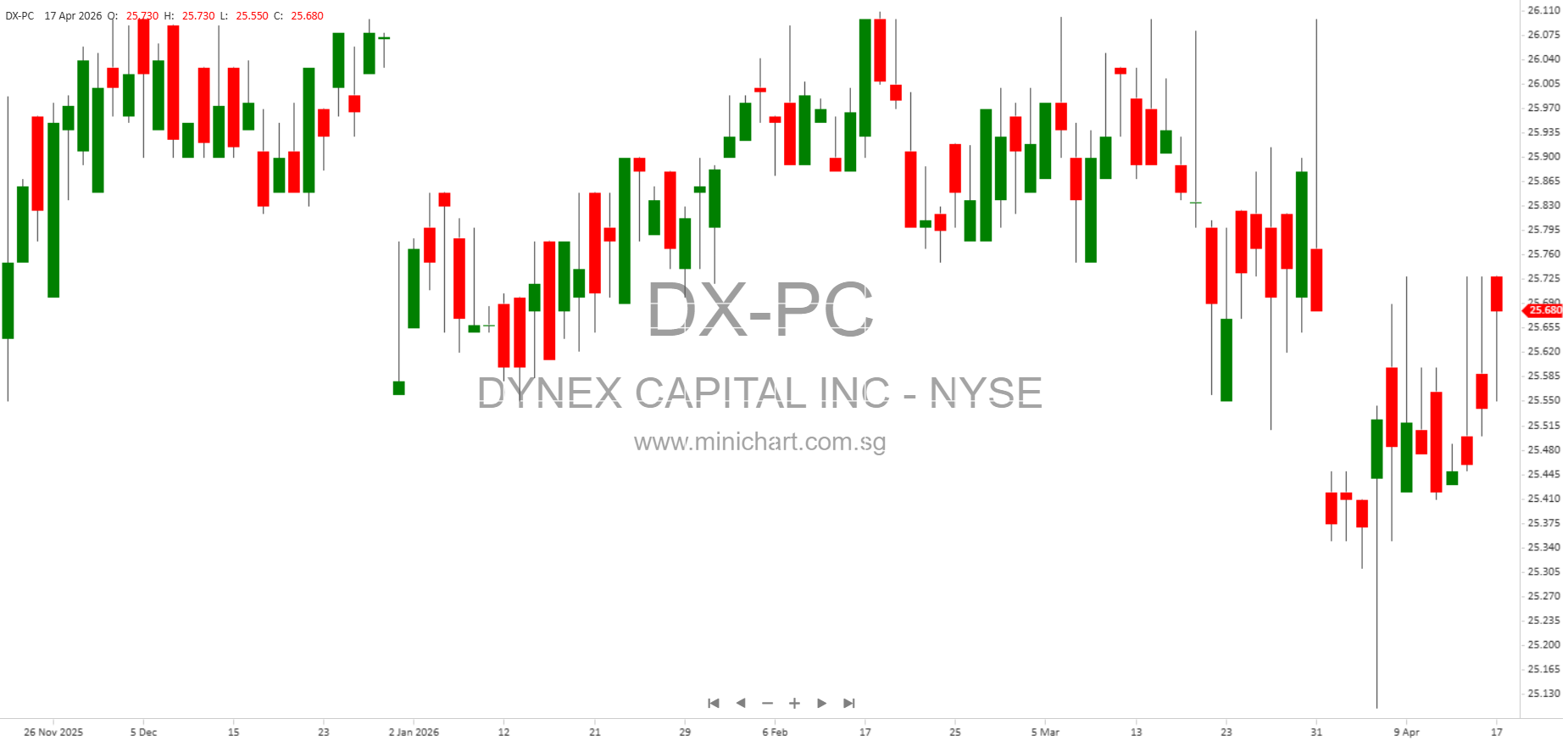
- Book Value Decline & Net Loss: The decline in book value and net loss per share are likely to be viewed negatively by investors, potentially putting downward pressure on the share price.
- Significant Capital Raise: The \$442 million raised via ATM offerings is substantial and may have a dilutive effect but also enables portfolio growth and increased leverage, introducing both opportunity and risk.
- Increased Leverage: A sharp rise in leverage to 8.6x signals increased risk-taking, which may concern risk-averse investors.
- Large Investment Purchases: The \$6.0 billion in net investment purchases reflect an aggressive deployment of capital, which could amplify returns but also potential losses in volatile markets.
- Dividend Stability: The maintained dividend of \$0.51 per share may provide some support for the stock, appealing to income-focused investors.
- Management Changes: The departure of the CFO and related compensation expenses could be perceived as a disruption, warranting monitoring by shareholders.
- Liquidity Position: High liquidity (46% of equity) is a mitigating factor should adverse market conditions persist.
Conclusion
Dynex Capital’s Q1 2026 report contains several important developments that investors should watch closely. The combination of a falling book value, net losses, aggressive capital raising and deployment, and higher leverage are all material factors that could affect the Company’s valuation and share price in the near term. Shareholders should also be attentive to management transitions and their impact on operating expenses and strategy. While dividend stability and liquidity provide some positives, the overall risk profile appears to have increased.
For a complete understanding, investors are encouraged to review the full earnings release and monitor subsequent filings for any updates on portfolio performance, capital allocation, and risk management.
Disclaimer: This article is for informational purposes only and does not constitute investment advice. Investors should consult their financial advisor before making investment decisions. The information is based on the Company’s public filings and is believed to be accurate as of the date of publication but may be subject to change.