Tencent Music Entertainment Group Annual Report: In-Depth Analysis for Investors
Key Highlights of the Report
- Dual-Class Share Structure: As of December 31, 2025, Tencent Music Entertainment Group (“the Company”) had 3,147,809,000 ordinary shares outstanding, split between 1,482,859,752 Class A ordinary shares and 1,664,949,248 Class B ordinary shares. The dual-class structure gives certain shareholders, notably Tencent, significantly higher voting power, effectively allowing them to control the outcome of shareholder resolutions regardless of how other shareholders vote. This structure may limit the influence of minority shareholders in key corporate decisions.
- Regulatory Risks and Compliance: The Company faces substantial regulatory scrutiny in China and the United States. Key issues include ongoing oversight of live streaming businesses by Chinese authorities, the impact of the Holding Foreign Companies Accountable Act (HFCAA), and the risk of delisting from U.S. exchanges if the PCAOB cannot inspect the Company’s auditors for two consecutive years. This is a critical risk for U.S. investors.
- Financial Reporting and Internal Controls: The Company reports under IFRS and has received an unqualified opinion on its internal controls over financial reporting as of December 31, 2025. However, management warns that future material weaknesses or compliance failures could harm investor confidence and share prices.
- Business Risks: The Company’s success is highly dependent on its ability to anticipate user preferences, secure third-party content licenses, and effectively compete in the rapidly evolving Chinese online music and audio entertainment industry. Loss of key content or inability to attract and retain users could materially impact revenues and financial condition.
- Dependence on Tencent: Tencent remains the controlling shareholder and exerts substantial influence over the Company’s strategy, management, and corporate actions. Any negative developments within Tencent, or deterioration in the business partnership, could adversely affect Tencent Music’s brand and operations.
- VIE Structure and Legal Uncertainties: Much of the Company’s business in China is operated through variable interest entities (VIEs). The VIE structure faces ongoing legal and regulatory uncertainty in China, and any adverse changes could force the Company to relinquish interests in these entities or face severe penalties.
- Macroeconomic and Geopolitical Risks: The Company is exposed to risks from global and Chinese economic slowdowns, changes in domestic and international policies, and potential financial instability (such as bank failures). These could impact liquidity, user spending, and access to capital.
- Dividend Policy and Shareholder Returns: The Company adopted a cash dividend policy in May 2024 but retains full discretion on whether and how much to pay based on future performance, capital requirements, and legal restrictions. Shareholder returns will largely depend on share price appreciation rather than dividends.
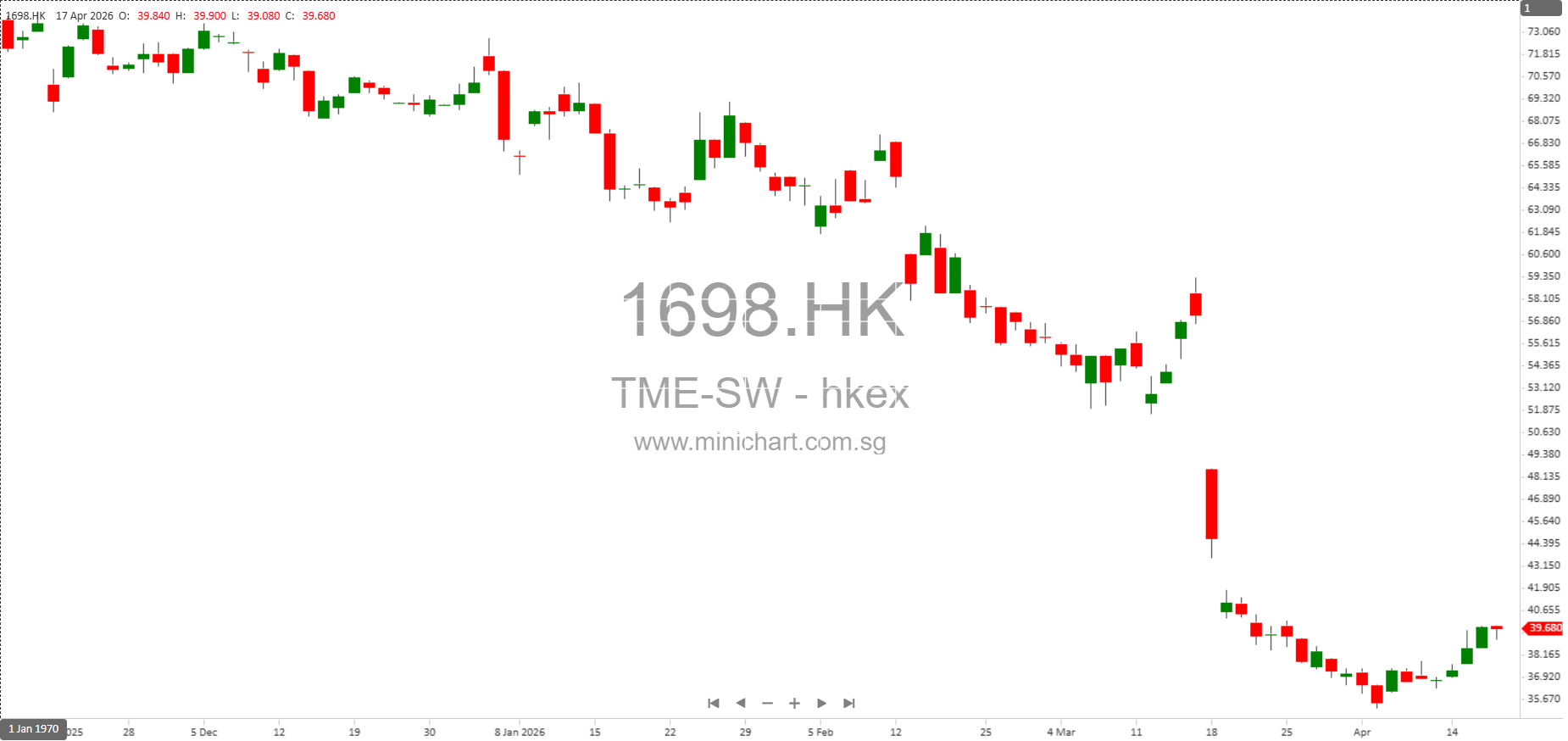
- Volatility and Market Risks: The trading price of the Company’s shares and ADSs is likely to be highly volatile, impacted by factors such as regulatory changes, analyst coverage, short-selling, and macroeconomic events. There is also a risk of dilution from future share issuances or rights offerings, and the anti-takeover provisions in the Company’s Articles of Association may limit shareholder actions.
- ESG and Compliance: Increasing focus on environmental, social, and governance (ESG) issues may impose additional compliance costs and risks. Failure to meet evolving ESG expectations could impact the Company’s reputation and access to capital.
Price-Sensitive and Shareholder-Relevant Issues
- Risk of U.S. Delisting: The possibility that the Company may be identified as a “Commission-Identified Issuer” under the HFCAA and face trading prohibitions or delisting from U.S. exchanges is a major risk factor. This could severely impact liquidity and share value for U.S. investors.
- Regulatory Changes in China: Uncertainty about the enforceability of VIE agreements, the interpretation of the Foreign Investment Law, and stricter oversight of live-streaming and data security could materially alter the Company’s business model and profitability.
- Dividend Uncertainty: While a dividend policy is in place, there is no guarantee of future payouts. Investors seeking regular dividends may not find this stock suitable.
- Governance and Minority Rights: The dual-class structure and anti-takeover provisions limit the influence of minority shareholders and may discourage takeovers or other transactions that could benefit share prices.
- ESG and Reputation Risk: Growing regulatory and investor focus on ESG may affect the Company’s ability to attract capital, especially from global institutional investors.
- Market Volatility and Short Attacks: The Company warns that short sellers may target its shares, causing significant price swings and potential reputational damage regardless of the underlying business fundamentals.
Additional Key Details for Investors
- Financial Performance: The Company continues to invest heavily in R&D and content acquisition, aiming to foster innovation and user engagement. However, these long-term investments may lead to short-term pressure on margins and profits.
- Cross-Border Regulatory Issues: The Company’s Cayman Islands incorporation, VIE structure, and international operations create complex legal compliance needs that could impact capital flows, dividend distributions, and ownership rights.
- Listing on Multiple Exchanges: Shares are listed on both the NYSE and the Hong Kong Stock Exchange, subjecting the Company to different regulatory regimes and investor bases. Fluctuations in one market may influence trading in the other.
- Ongoing Litigation and Investigations: Potential lawsuits, regulatory investigations, and compliance failures may result in fines, penalties, or reputational harm.
- Insurance and Risk Management: The Company maintains insurance coverage deemed appropriate for its operations but acknowledges that there remain uninsurable risks inherent in its business model.
- Disclosure and Transparency: As a foreign private issuer, the Company is exempt from certain U.S. reporting requirements, which may limit the information available to investors compared to U.S. domestic companies.
Conclusion
Tencent Music Entertainment Group’s annual report highlights both its strong market position and the significant risks it faces from regulatory changes, governance structure, and market volatility. Investors should closely monitor developments related to U.S.-China regulatory relations, the Company’s evolving business model, and its ability to deliver sustainable growth amid heightened scrutiny and competition. The dual-class voting structure, potential for U.S. delisting, and uncertainties around VIE arrangements are especially important and may have a direct impact on share value.
Disclaimer: This article is for informational purposes only and does not constitute investment advice. The information provided is based on the Company’s published annual report and other public disclosures. Investors should conduct their own due diligence and consult with financial advisors before making investment decisions. The author and publisher assume no liability for any actions taken based on this report.