Hooker Furnishings Corporation 2026 Annual Report: Key Details and Investor Insights
Executive Summary: Challenging Year with Strategic Actions Amid Macro Pressures
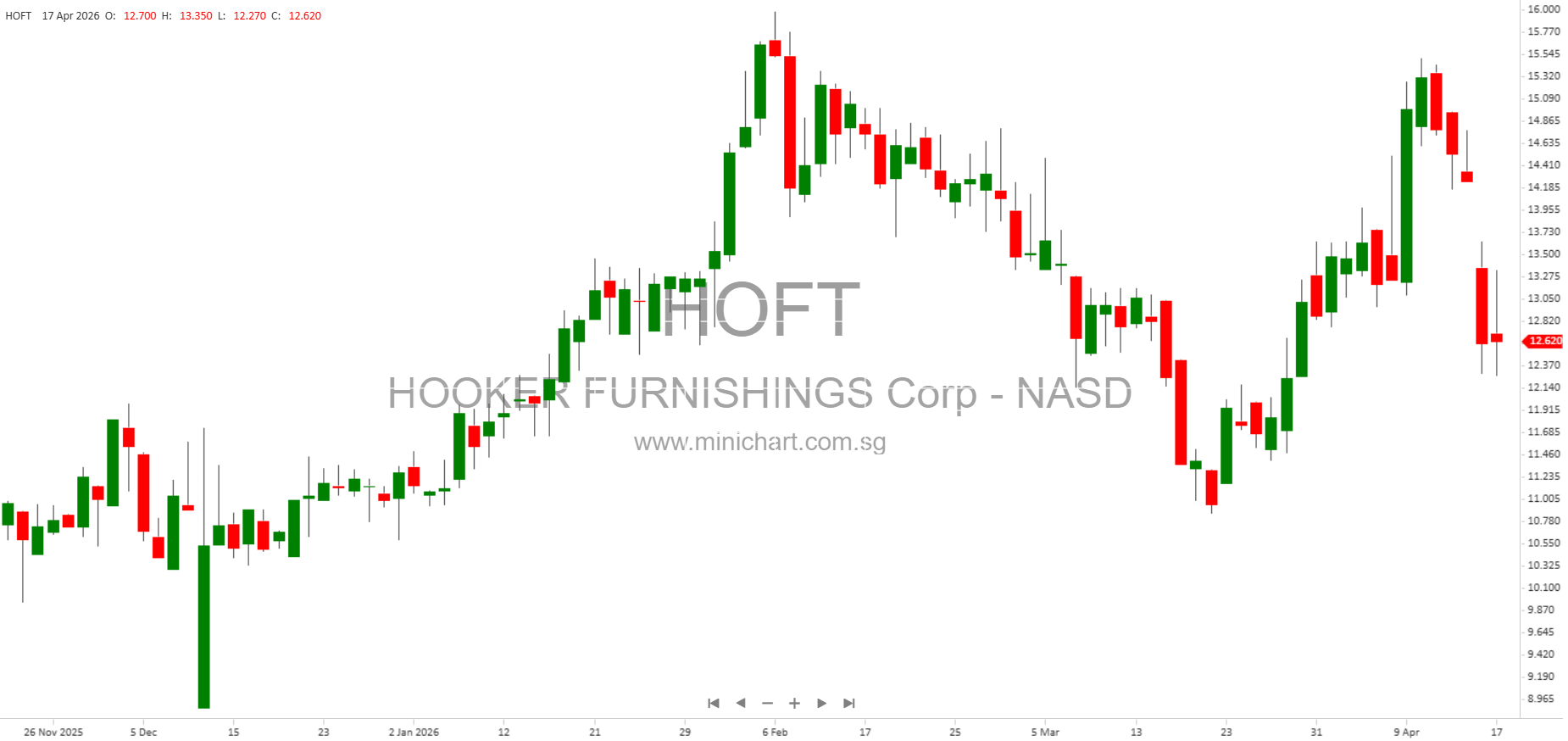
Hooker Furnishings Corporation (“Hooker”, NASDAQ: HOFT) has released its Annual Report for fiscal year 2026, ending February 1, 2026. The company faced a highly challenging macroeconomic and industry environment, marked by weak home furnishings demand, a slow housing market, reduced consumer discretionary spending, and the adverse impact of tariffs. In response, Hooker executed a series of significant strategic actions, including an aggressive cost reduction program, targeted divestitures, and the launch of new product lines. These actions, while necessary, resulted in a year marked by operating losses, non-cash impairment charges, and restructuring costs, but position the company for potential recovery and improved profitability.
Key Financial Highlights
-
Operating Results:
- Reported an operating loss of \$16.5 million for fiscal 2026, driven primarily by a \$15.6 million non-cash impairment charge, overall lower net sales, and approximately \$2.0 million in restructuring costs.
- Net loss from continuing operations was \$11.3 million.
- Gross profit margin improved to 26.4% from 24.6% in the prior year, reflecting benefits from cost reductions and business exits.
- Selling & Administrative expenses decreased by \$11.9 million, a direct result of restructuring efforts and the exit of unprofitable operations.
-
Segment Performance:
- Hooker Branded Segment: Continued to be the largest contributor to sales, but impacted by overall industry softness.
- Domestic Upholstery Segment: Faced headwinds due to volatility in raw materials and consumer demand.
- All Other: Included the Samuel Lawrence Hospitality line and non-core/discontinued operations. Aggressive restructuring and divestitures were executed here.
-
Balance Sheet & Liquidity:
- Public float as of the last completed second fiscal quarter: \$94.9 million.
- Shares outstanding as of April 10, 2026: 10,779,729 shares.
- Asset-based lending facility secured by substantially all assets, with restrictive lending covenants.
Strategic Moves and Shareholder-Relevant Developments
-
Cost Reduction Program:
- Multi-phase program nearly complete by year-end, delivering significant S&A expense savings and improved gross margin despite lower sales.
-
Divestitures:
- Sale of Pulaski Furniture and Samuel Lawrence casegoods brands. These divestitures are aimed at streamlining the portfolio, reducing complexity, and focusing on core, profitable categories.
- Risks remain that anticipated benefits (improved profitability, reduced complexity) may not be realized in the desired timeframe; some liabilities (e.g., legacy pension obligations) may be retained.
-
New Product Lines:
- Launch of the Margaritaville line (slated for second half of fiscal 2027), representing a potential growth engine and brand diversification.
-
Restructuring and Impairments:
- \$15.6 million impairment charge related to goodwill and trade names, reflecting the impact of market conditions and business exits.
- Additional \$2.0 million in restructuring costs for FY26.
-
Cybersecurity and ESG Commitments:
- Ongoing investment in cyber insurance and IT risk mitigation. No material impact from past cyber incidents, but management warns of evolving risks.
- Active ESG committee (CARE) aligns environmental stewardship with best practices and regulatory developments; ongoing disclosure of progress to the Board.
-
Capital Allocation:
- Continued payment of quarterly dividends remains subject to Board review and company performance.
- Ongoing evaluation of share repurchases—extent of buybacks will impact EPS and outstanding shares.
Risks & Forward-Looking Concerns for Investors
- Macroeconomic Sensitivity: The company is highly exposed to macroeconomic trends—interest rates, housing market volatility, consumer spending, and global trade tensions (especially tariffs and antidumping duties).
- Industry Competition: The furniture industry faces intense price competition and rapidly changing consumer preferences, including demand shifts toward lower-priced furniture.
- Customer Concentration: A significant portion of sales and receivables are concentrated among a few large customers. Loss of any major customer or sales program could materially affect results.
- Liquidity & Leverage: The company’s asset-based lending facility is secured by substantially all assets and contains restrictive covenants, limiting financial flexibility.
- Cybersecurity and Regulatory Compliance: While no material breaches have occurred to date, evolving cyber threats and compliance requirements remain ongoing risks.
- Activist Shareholders: The company cautions that actions by activist shareholders could disrupt management, increase costs, and drive share price volatility.
- Execution Risks: The success of divestitures, new product launches, and cost reductions is not guaranteed. Failure to achieve expected benefits could weigh on future performance.
- Product Safety, Legal, and Environmental Risks: Product safety issues, changes in regulatory environments, and costs of compliance could adversely affect sales and earnings.
Other Notable Disclosures
- Regulatory Compliance: The company remains in material compliance with all relevant U.S. and international laws and regulations.
- Legal Proceedings: No material legal proceedings or unresolved staff comments at this time.
- ESG Initiatives: Ongoing CARE committee activities focused on environmental responsibility, with regular Board updates.
Investor Takeaways: Price Sensitive Items
- Substantial Operating Loss and Impairment: The \$16.5 million operating loss (including a \$15.6 million impairment) is a material development. This reflects the aggressive restructuring and the impact of adverse market conditions. It may weigh on near-term valuation but positions the company for improved results if macro conditions stabilize.
- Portfolio Restructuring and Divestitures: Divestitures of the Pulaski and Samuel Lawrence brands are strategic moves with potential to improve profitability and focus, but introduce execution and transition risks.
- Cost Reductions and Margin Improvement: Despite sales declines, Hooker’s gross margin improved, providing a positive signal that restructuring efforts are delivering results.
- New Product Launch: The upcoming Margaritaville line in fiscal 2027 is a potential catalyst for re-acceleration of growth.
- Capital Allocation: Dividends and buybacks remain at the Board’s discretion and will be closely watched by income and value investors.
- Risks Remain High: Macro trends, customer concentration, execution of strategic shifts, and cyber and regulatory risks are all significant and could move the share price in either direction.
Conclusion
Fiscal 2026 was a transition year for Hooker Furnishings, with substantial headwinds driving operating losses and asset impairments, but also with management taking decisive steps to streamline the business and set the stage for recovery. Investors should closely monitor the company’s execution on cost reductions, strategic divestitures, and new product initiatives, as well as ongoing macroeconomic and industry trends. The current environment is one of elevated risk but also potential opportunity if the company’s strategic actions yield improved profitability and growth in future periods.
Disclaimer: This article is for informational purposes only and does not constitute investment advice. All financial figures are as reported by Hooker Furnishings Corporation in its 2026 Annual Report. Investors should conduct their own due diligence and consult with their financial advisor before making any investment decisions. Past performance is not indicative of future results.