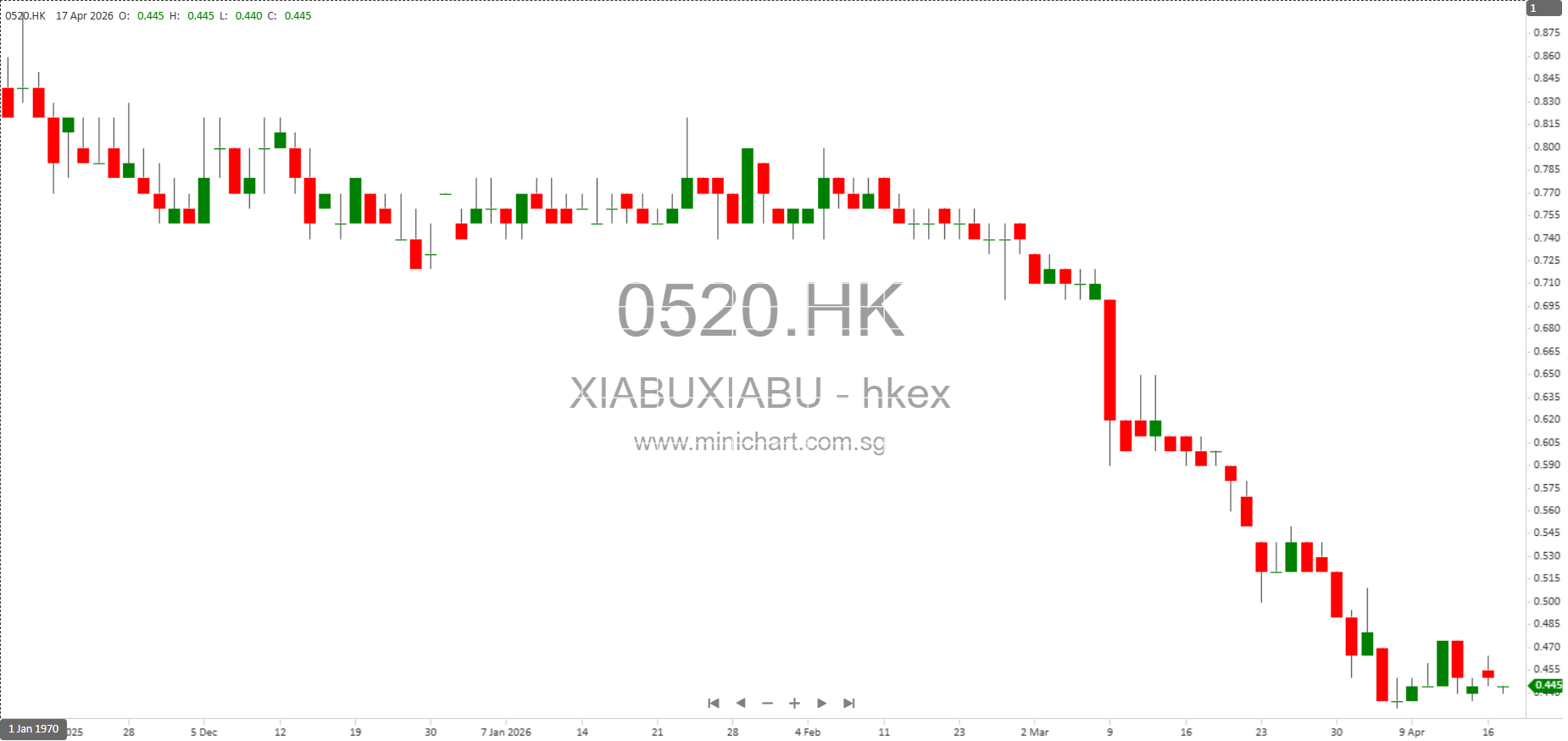
Xiabuxiabu Catering Management (China) Holdings Co., Ltd.
2025 Annual Report – Key Investor Insights
Executive Summary
Xiabuxiabu Catering Management (China) Holdings Co., Ltd. (“Xiabuxiabu” or “the Company”, stock code: 520.HK), a leading hotpot restaurant chain operator in China, has released its audited annual report for the year ended 31 December 2025. This comprehensive analysis provides investors with a detailed look at the Group’s financial performance, operational highlights, principal risks, and key matters that could impact shareholder value.
1. Financial Performance Overview
-
Revenue Decline:
- Total revenue for 2025 was RMB 3,788.7 million, a significant decrease of 20.3% from RMB 4,754.8 million in 2024.
- The year-on-year decline reflects challenging macroeconomic conditions and weak consumer spending in China’s catering sector.
-
Loss Reduction:
- Despite the revenue drop, net loss improved to RMB 296.4 million (7.8% of revenue) from RMB 398.5 million (8.4% of revenue) in 2024, a 25.6% reduction.
-
Cost Controls and Efficiency:
- Raw material and consumables costs fell by 20.7% to RMB 1,326.4 million.
- Staff costs decreased by 18.2% to RMB 1,318.3 million.
- Property rentals and related expenses, utilities, and depreciation all saw double-digit declines.
-
Other Financials:
- Other income was RMB 48.4 million, down 15.7%.
- Other losses shrank dramatically by 76% to RMB 49.0 million, reflecting improved asset management and fewer negative one-off items.
- Finance costs fell by 27.9% to RMB 51.3 million, reflecting lower debt or reduced interest rates.
-
Liquidity and Capital Structure:
- As of 31 December 2025, the Group’s current liabilities exceeded its current assets by RMB 446.9 million, but management believes available cash flows and unused banking facilities (RMB 359 million) are sufficient for business needs.
- Distributable reserves stood at RMB 146.1 million.
-
Financial Assets at FVTPL:
- The Group held RMB 425.2 million in financial assets at fair value through profit or loss (FVTPL), mainly short-term wealth management products from reputable banks and investment institutions.
- Expected return rates ranged between 1.6% and 4.8% per annum; two products totaling RMB 130.1 million mature in 2028 and are classified as non-current assets.
- Realized gain from these products in 2025 was approximately RMB 17.5 million.
2. Shareholder Matters and Potential Price-Sensitive Issues
-
No Dividend Declared:
- No dividend was declared or paid for the year, and no arrangements were reached for dividend waivers.
-
Share Incentive Schemes:
- RSU Scheme: As of 31 December 2025, the RSU scheme limit is 4% of shares in issue at the listing date (42,174,566 shares). No new RSUs were granted in 2025; the scheme expires in December 2024.
- Share Award Scheme: Adopted in August 2024, this scheme allows up to 10% of issued shares (108,617,448 shares) for awards. As of 31 December 2025, 5,748,514 shares (0.5% of issued shares) remain unvested. Awards are granted to directors, management, and key employees to align interests and incentivize performance.
- Director Interests: Major shareholder and Chairman Ho Kuang-Chi, through trusts and direct holdings, controls approximately 36.48% of shares, with additional interests via share awards. No directors or their associates were involved in material transactions with the Group.
-
Share Capital and Treasury Shares:
- No purchase, sale, or redemption of listed securities or treasury shares occurred in 2025.
-
Public Float Maintained:
- The Company maintained the required minimum 25% public float throughout the year, ensuring liquidity and compliance with listing rules.
-
No Significant Events After Reporting Period:
- Directors are not aware of any material events after 31 December 2025 that would require disclosure or are price sensitive.
3. Principal Risks and Mitigation Strategies
-
Weak Economic Recovery and Customer Traffic:
- Risks include sluggish new customer traffic, weak consumption, and low repeat purchase rates.
- Mitigation: Multi-brand strategy, co-branding with global IPs (e.g., Doraemon), targeted member benefits, and flexible promotional campaigns to re-engage customers.
-
Site Selection and Expansion:
- Risks surrounding opening new restaurants and their profitability.
- Mitigation: Leveraging data analytics for location selection, collaborating with top developers, negotiating favorable rental terms, and obtaining renovation subsidies.
-
Rising Food and Labor Costs:
- Procurement risks from global price inflation in agricultural products and rising staff costs.
- Mitigation: Direct sourcing, annual procurement contracts, broadening supplier base, strategic reserves, flexible staffing, digital operations, and performance-based compensation.
-
Compliance and ESG:
- No material breaches of PRC laws or regulations; all material licenses and approvals were obtained for new restaurants.
- Governance and ESG practices are robust, with internal controls, whistleblowing, and anti-corruption policies in force. No major environmental incidents or penalties occurred in 2025.
4. Corporate Governance, ESG, and Stakeholder Engagement
-
Governance:
- Board and committees (Audit, Nomination, Remuneration) are fully functional and compliant with Hong Kong Listing Rules.
- Independent auditor Deloitte Touche Tohmatsu issued an unqualified opinion on the 2025 consolidated financial statements.
-
ESG:
- The Board oversees environmental, social, and governance strategy. The Group has implemented waste reduction, anti-food waste campaigns, and low-carbon initiatives.
- Stakeholder communication has been maintained through multiple channels, with a focus on transparency and responsiveness.
5. Outlook for 2026
- The Group aims to reinforce its leadership in the Chinese hotpot restaurant segment and pursue growth by enhancing its multi-brand, multi-scenario approach, driving customer engagement, and adapting to industry trends.
Key Points for Shareholders and Potential Price-Sensitive Issues
- Continued Losses, but Improving Trend: Profitability remains an issue, but the reduction in losses and strong cost controls may signal a turning point if macro conditions improve.
- Significant Financial Asset Holdings: The Group has substantial investments in non-principal protected wealth management products. While returns have so far met expectations, adverse market movements could impact future results.
- No Dividend for 2025: The absence of a dividend may disappoint income-focused investors and affect share price sentiment.
- Share Incentive Schemes: Large unvested share awards (up to 10% of issued capital) could be dilutive over time, especially if performance targets are met and shares vest in bulk.
- Liquidity and Gearing: The Group’s current liabilities exceed current assets, but management expects available resources and bank facilities to be sufficient. Any deterioration in cash flow or stricter credit conditions could be a risk factor.
- Macroeconomic Sensitivity: The Group’s fortunes are closely linked to consumer confidence and discretionary spending in China. Further economic weakness could weigh on recovery prospects.
- Corporate Governance and ESG: Strong governance and ESG track record should support share valuation and investor confidence, especially among institutional investors.
Conclusion
Xiabuxiabu faces continued headwinds from a challenging macro environment and changing consumer behavior, reflected in its declining revenues and ongoing losses. However, management’s decisive cost controls, strategic investments in customer engagement, and robust governance practices position the Group for potential recovery when the sector rebounds. Shareholders should monitor developments in the Chinese consumer market, cost inflation, and the performance of the Group’s financial investments as key variables for future share price movements.
Disclaimer: This article is a summary and analysis of the official 2025 annual report of Xiabuxiabu Catering Management (China) Holdings Co., Ltd. for informational purposes only. It does not constitute investment advice. Investors should conduct their own research or consult a qualified financial advisor before making investment decisions. The author and publisher are not responsible for any actions taken based on this information.