Vivakor, Inc. 2025 Annual Report: Key Developments, Risks, and Investor Considerations
Vivakor, Inc. (Nasdaq: VIVK) has released its Annual Report on Form 10-K for the fiscal year ended December 31, 2025. The report provides comprehensive insight into the company’s operations, strategic direction, financial standing, and the risks and opportunities facing shareholders. Below is a detailed summary tailored for investors.
1. Key Corporate Highlights
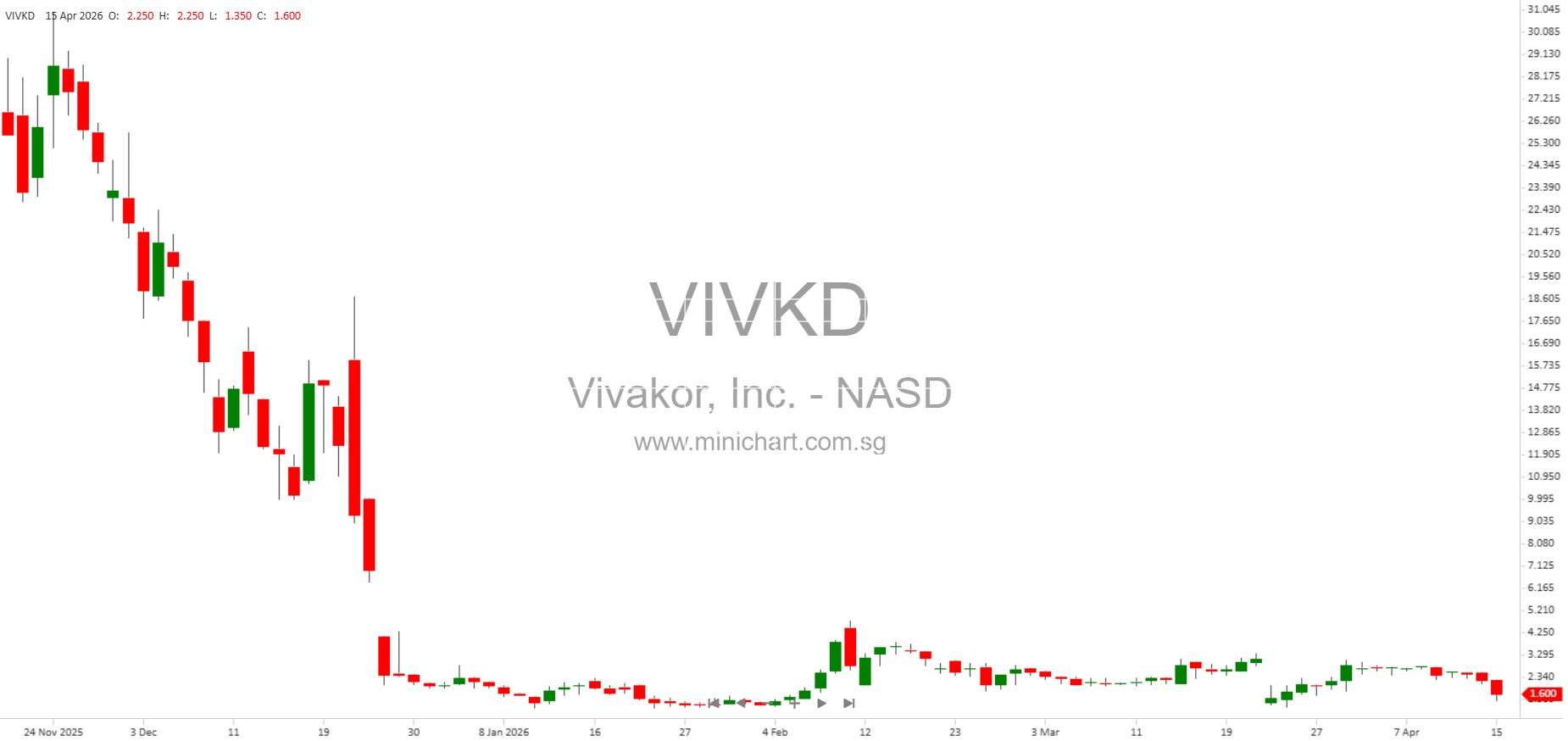
- Reverse Stock Split: On March 24, 2026, Vivakor implemented a 1-for-200 reverse stock split. This significant capital action means every 200 outstanding shares were consolidated into one share. Fractional shares were rounded up to the nearest whole share. All share figures in the report reflect this adjustment.
- Authorized Shares: As of December 2025, Vivakor’s authorized capital structure stands at 500,000,000 shares of common stock and 15,000,000 shares of preferred stock.
- Shares Outstanding: As of April 15, 2026, there were 2,068,041 shares of common stock outstanding.
- Public Float & Market Value: As of June 30, 2025, 139,839 shares of common stock were held by non-affiliates, with a public float valued at \$21,638,687 based on a closing price of \$154.74 per share.
- Exchange Listing: Vivakor’s common stock is traded on the Nasdaq Capital Market under the symbol VIVK.
2. Company Profile & Business Overview
Vivakor is a Nevada corporation focused on midstream energy infrastructure, oilfield remediation, and the recovery of hydrocarbons. Key business segments include:
- Delhi, Louisiana Facility: Supported by minimum-volume and resale-margin commitments under agreements with third parties, this site underpins Vivakor’s core operations.
- CP Omega Terminal: A pipeline-connected terminal linked to the Plains/P66 STACK Pipeline and the Cushing hub, offering fee-based transportation and terminaling services under long-term producer contracts.
- Marketing and Trading Segment: This division is expected to market oil recovered from tank bottoms and hydrocarbon-bearing materials processed at Vivakor’s Remediation Processing Center (“RPC”) once operational. The aim is to enhance asset utilization and margins by integrating marketing and logistics with core operations.
Technology and Intellectual Property: Vivakor holds licenses to upgrade hydrocarbons recovered during remediation, positioning the company to efficiently operate RPCs and create additional value from recovered hydrocarbons.
3. Strategic Initiatives and Growth Plans
- New Environmental Solutions: Vivakor plans for its RPC to introduce oilfield-waste recycling and hydrocarbon-recovery capabilities. This aligns with rising sustainability priorities and regulatory expectations in the energy sector.
- Terminal Expansion: The company is seeking to increase volumes under long-term contracts, pursue complementary asset acquisitions, and expand connectivity to improve access to key producing regions and end markets.
- Selective Acquisitions: Vivakor’s future strategy includes pursuing strategic acquisitions of complementary midstream and related assets, with an emphasis on scale, integration, and long-term growth.
- Asset Optimization and Customer Engagement: The company is focused on optimizing existing assets, driving incremental revenue, maintaining disciplined capital allocation, and strengthening customer relationships through integrated service offerings.
4. Risk Factors and Forward-Looking Statements
Vivakor’s annual report contains a cautionary note on forward-looking statements. The management highlights several risks that could materially impact future performance and, consequently, share value:
- Changes in market acceptance of Vivakor’s products and services.
- Increased competition within the sector.
- Political, economic, or regulatory shifts in operating markets.
- Risks associated with key customer relationships and adverse conditions in customer industries.
- Challenges in attracting or retaining senior management and key employees.
- Ability to respond to technological developments and protect proprietary rights.
- Risks noted in the “Risk Factors” section, which investors should review carefully.
The report stresses that forward-looking statements are based on management’s current expectations and assumptions, which may prove inaccurate. The company expressly disclaims any obligation to update such statements except as required by law.
5. Filings and Compliance
- Vivakor is a “non-accelerated filer,” “smaller reporting company,” and “emerging growth company” as defined by the SEC.
- The company has filed all required reports and submitted all Interactive Data Files as mandated by Regulation S-T for the preceding 12 months.
- No restatements or error corrections requiring incentive compensation recovery analysis have been identified.
- Vivakor is not a shell company.
6. Potentially Price-Sensitive Information
- Reverse Stock Split: The 1-for-200 reverse stock split and subsequent rounding up of fractional shares is a major capital structure change. Such actions often impact share price and liquidity.
- Low Shares Outstanding: Post-split, only 2,068,041 shares are outstanding, potentially increasing share price volatility and making the stock more susceptible to price movements on relatively small trading volumes.
- Operational Developments: The anticipated launch of the Remediation Processing Center (RPC) and expansion of midstream assets and logistics could materially affect revenues and future profitability.
- Acquisition Strategy: Active pursuit of strategic acquisitions and terminal expansion could significantly alter the company’s financial and operational profile if executed successfully.
- Public Float and Market Value: The relatively small public float and high market value per share may attract speculative trading activity.
7. Conclusion: Shareholder Takeaways
- Vivakor is positioning itself as a key player in oilfield remediation and midstream energy infrastructure, with a focus on environmental solutions and asset optimization.
- The company’s capital structure has changed significantly, and the share count is now low, leading to potential price volatility.
- Vivakor is pursuing growth through asset acquisitions, terminal expansion, and technological advancement, but faces substantial competitive, market, and operational risks.
- Shareholders should closely monitor updates regarding the RPC’s completion, acquisition activity, and any regulatory or market changes that could impact Vivakor’s strategy or financials.
Disclaimer: This article is for informational purposes only and does not constitute investment advice. Investors should review Vivakor’s official filings and consult with a qualified financial advisor prior to making investment decisions. Forward-looking statements are subject to risks and uncertainties, and actual results may differ materially.