Key Points and Developments
- Business Focus: UHP develops, manufactures, and markets CelluSTAT®, a patented hemostatic gauze product for controlling bleeding from superficial wounds. The product is aimed at various healthcare settings, and UHP is actively seeking FDA Premarket Approval, which remains a critical milestone for the Company.
-
Financial Health:
- UHP reports a working capital deficit, minimal cash, and limited product sales.
- For the year ended December 31, 2025, total assets stood at only \$316,698, while total stockholders’ deficit was reported at \$(3,876,451), up from \$(2,443,831) the previous year—highlighting the Company’s deteriorating equity position.
- The accumulated deficit increased to \$(81,370,291) from \$(78,700,943) year-over-year, mainly due to continued operating losses.
-
Liquidity and Capital Raising:
- The Company’s ability to execute its business plan and remain a going concern is heavily reliant on raising additional financing. There is no assurance that such funds will be available or on favorable terms.
- UHP issued shares and warrants to raise capital during the year, including a notable transaction with White Lion and an Any Market Purchase Agreement involving a complex warrant liability structure.
- Net cash used in operating activities for 2025 was \$(1,194,716). There were no investing activities, and financing activities provided \$1,268,179 the prior year, but no significant cash was raised in 2025.
-
Material Weaknesses in Internal Controls:
- Management and the independent auditor have identified material weaknesses in internal control over financial reporting as of December 31, 2025. These weaknesses have not been fully remediated, raising the risk of potential misstatements in future financial reports.
- There is a risk of additional material weaknesses being identified in the future, which could lead to restatements and negatively impact investor confidence and share value.
-
Going Concern Warning:
- The independent auditor has expressed substantial doubt about UHP’s ability to continue as a going concern. This could have a material adverse effect on relationships with prospective customers, creditors, investors, and suppliers, and may further depress the stock price.
-
Stock Price and Market Risk:
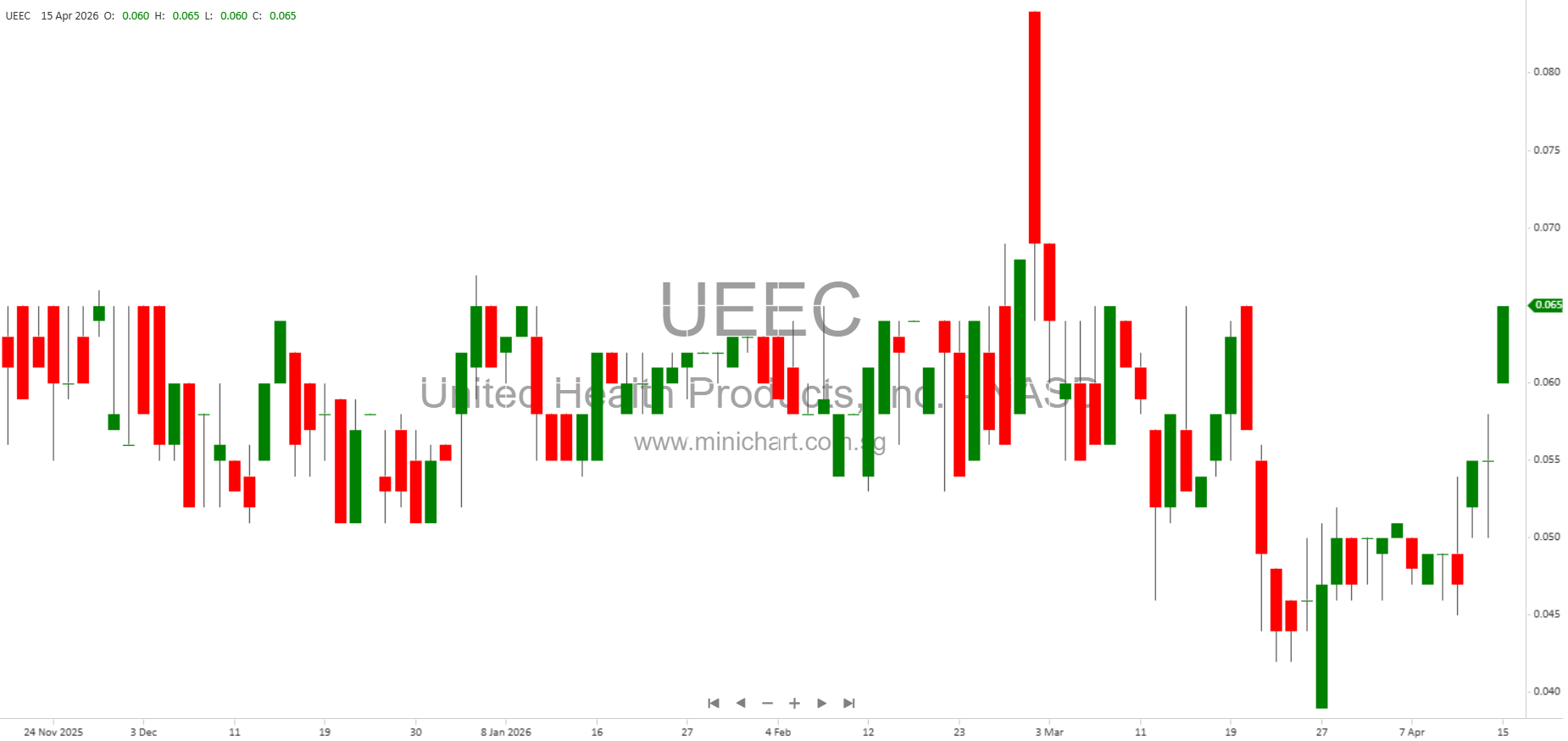
- UHP’s shares are quoted on the OTCQB under the symbol UEEC. There is currently no established market, and trading has been limited.
- The Company’s stock is classified as a “penny stock,” subject to strict trading regulations, which may make it more difficult for investors to buy or sell shares and may limit liquidity.
-
Shareholder Dilution and Overhang:
- UHP has a history of issuing shares for capital and compensation, which has resulted in dilution of existing shareholders’ interests. The possibility of further share issuance, including exercise of outstanding options and warrants, could create an “overhang,” pressuring the share price.
-
Management and Personnel Risks:
- The Company’s management is highly concentrated, with the CEO also serving as acting CFO. UHP’s success depends on attracting and retaining key personnel, which is a risk point given its small size and financial constraints.
-
No Dividend Policy:
- UHP has never paid cash dividends and does not intend to do so in the foreseeable future. Investors are reliant on capital appreciation for any return on investment.
Price-Sensitive and Shareholder-Relevant Issues
- Going Concern Risk: The substantial doubt about UHP’s ability to continue as a going concern is highly material and could drive significant share price volatility.
- Internal Controls Weaknesses: Ongoing control issues and the potential for future financial restatements may undermine investor confidence.
- Dependence on Capital Markets: UHP’s survival is contingent on raising new funds, which may not materialize, potentially leading to insolvency or further dilution of existing shareholders.
- Penny Stock Status and Limited Market: Trading and liquidity risks are heightened, potentially restricting the ability of investors to exit positions.
- Equity Dilution: The possibility of significant further dilution from share or warrant issuances is a real risk for existing shareholders.
- FDA Approval Still Pending: The success of UHP’s main product, CelluSTAT®, is dependent on FDA Premarket Approval, which has not yet been secured and remains a major business risk and catalyst.
Detailed Financials and Stock Data
- Shares Outstanding: As of December 31, 2025, 258,690,253 shares were issued and outstanding, up from 252,408,222 at the end of 2024.
- Market Value: As of June 30, 2025, the market value of shares held by non-affiliates was approximately \$25.2 million, based on a share price of \$0.098.
- Stock Performance (2025):
- Q1: High \$0.28, Low \$0.05
- Q2: High \$0.11, Low \$0.06
- Holders of Record: As of April 15, 2026, there were approximately 415 holders of record.
- No Dividends Paid: UHP has not paid, and does not expect to pay, dividends.
Risks and Forward-Looking Statements
-
UHP’s disclosures highlight multiple risks, including:
- Liquidity and capital raising challenges
- Market acceptance uncertainty for CelluSTAT®
- Material weaknesses in financial controls
- Ongoing losses and accumulated deficit
- Shareholder dilution and limited trading market
- Dependence on a small management team and key personnel
- The Company’s ability to secure FDA Premarket Approval for its product, raise additional capital, and address its internal control weaknesses will be significant determinants of near-term share price performance.
Conclusion
United Health Products, Inc. faces significant financial, managerial, and regulatory risks. The going concern warning, internal control weaknesses, need for additional capital, and lack of an established trading market are all critical issues for shareholders and potential investors. These factors—along with the pending FDA approval for CelluSTAT®—make UHP a highly speculative investment, with the potential for further share price volatility and dilution.
Investors should monitor developments closely, especially any announcements regarding financing, FDA approval, or resolution of internal control weaknesses, as these could materially impact the Company’s share price.
Disclaimer: The above article is a summary interpretation of United Health Products, Inc.’s 2025 Annual Report and is intended for informational purposes only. It does not constitute investment advice. Investors should consult the original SEC filings and their financial advisor before making any investment decisions. Past performance is not indicative of future results, and all investments carry risk, including loss of principal.