Premier Air Charter Holdings Inc. (PREM) 2025 Annual Report: Key Details and Investor Considerations
Executive Summary
Premier Air Charter Holdings Inc. (“Premier” or “the Company”) has released its 2025 Annual Report, providing extensive details on its business operations, financial health, risks, and strategic outlook. This report contains several key developments, ongoing challenges, and critical risk factors that shareholders and investors must pay close attention to, as they may potentially influence the share price and investment decisions.
Company Overview and Recent Developments
- Acquisition and Structure: On March 11, 2025, Premier Holdings completed the acquisition of Premier Air Charter, Inc., a California corporation, making Premier a wholly owned subsidiary. The acquisition was executed by merging a subsidiary (Merger Sub) into Premier, with Merger Sub ceasing to exist. The transaction issued 237,871,049 shares of common stock to Tipp Investments LLC, the former shareholder of Premier, and is intended to qualify as a tax-free reorganization under Section 368 of the Internal Revenue Code.
- Share Structure: As of December 31, 2025, Premier had 280,848,293 shares of common stock issued and outstanding, held by 69 shareholders of record. No equity compensation plans are currently authorized.
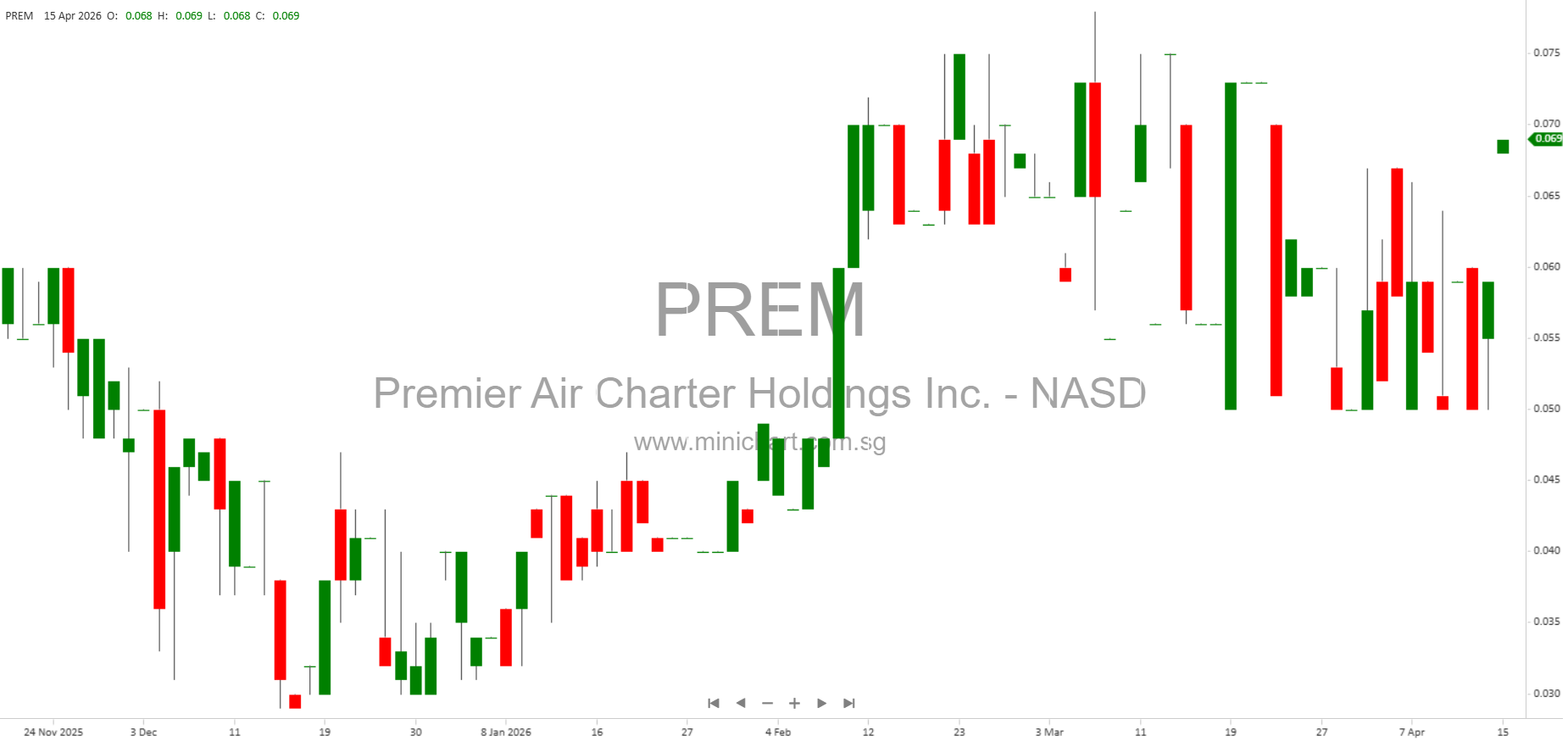
- Stock Market Information: Premier’s common stock is quoted on the OTCID Market under the symbol “PREM.” Trading is reported as thin, with wide price fluctuations, and there is no assurance of a liquid market in the future.
Financial Performance
- Revenues: On a pro forma unaudited basis (as if the acquisition took place on January 1, 2024), Premier reported revenues of \$31.88 million in 2025, up from \$20.75 million in 2024, reflecting strong top-line growth.
- Net Loss: The Company incurred a net loss of \$3,865,621 in 2025, compared to \$2,191,235 in 2024. These losses were mainly due to significant investments in aircraft and operational infrastructure.
- Liquidity and Solvency: As of December 31, 2025, Premier’s current assets were \$3,727,772, while current liabilities stood at \$16,333,220—a notable working capital deficit. The Company’s financial statements raise “substantial doubt” about its ability to continue as a going concern, as ongoing operations and growth plans are highly dependent on related party support and additional financing.
- Cash Flows and Financing: In 2025, Premier received \$1,650,223 in cash from financing activities, primarily from related-party long-term debt. There are no significant off-balance sheet arrangements reported.
Strategic Outlook and Growth Strategy
- Premier’s growth strategies focus on expanding charter revenue through improving current aircraft fleet utilization and securing cost-effective financing to invest in additional charter aircraft.
- The Company will continue to rely on related parties, equity sales, or debt financing to fund operations. Any additional share issuance will dilute existing shareholders, and there are no assurances of successful future capital raises.
- The Company explicitly states it will not pay dividends in the foreseeable future, retaining future earnings for business development.
Key Risks and Shareholder Considerations
1. Capital Requirements & Going Concern
- Premier faces ongoing liquidity challenges and requires substantial capital to fund working capital, capital expenditures, and potential growth. The Company may be forced to sell assets, enter a business combination, or reduce/eliminate operations if unable to secure funding. These actions could result in significant dilution or total loss for shareholders.
- Access to credit markets and favorable borrowing terms depend on maintaining strong credit ratings, which could be challenged by the Company’s current financial position.
2. Industry and Economic Risks
- The private aviation industry is highly competitive and exposed to economic cycles, geopolitical tensions (e.g., the war in Ukraine, Middle East conflicts), rising fuel costs, and regulatory changes, all of which can adversely impact revenues and profitability.
- Recent and anticipated increases in interest rates, as well as the potential for recession, may reduce demand for business and high-net-worth travel.
3. Public Company Costs and Regulatory Compliance
- Premier is a “smaller reporting company” and thus is exempt from certain disclosure requirements, which may reduce the attractiveness of its stock to some investors and impact liquidity.
- The Company incurs significant legal, accounting, and compliance expenses as a public entity, including the costs of compliance with the Sarbanes-Oxley Act. There is a risk of not being able to comply with Section 404 (internal control over financial reporting), which could result in sanctions or a decline in stock price.
4. Market, Trading, and Liquidity Risks
- PREM shares are thinly traded, and subject to wide price volatility. If the share price remains below \$5.00 and is not listed on a national exchange, the stock may be classified as a “penny stock,” subject to additional trading restrictions and disclosures that may further reduce liquidity and deter investors.
- Company provisions in its articles of incorporation and bylaws may discourage, delay, or prevent a change of control, potentially depressing the trading price of the stock.
- FINRA suitability rules, market volatility, and lack of analyst coverage may further impede trading activity and liquidity.
- The Company has never paid dividends, and explicitly does not intend to do so in the foreseeable future.
5. Operational and Management Risks
- The business relies heavily on a small group of executive officers and consultants; the loss of key personnel could adversely impact strategic execution and financial performance.
- There is significant reliance on related parties for financial support, which may not be sustainable.
- Environmental regulations and stakeholder pressure regarding carbon emissions may increase operating costs and require additional capital investments.
- No significant cybersecurity risks have been identified that have materially affected the Company, but the Company continues to enhance its risk management framework.
Potential Share Price Movers and Material Events
- Substantial Doubt About Going Concern: The auditor’s inclusion of a “going concern” warning is a major red flag for investors, signaling a real risk of business failure or highly dilutive rescue financing.
- Large Related-Party Transactions: The Company’s dependence on related parties for operational funding raises questions about long-term sustainability and independence.
- Thin Market and Penny Stock Status: The risk of PREM shares being classified as penny stock, combined with thin trading, could significantly limit liquidity and market value realization for shareholders.
- Significant Dilution Risk: The likelihood of future equity financings or debt conversions at lower prices could substantially dilute existing shareholders’ interests.
- No Dividends/No Buybacks: The Company’s stated policy of not paying dividends or conducting share buybacks means investors should not expect income returns or capital support from management.
- Regulatory and Compliance Risks: Any failure to comply with public company standards could result in trading suspensions, delisting, or regulatory sanctions.
Conclusion
Premier Air Charter Holdings Inc. presents a high-risk investment profile, with significant ongoing losses, cash flow challenges, reliance on related party financing, and exposure to a competitive and regulated industry. While revenue growth is apparent, the sustainability and scalability of operations are uncertain without additional capital. Investors should closely monitor liquidity developments, related-party support, and any future capital raises, as these will likely have a direct and material impact on the share price.
Disclaimer: This article is an investor-focused summary and interpretation of Premier Air Charter Holdings Inc.’s 2025 Annual Report. It does not constitute investment advice. Investors should review the full filing, consider their own financial situation, consult with professional advisors, and be aware of the high risks, including the potential for total loss of capital or substantial dilution, before making investment decisions.