Tofutti Brands, Inc. Annual Report: Detailed Investor Insights
Summary of Key Points
- Fiscal 2025 Net Loss: The company reported a net loss of \$778,000 for the year ended December 27, 2025, and has not been consistently profitable in recent years. Cash reserves decreased to \$347,000 from \$462,000 the previous year, and working capital fell to \$2,026,000 from \$2,893,000. This significant decline in liquidity raises concerns about the company’s ability to fund future operations and product introductions without additional financing, which may not be available or on favorable terms.
- Dependence on Key Individuals and Limited Staff: Tofutti Brands’ future is heavily reliant on Steven Kass, who serves as both Chief Executive and Financial Officer at age 74. The loss of his services would have a material adverse impact on operations. Furthermore, the company noted material weaknesses in internal controls due to its small accounting department, limiting segregation of duties and oversight.
- Reliance on Limited Suppliers and Distributors: The company depends on a small number of suppliers for ingredients, packaging, and production. Disruptions in this supply chain could severely impact operations, product availability, and financial performance. Similarly, dependence on a few key distributors increases risk should relationships sour or terms change.
- Volatile Operating Costs and Commodity Risks: The company’s raw materials are commodities susceptible to price volatility from external factors such as weather, regulatory changes, and market fluctuations. Inability to manage these costs could adversely affect profitability and overall business results.
- Competitive and Market Risks: Tofutti faces intense competition from larger, better-capitalized companies. Consumer preferences are rapidly evolving, and maintaining brand relevance and innovation is critical to the company’s survival. There is a risk that failure to successfully innovate or adapt could cause sales and margins to decline.
- Internal Control Deficiencies: Management concluded that internal control over financial reporting was not effective as of December 27, 2025, citing insufficient resources, lack of optimal separation of duties, and inadequate monitoring and oversight. This could result in regulatory investigations or sanctions, impact investor confidence, and negatively affect the share price.
- No Registered Patent Protection: The company does not hold any registered patents. Instead, it relies on trade secrets and know-how. The absence of patent protection exposes Tofutti to the risk that competitors may duplicate its products, which could erode market share and profitability.
- Share Price and Liquidity Concerns:
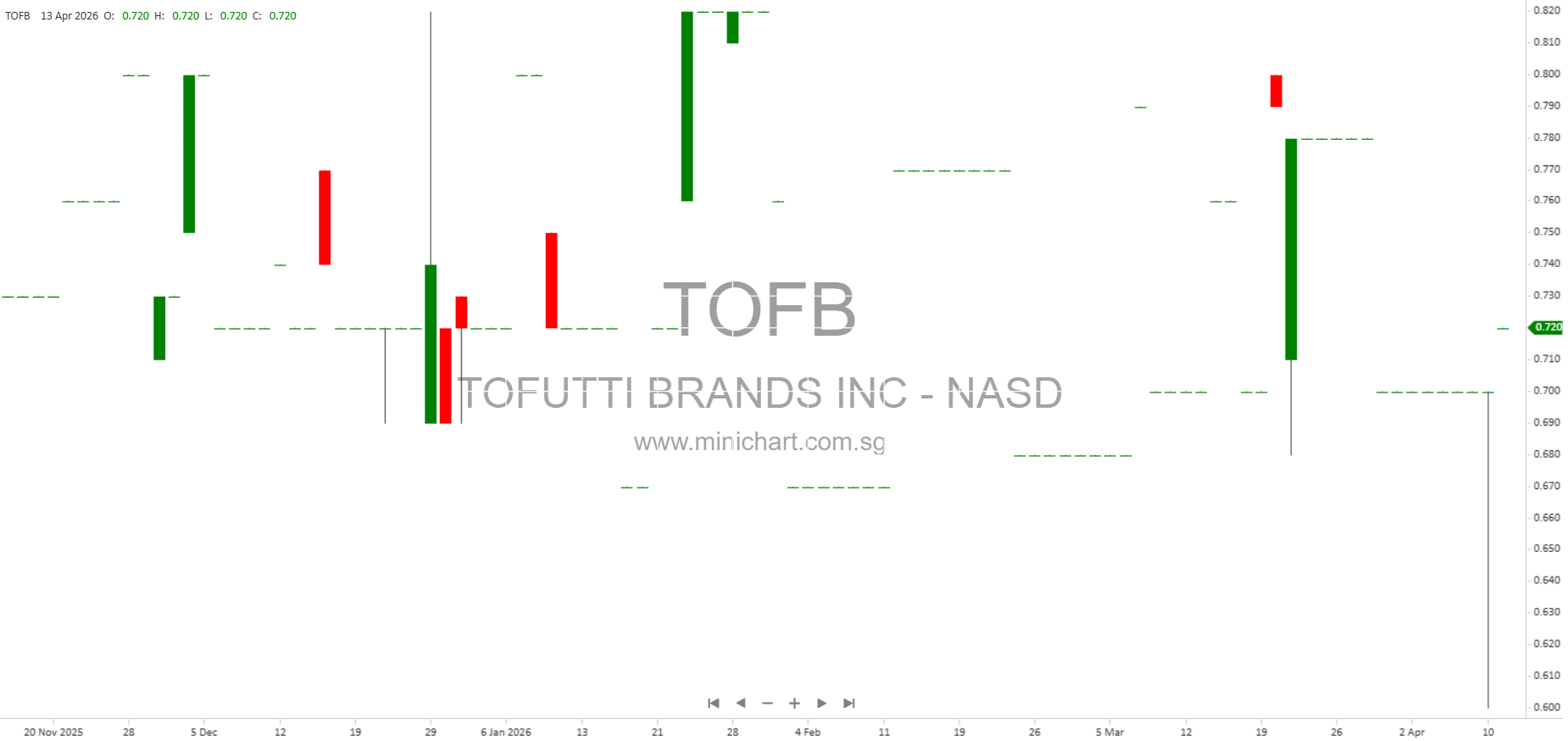
- Tofutti’s common stock trades on the OTCQB tier, which is characterized by thin trading and high volatility. This can depress the stock price for reasons unrelated to the company’s performance and make it difficult for shareholders to sell their shares.
- The stock is classified as a “penny stock,” subjecting it to restrictive trading rules that may further limit liquidity and deter investor interest.
- No Dividends Expected: The company does not intend to pay cash dividends in the foreseeable future, as it needs to retain earnings for business operations.
- Cybersecurity and Other Operational Risks: While the company is not currently aware of any material cybersecurity risks, it acknowledges that future incidents could impact operations and financial results. Other risks include economic downturns, changing regulations, and external disruptions (such as natural disasters or pandemics).
- Equity Incentive Plan Expiry: The 2014 Equity Incentive Plan expired on June 9, 2024. 250,000 non-qualified options granted under this plan remain outstanding but no new grants can be made under the expired plan.
Price-Sensitive and Shareholder-Relevant Information
- Liquidity and Going Concern Risk: The company’s declining cash and working capital, coupled with historical losses and uncertainty over future financing, could materially impact its ability to continue operations. This is highly price-sensitive and relevant for investors.
- Control Weaknesses: The continued material weaknesses in internal controls could result in restatements, regulatory action, and loss of investor confidence, all of which are price-sensitive.
- Leadership Dependency: Heavy reliance on a single executive for both CEO and CFO roles, especially given his age, introduces key person risk that could quickly affect the company’s stability and share value if circumstances change.
- Lack of Patent Protection: The absence of patent protection means competitors could potentially copy Tofutti’s products, threatening future revenue streams and market position.
- Thin Trading and Penny Stock Status: The stock’s OTCQB and penny stock status make it vulnerable to high volatility and low liquidity, which can cause rapid and unpredictable share price movement, often unrelated to the company’s actual performance.
Additional Details for Investors
- Number of Shareholders: As of April 2, 2026, there were approximately 241 holders of record of Tofutti common stock, with 5,153,706 shares outstanding at a par value of \$0.01 per share.
- No Sales of Unregistered Securities or Purchases of Common Stock: There were no sales of unregistered securities in fiscal 2025, nor did the company repurchase any of its own shares in the final quarter of the year.
- Quarterly Operating Variability: The company experiences significant quarterly fluctuations in sales, particularly with major customers, and notes that sales patterns are not reliably repeatable year to year. This unpredictability adds risk for short-term investors.
- Climate and Regulatory Risks: Tofutti may incur additional costs to meet changing consumer and regulatory demands for sustainability and environmentally friendly packaging, which could impact financial performance.
- Product Liability and Insurance: The company maintains product liability insurance and requires co-packers and some customers to name Tofutti as a co-insured, but there is no guarantee that insurance coverage will be adequate for all potential claims.
Conclusion
Tofutti Brands, Inc. faces significant operational, financial, and market risks that investors should carefully consider. The company’s lack of profitability, declining liquidity, reliance on a single key executive, absence of patent protection, material weaknesses in internal controls, and status as a thinly traded penny stock all present substantial risks that could lead to further share price volatility or declines. Investors should monitor developments closely and consider these factors in their investment decisions.
Disclaimer: This article is for informational purposes only and does not constitute investment advice or a recommendation to buy or sell any securities. Investors should perform their own due diligence and consult with a qualified financial advisor before making investment decisions. The information presented herein is based on the company’s publicly filed annual report and may be subject to change or revision.