Totaligent, Inc. Annual Report: Key Highlights & Investor Update
Introduction
Totaligent, Inc. has released its latest annual report for the fiscal year ended December 31, 2025. This report delivers a comprehensive overview of the company’s financial position, operational performance, risk profile, and future outlook. Investors and shareholders should note several critical developments and disclosures that may impact share value and influence investment decisions.
Key Financial Highlights
-
Continuing Operating Losses and Going Concern Doubt:
- For the year ended December 31, 2025, Totaligent reported a net loss of \$600,046.
- As of year-end, the company had negative working capital of \$2,361,038, an accumulated deficit of \$2,560,631, and a stockholders’ deficit of \$2,164,267.
- The independent auditors have expressed substantial doubt about the company’s ability to continue as a going concern due to recurring losses, negative capital, and the need for additional financing.
-
Cash Flow and Financing Activities:
- During 2025, Totaligent issued \$230,000 in convertible debt.
- The company’s primary funding to date has been from private investors, with some having verbally committed to further funding if needed.
- Material cash requirements for the next year are estimated at \$100,000 to \$200,000 per month, to cover payroll, capital expenditures, and software development.
-
Share Structure and Market Activity:
- As of March 31, 2026, there were 213,601,313 shares of common stock outstanding and 322 holders of record.
- The public float as of June 30, 2025, was approximately \$5.6 million.
- The company is classified as a “smaller reporting company” and a voluntary filer, meaning it is not currently required to file periodic reports with the SEC and may stop filing at any time.
Risks and Issues of Concern for Investors
-
Early-Stage Status and Limited Operating History:
- Totaligent is still at a development stage, with a limited track record and history of operating losses.
- The company acknowledges the likelihood of unforeseen costs, competition, and operational challenges typical for early-stage businesses.
-
Need for Additional Capital:
- The company will require significant capital infusions to fund operations, expansion, product development, and to address ongoing losses.
- There is no assurance that additional financing will be available on favorable terms or at all; failure to secure funding may force the company to scale back or cease operations.
- Any new equity or debt financing may dilute existing shareholders or subordinate their interests.
-
Penny Stock Status and Trading Risks:
- Totaligent’s common stock is classified as a “penny stock,” subject to significant SEC and broker-dealer restrictions, potentially limiting liquidity and the ability to attract new investors.
- The company does not pay dividends and does not intend to do so for the foreseeable future.
-
Internal Controls and Reporting Weaknesses:
- Management and auditors have identified material weaknesses in internal controls over financial reporting, including the lack of a full-time CFO and absence of an independent audit committee.
- These control deficiencies may result in financial misstatements and could undermine investor confidence, making it harder to attract capital.
-
Market and Liquidity Risks:
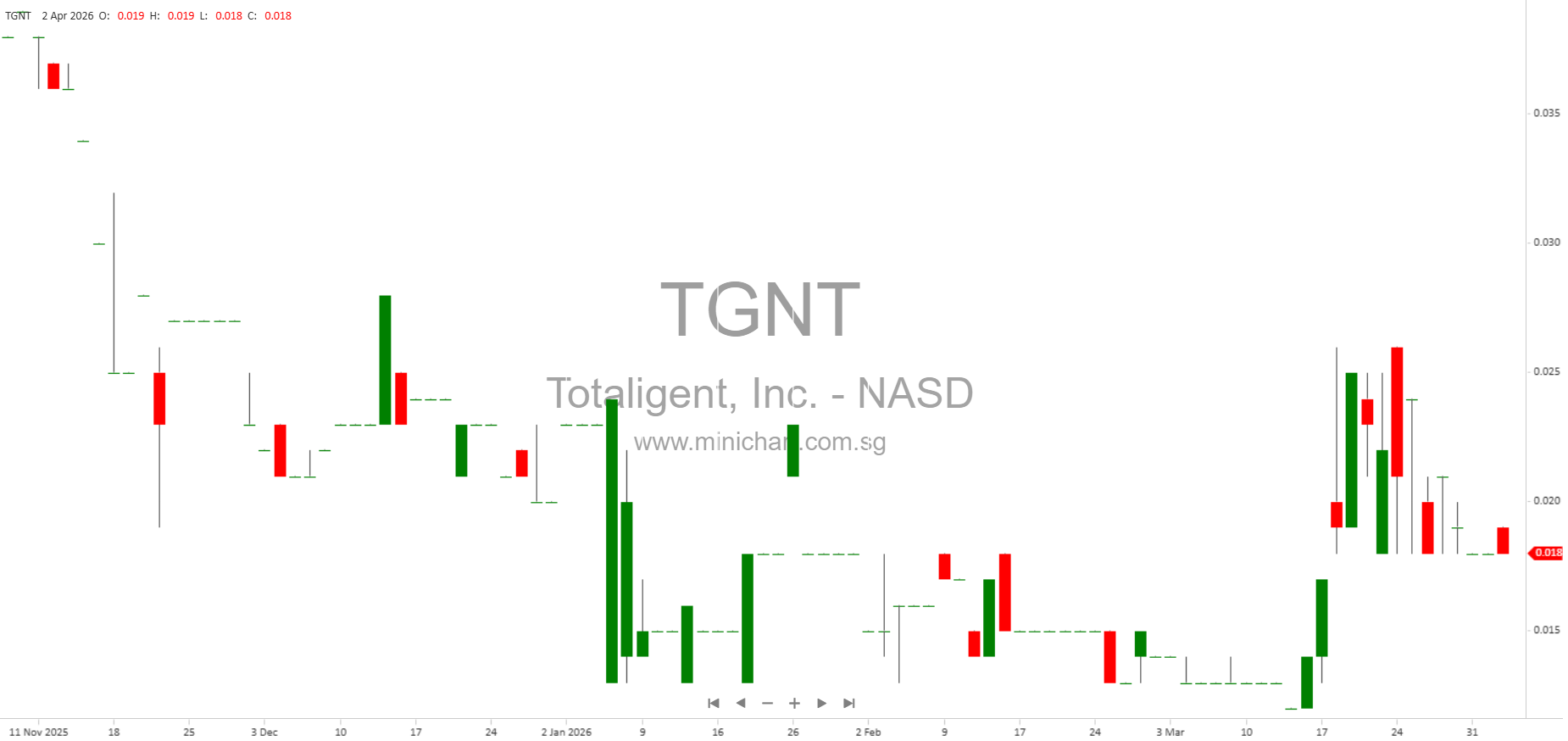
- The company’s share price may be volatile due to low public float, thin trading, and broader market or economic factors.
- Future sales by existing shareholders, new share issuances, or conversion of convertible debt can exert downward pressure on the stock price.
-
No Equity Compensation Plans:
- The company does not have any equity compensation plans, and thus there are no shares reserved for such purposes.
Other Noteworthy Disclosures
-
No Legal Proceedings:
- The company is not currently involved in any litigation or legal proceedings that would have a material adverse effect on its business.
-
Regulatory and Reporting Status:
- As a smaller reporting company and voluntary filer, Totaligent has scaled disclosure requirements and is not required to provide certain data (such as Compensation Discussion and Analysis or five years of financials).
Potential Price-Sensitive Information for Shareholders
- Continued substantial doubt about the company’s ability to continue as a going concern is a significant red flag that could negatively impact share value.
- Material weaknesses in internal controls and the lack of a full-time CFO or independent audit committee may reduce investor confidence and limit access to capital.
- The company’s status as a “penny stock” with low liquidity and no dividend policy may further restrict institutional investor interest.
- The possibility that the company could cease filing reports at any time, as it is a voluntary filer, introduces additional uncertainty and risk for shareholders.
- Any failure to secure additional funding, or the dilution from new equity/debt, could have an immediate and material impact on the company’s stock price and viability.
Conclusion
Investors should exercise caution given the company’s early-stage status, persistent losses, negative capital position, uncertain access to funding, penny stock status, and weaknesses in internal controls and governance. Any positive developments in financing, operational execution, or internal controls could improve sentiment, but the current risk profile is elevated and significant downside risks remain.
Disclaimer: This summary is for informational purposes only and does not constitute investment advice. Investors should conduct their own due diligence and consult with their financial advisor before making any investment decision. The information above is derived from the company’s 2025 annual report and may not cover all aspects relevant to your investment objectives or risk tolerance. Market conditions and company circumstances can change rapidly.