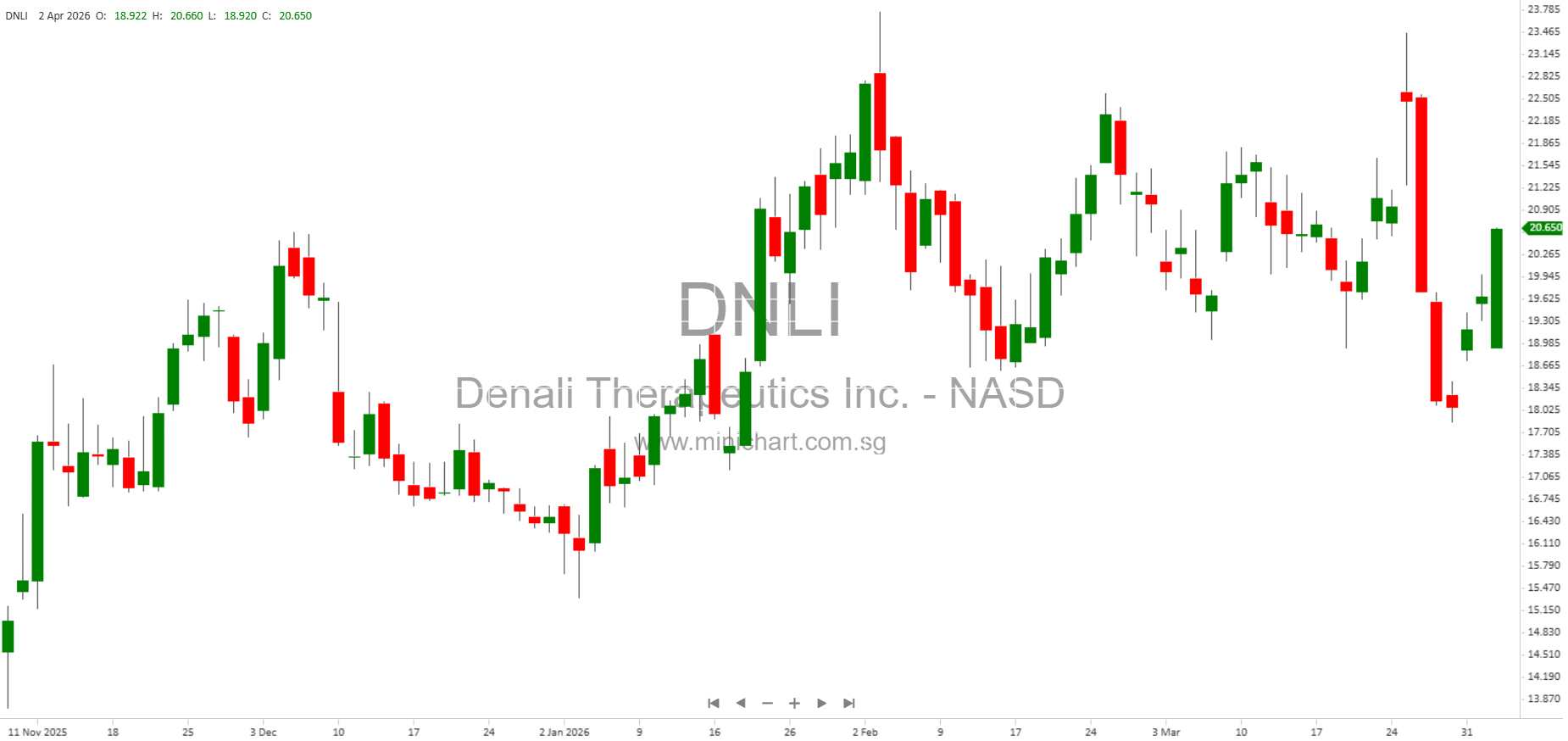
Denali Therapeutics Regains Full Rights to Investigational Therapy DNL593 for Frontotemporal Dementia (FTD-GRN)
Key Points for Investors
- Denali Therapeutics (NASDAQ: DNLI) regains full global rights to DNL593 (PTV:PGRN), an investigational therapy for frontotemporal dementia-granulin (FTD-GRN), after partner Takeda terminates their collaboration.
- Takeda’s exit was based on strategic reasons, not due to any efficacy or safety concerns related to DNL593.
- Denali will continue clinical development independently, with important Phase 1/2 data expected by year-end 2026.
- Denali’s TransportVehicle™ (TV) platform, the first FDA-approved blood-brain barrier-crossing technology, underpins DNL593 and multiple other programs.
- There are currently no approved treatments to slow the progression of FTD or FTD-GRN, representing a significant market opportunity if DNL593 is successful.
- Interim healthy volunteer data showed robust brain delivery, dose-dependent increases in cerebrospinal fluid progranulin, and no significant safety signals.
- All 40 patients required for the ongoing trial have been enrolled.
Detailed Analysis
Denali Therapeutics Inc. announced the termination of its collaboration agreement with Takeda for the co-development and co-commercialization of DNL593 (PTV:PGRN), an investigational therapy designed for patients with frontotemporal dementia caused by mutations in the granulin (GRN) gene (FTD-GRN). This decision, communicated by Takeda, was made for strategic reasons and is explicitly not based on any new concerns regarding the efficacy or safety of DNL593. As a result, Denali regains full global rights and control over the DNL593 program and its intellectual property.
DNL593 utilizes Denali’s proprietary Protein TransportVehicle™ (PTV) technology to deliver progranulin across the blood-brain barrier (BBB) directly to the brain. The technology is clinically validated and forms the basis of five clinical-stage programs at Denali. The BBB has historically posed a major barrier to drug delivery in central nervous system diseases, and Denali’s TV platform is designed to overcome this limitation, enabling the delivery of large therapeutic molecules (antibodies, enzymes, oligonucleotides) throughout the brain.
The ongoing Phase 1/2 study of DNL593 in FTD-GRN patients has completed enrollment (n = 40). Previously disclosed interim results from the healthy volunteer portion (Part A) of the trial demonstrated:
- Robust, dose-dependent increases in cerebrospinal fluid progranulin, consistent with effective brain delivery.
- DNL593 was generally well tolerated, with no significant safety signals to date.
Final biomarker and clinical results from the patient cohort are expected by the end of 2026, representing a potentially significant catalyst for the stock.
Frontotemporal dementia (FTD) is the most common form of dementia in people under age 60. Mutations in the GRN gene, which encodes the progranulin (PGRN) protein, are among the most common genetic causes of FTD. There are no approved therapies to slow disease progression, and FTD-GRN represents a high unmet medical need. If DNL593 delivers positive data, it could become the first disease-modifying therapy for this patient population, offering substantial commercial potential.
The TV platform’s mechanism is based on engineered Fc domains that bind transport receptors (e.g., transferrin receptor, CD98 heavy chain amino acid transporter) at the BBB, enabling receptor-mediated transcytosis and robust brain delivery. Preclinical data show 10–30x brain exposure improvements for antibodies/enzymes and 1,000x for oligonucleotides versus standard systemic delivery.
Management Commentary: CEO Dr. Ryan Watts emphasized Denali’s confidence in the scientific rationale and available data for DNL593, and the company’s commitment to advancing the program independently. He also highlighted the broad, validated potential of the TransportVehicle™ platform for neurodegenerative diseases where treatment options are severely lacking.
Potential Share Price Impact & Shareholder Considerations
- The return of full rights to DNL593 provides Denali with greater flexibility and full economics if the program succeeds.
- Takeda’s exit could be interpreted negatively in the short term, but the clarification that it was not based on data concerns is a positive.
- The anticipated data readout by the end of 2026 is a major catalyst for the company.
- The completed enrollment in the Phase 1/2 trial reduces execution risk on this key program.
- Denali’s platform has broad applicability to other neurodegenerative conditions, enhancing the company’s pipeline value.
- Investors should be mindful of the usual clinical development risks, including regulatory, manufacturing, and commercialization uncertainties, as well as the company’s need to continue funding its programs.
Forward-Looking Statements
This announcement contains forward-looking statements regarding Denali’s product candidates, development plans, anticipated data timing, and platform technology. Actual results may differ due to risks including regulatory uncertainty, clinical trial outcomes, and financial requirements, among others.
Contact Information
- Investor Contact: Tyler Nielsen ([email protected])
- Media Contact: Erin Patton ([email protected])
Disclaimer: This article is for informational purposes only and does not constitute investment advice. Investors should conduct their own research and consider their own circumstances before making any investment decisions. The information is based on statements and data provided by Denali Therapeutics as of the date of the announcement and may be subject to change. Neither the author nor this publication is responsible for any investment actions taken by readers.