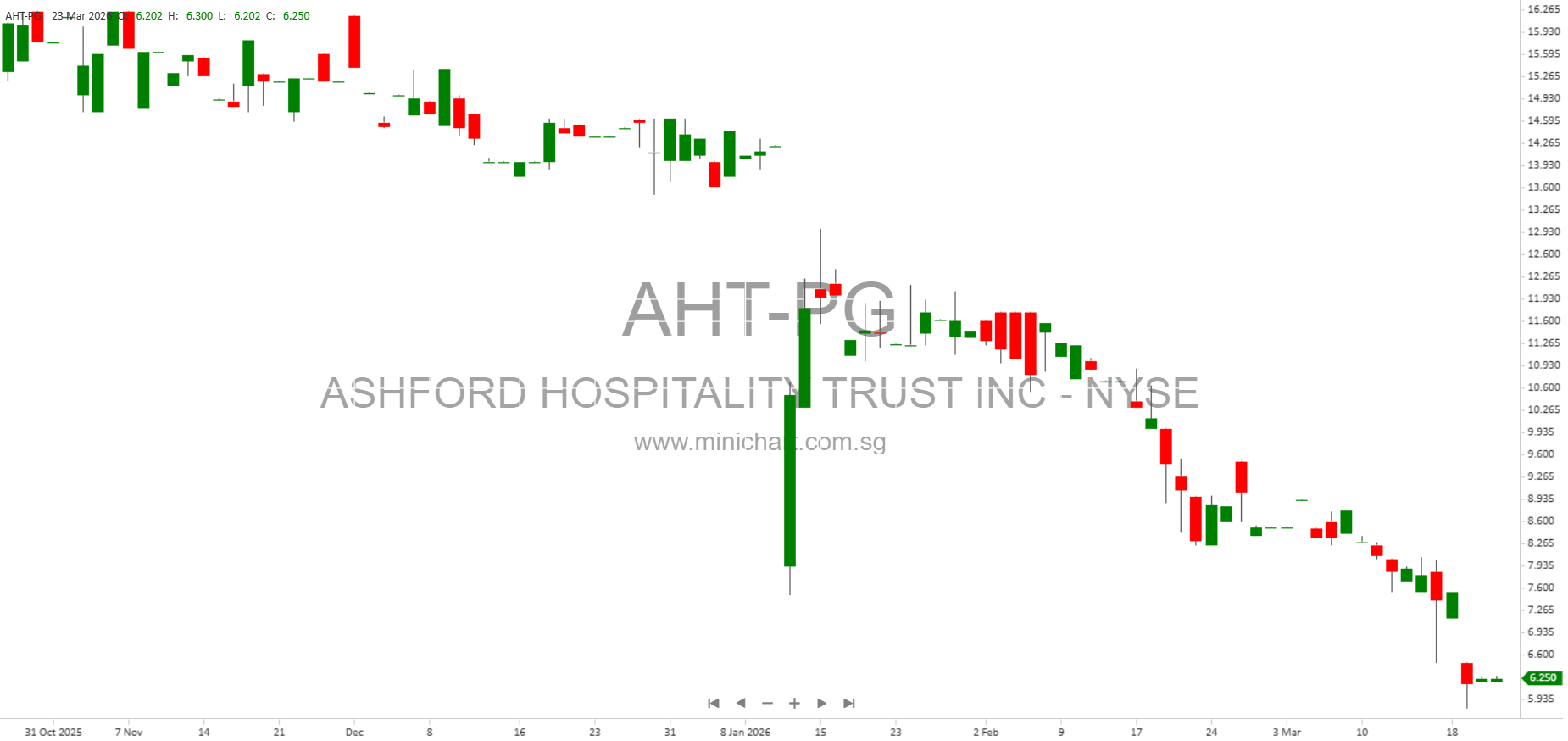
Ashford Hospitality Trust Inc. 2025 Annual Report: Key Investor Highlights
Overview
Ashford Hospitality Trust Inc. (AHT), a real estate investment trust (REIT) specializing in hotel properties, has released its annual report for the period ending December 31, 2025. The company’s headquarters are located in Dallas, Texas, and it continues to operate under the EIN 861062192. Ashford’s fiscal year ends December 31, and its latest SEC 10-K submission provides critical insights into its operational and financial status for investors.
Key Points from the Report
-
Diverse Capital Structure:
The company maintains a complex capital structure with multiple classes of preferred stock, including Series D, F, G, H, I, J, K, L, and M. Each class is tracked for both the current and prior fiscal years, reflecting Ashford’s ongoing efforts to manage capital and liquidity. This diversity in capital structure could influence dividend payouts and affect share price volatility. -
Variable Interest Entities:
Ashford is the primary beneficiary of certain variable interest entities (VIEs), indicating consolidation of assets and liabilities from these entities into its financial statements. This has implications for risk exposure and asset management. -
Advisory Agreements:
The company discloses specific advisory agreement fee structures, including a monthly base fee percentage of total market capitalization (notably 0.0583%) and a minimum base fee (0.0833%). These fees directly impact Ashford’s expenses and shareholder returns. -
Geographical Diversification:
Ashford’s hotel portfolio spans major U.S. metropolitan areas, including Dallas, San Diego, San Francisco-Oakland, Tampa, Miami, Orlando, Philadelphia, Minneapolis-St. Paul, Nashville, Los Angeles, and others. The company also tracks performance by region, providing granular insight into occupancy, food and beverage, and other revenue segments. -
Disposal of Assets:
The report reveals sales of certain properties, such as the SpringHill Suites and Fairfield Inn Kennesaw, which are classified as disposal group assets not considered discontinued operations. Asset sales can significantly affect liquidity, debt reduction, and share valuation. -
Hedging and Derivative Instruments:
Ashford utilizes interest rate floors and caps as hedging tools, some of which are classified as “nondesignated” for accounting purposes. This strategy aims to mitigate interest rate risk but may introduce earnings volatility. -
Equity Method Investments:
Investments in entities such as OpenKey and Napa Resorts are accounted for under the equity method, which may affect reported earnings and asset values. -
Management Fees:
Management fees are a significant expense, tracked by product/service segment and region. This transparency allows investors to assess profitability and operational efficiency. -
Retained Earnings and Paid-in Capital:
The financial statements detail changes in retained earnings and additional paid-in capital, which are crucial indicators of Ashford’s financial health and potential for future dividends or share buybacks.
Potentially Price-Sensitive Issues
- Asset Sales: The disposal of hotel properties—especially if proceeds are used for debt reduction or reinvestment—could positively impact Ashford’s balance sheet and share price. Conversely, if asset sales reflect operational challenges or forced divestitures, it could signal underlying weakness.
- Preferred Stock Structure: The large number of preferred stock classes and repurchase rights may affect common shareholder dilution, dividend allocation, and market capitalization calculations.
- Fee Structure Changes: Adjustments to advisory or management fee percentages could impact net income, affecting investor sentiment.
- Hedging Activities: The use of interest rate derivatives, especially nondesignated instruments, may lead to earnings volatility depending on market conditions.
Important Details for Shareholders
- Shareholders should closely monitor asset sales, as these transactions can directly impact Ashford’s liquidity and debt levels.
- The intricate preferred stock structure may affect dividend entitlements and voting power. Any changes or repurchases in these classes could be material.
- Advisory and management fee percentages are non-trivial expenses that may affect profitability and the company’s ability to return value to shareholders.
- Geographic diversification in hotel holdings provides some protection against regional downturns but introduces complexity in performance assessment.
Conclusion
The 2025 annual report from Ashford Hospitality Trust Inc. signals several key areas of focus for investors, including asset sales, preferred stock dynamics, fee structures, and hedging activities. These factors can be highly price-sensitive and warrant close attention from shareholders. The company’s continued diversification and asset management strategies may affect future earnings, dividend potential, and share price performance.
Disclaimer: This article is for informational purposes only and does not constitute investment advice. Investors should conduct their own due diligence and consult with financial professionals before making any investment decisions.