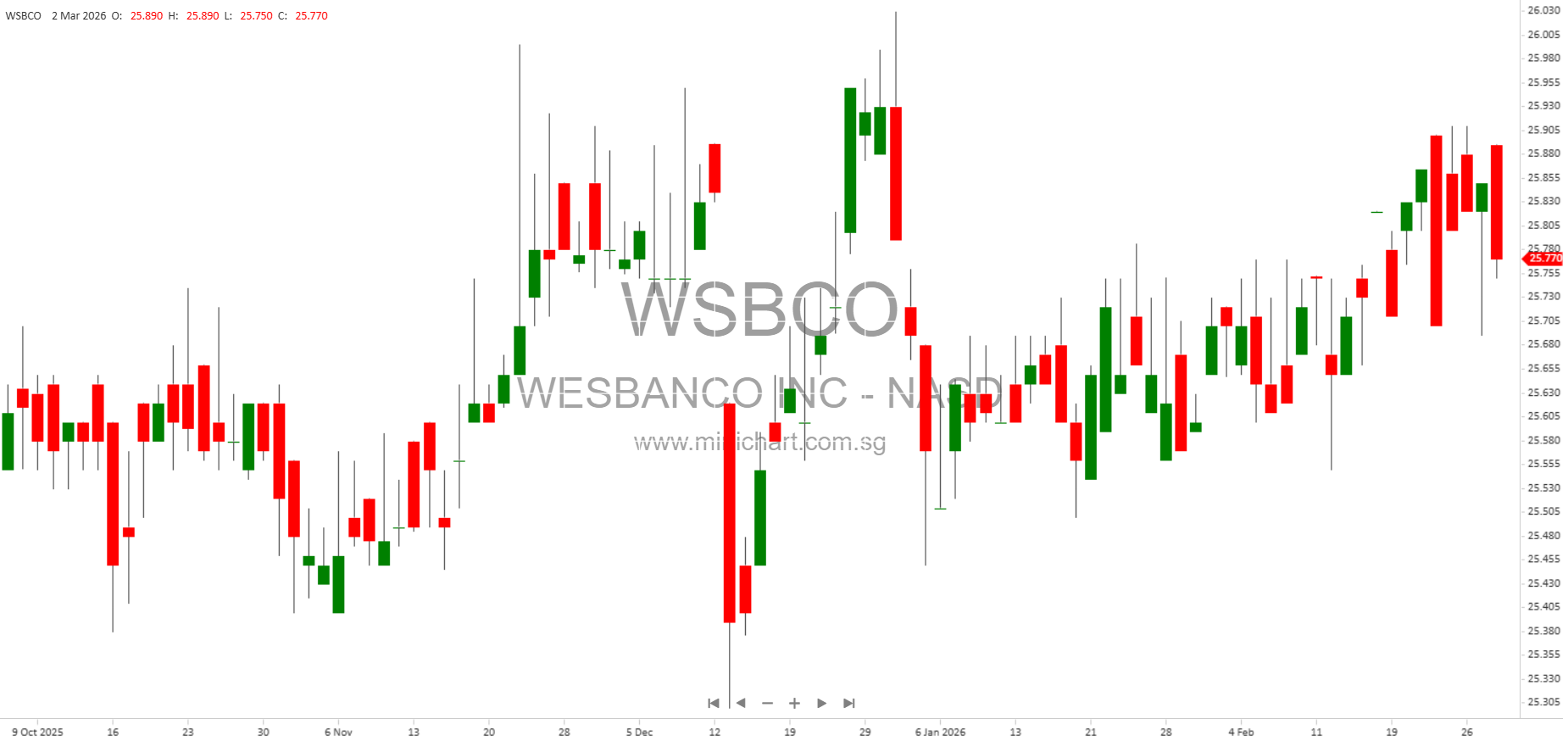
WesBanco Inc 10-K Report: Key Insights and Shareholder Alerts
Summary of Key Points
- Report Date: March 2, 2026
- Fiscal Year End: December 31, 2025
- Filer: WesBanco Inc, Wheeling, WV
- Industry: National Commercial Banks
- SEC File Number: 001-39442
- Recent and Historical Business Acquisitions: Premier Financial Corporation, Your Community Bankshares Inc, Old Line Bancshares Inc, Farmers Capital Bank Corporation
- Equity and Debt Issuances: Multiple classes and series of preferred stock, common stock, treasury stock, and depositary shares observed
- Loan Portfolio and Credit Quality: Extensive segmentation, including commercial, consumer, residential, and commercial real estate portfolios, with detailed tracking of past due and non-performing assets
- Fair Value Assessments: Recurring and nonrecurring fair value measurements applied across asset classes, including mortgage-backed securities, treasury securities, corporate debt, and municipal obligations
- Employee Stock Plans and Awards: Multiple performance-based and employee stock option plans active
- Accounting Pronouncements: Adoption of Accounting Standards Update 2016-13 and 2023-09
Strategic and Financial Developments
1. Business Acquisitions and Consolidation
WesBanco Inc has completed significant acquisitions in recent years, including Premier Financial Corporation, Your Community Bankshares Inc, Old Line Bancshares Inc, and Farmers Capital Bank Corporation. These acquisitions have expanded WesBanco’s geographic footprint, diversified its asset base, and increased its customer reach. The integration and performance of these acquired entities may affect the company’s financials and share price, especially as synergies and cost savings are realized or if integration challenges emerge.
2. Shareholder Equity and Stock Issuances
The company has issued multiple classes of stock, including Series A and Series B Preferred Stock, common stock, and depositary shares. Treasury stock transactions are ongoing, indicating active capital management. These equity actions—especially new issuances, repurchases, or conversions—can directly impact share value and dilution for existing shareholders.
3. Loan Portfolio Segmentation and Credit Risk
WesBanco’s loan portfolio is segmented into commercial, consumer, residential, and commercial real estate, with further breakdowns by asset class and credit performance. The report details the proportions of loans that are not past due, 30-59 days past due, 60-89 days past due, and ≥90 days past due, as well as non-performing and criticized assets. Any significant deterioration in credit quality or an uptick in non-performing loans could be materially price sensitive, as it might signal rising credit risk and future losses.
4. Fair Value Measurement and Asset Valuation
The company regularly applies fair value measurements to its securities portfolio, including U.S. Treasury, corporate debt, municipal obligations, mortgage-backed securities, and equity method investments. Both recurring and nonrecurring fair value adjustments are noted, which could affect reported earnings and book value. Significant unrealized losses or gains in these portfolios, especially in volatile markets, could impact investor sentiment and share price.
5. Employee Compensation Plans
WesBanco maintains numerous stock option and equity compensation plans, including performance-based restricted stock and employee stock options. New awards or vesting schedules can dilute existing shareholders but may also incentivize management performance, potentially affecting future profitability and share price.
6. Accounting Standards Adoption
The adoption of ASU 2016-13 (Credit Losses) and ASU 2023-09 (Income Taxes) represents significant changes in financial reporting. ASU 2016-13, in particular, requires earlier recognition of credit losses, which may increase loan loss provisions and reduce reported net income in periods of deteriorating credit quality.
Potential Price-Sensitive Issues
- Integration Risks: Ongoing integration of acquired banks could lead to unexpected costs or operational issues.
- Credit Quality Trends: Any increase in non-performing or criticized loans may signal underlying credit issues.
- Capital Actions: New stock issuances, buybacks, or changes in dividend policy could materially affect share price.
- Fair Value Changes: Significant unrealized losses in securities portfolio may reduce book value and investor confidence.
- Regulatory/Accounting Changes: Adoption of new accounting standards may impact reported earnings and reserves.
Shareholder Alerts
Shareholders should monitor:
- Loan portfolio performance and any material changes in credit quality.
- Equity issuance and treasury stock activity.
- Updates on integration and performance of acquired entities.
- Fair value changes in the securities portfolio, especially in volatile markets.
- Management and employee compensation plans, as these can affect dilution and performance incentives.
- Impact of new accounting standards on income, reserve levels, and volatility.
Conclusion
WesBanco Inc’s 10-K reveals a bank in active transformation, with several acquisitions, ongoing capital management, and a segmented loan portfolio facing various credit risks. The adoption of new accounting standards and the fair value measurement of securities add further complexity and potential volatility to earnings and book value. Investors should closely monitor these evolving factors for any signs of material change that could affect WesBanco’s share price and long-term value.
Disclaimer: The information provided in this article is for informational purposes only and does not constitute investment advice or a recommendation to buy or sell securities. Investors should conduct their own research and consult with a qualified financial advisor before making any investment decisions. The article is based on the latest WesBanco Inc 10-K filing and may not reflect subsequent events or disclosures.