State Street SPDR Straits Times Index ETF: Comprehensive Investor Update
Summary of Key Points
- Investment Objective: The fund aims to closely replicate, before expenses, the performance of the Straits Times Index (STI), Singapore’s benchmark index of the top 30 listed companies.
- Full Replication Strategy: The fund primarily invests in all STI constituent stocks in the same weighting as the index, with adjustments only as necessary to track changes in the index composition.
- Low Expense Ratio: Total annual fees and expenses are not expected to exceed 0.3% of the Fund’s net asset value, making it one of the lower-cost options for Singapore equity exposure.
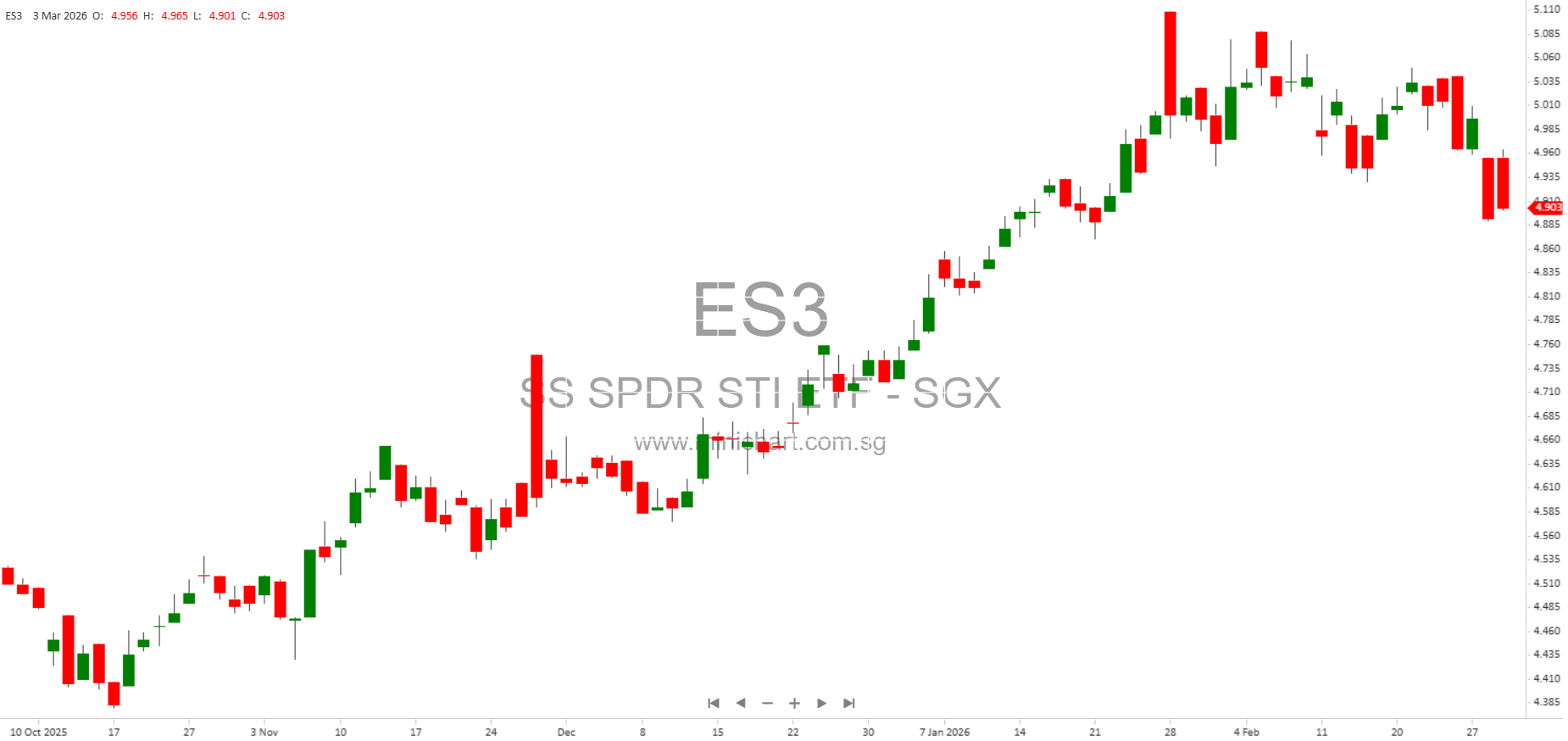
- Liquidity & Trading: Units are listed and traded on the SGX-ST under the ticker “ES3”, enabling investors to buy and sell like ordinary shares. Direct creation/redemption is typically limited to large blocks (500,000 units in-kind or 50,000 units cash).
- CPFIS Inclusion: The fund is included under the CPF Investment Scheme (CPFIS) for Ordinary Account monies and classified as Higher Risk – Narrowly Focused (Singapore-Centred Securities).
- Distribution Policy: The fund intends to pay distributions twice a year, anticipated to approximate the yield of the STI, but the actual amount is at the manager’s discretion.
- Key Parties: State Street Global Advisors Singapore Limited is the manager, DBS Trustee Limited is the trustee, and State Street Bank and Trust Company is the custodian. Auditors are PricewaterhouseCoopers LLP.
Important Information for Shareholders and Price-Sensitive Issues
Risks That May Impact Value
- Market Risk: The value of the ETF units and any income from them is not guaranteed and may fluctuate, reflecting the performance of the STI. A decline in the STI will likely result in a decrease in the fund’s NAV and unit price.
- Passive Management: The fund is not actively managed. It does not attempt to outperform the STI and will not sell shares of a constituent company unless it is removed from the index, even if the company faces financial trouble.
- Tracking Error: The fund’s return may not exactly match the STI due to fees, expenses, trading costs (especially during rebalancing), and timing differences. Occasional use of permitted derivatives may also result in imperfect correlation.
- Liquidity Risk: While the ETF is listed on SGX-ST, there is no guarantee of a liquid trading market at all times. Large creations/redemptions can only be done in blocks. Most retail investors will trade in board lots on the exchange.
- Potential for Premium/Discount: Units may trade at a price above or below their Net Asset Value (NAV) depending on supply/demand dynamics, market conditions, or temporary suspensions of creations/redemptions.
- Suspension/Delisting Risk: The fund may suspend creations/redemptions or face delisting if it fails to meet SGX-ST requirements or if the STI is no longer calculated or published. Termination of the fund could occur if assets under management fall below S\$100 million for two years or more.
- Dividend Risk: Distributions depend on dividends paid by STI constituent companies, which can vary. The manager may also pay expenses from dividends or, if insufficient, by selling portfolio shares, potentially lowering fund value and affecting distribution levels.
- Index Sponsor Limitation: The index sponsors (FTSE, SPH, SGX-ST) do not guarantee the accuracy or continuity of the STI. Errors or changes in the index methodology/composition may impact the fund’s performance.
- Regulatory and Tax Risks: The fund is subject to Singapore and international tax reporting (FATCA, CRS). Non-compliance may result in withholding taxes that could reduce NAV.
- Currency Risk: All or most assets are in SGD. Investors whose base currency is different face FX risk. The fund does not actively hedge currency exposure.
Operational and Structural Features
- Creations and Redemptions: Direct creations and redemptions are only available to appointed Participating Dealers and certain Approved Applicants, and only in large blocks (500,000 units in-kind, 50,000 units cash). Most investors will transact via the SGX-ST.
- No Securities Lending: The fund does not and will not engage in securities lending or repurchase transactions, which distinguishes it from some other ETFs that generate additional income from such activities.
- Soft-Dollar Arrangements: The manager may receive research and brokerage services in “soft-dollar” arrangements, but must ensure best execution and avoid unnecessary trades.
- Transparency: The fund publishes semi-annual and annual reports on its website, and investors can request printed copies without charge.
- Meetings and Governance: Investors have the right to call meetings, vote on key resolutions (e.g., removal of manager/trustee, termination of fund), and inspect certain documents at the manager’s office.
Potential Price-Sensitive Triggers
- Changes in STI Composition or Methodology: Announcements of additions or deletions to the STI, or changes in the index sponsor or calculation methodology, may cause the fund to rebalance, potentially impacting unit price and NAV.
- Suspension or Delisting: Suspension of trading in the ETF units or delisting from the SGX-ST, or the fund’s termination, would be highly price-sensitive and could result in loss of liquidity or forced sales at unfavorable prices.
- Regulatory or Tax Changes: Amendments to CPFIS eligibility, tax laws (e.g., FATCA/CRS enforcement), or capital markets regulations may affect the fund’s structure, investor base, or net returns.
- Significant Changes in AUM: If the fund’s size drops below S\$100 million for an extended period, the manager may terminate the fund, which would be a material event for investors.
- Extraordinary Market Events: Disruptions to the SGX-ST, settlement systems, or a cessation in the publication of the STI would trigger suspensions of creations/redemptions and may lead to NAV price deviations.
Conclusion
The State Street SPDR Straits Times Index ETF offers investors a low-cost, liquid, and diversified way to track Singapore’s main market index. However, as a passive index tracker, it is exposed to all market risks inherent in the STI, and several operational and regulatory risks that could materially affect unit prices and liquidity. Investors should pay close attention to announcements regarding index changes, fund size, regulatory amendments, and any notifications of trading suspension or delisting, as these are likely to have a significant impact on the value of their investment.
Disclaimer: This article is for informational purposes only and does not constitute investment advice or a solicitation to buy or sell units in the State Street SPDR Straits Times Index ETF. Investors should consult their own professional advisers regarding investment suitability, risks, and implications based on their individual circumstances. Neither the author nor the publisher accepts liability for any loss arising from reliance on the information provided herein.